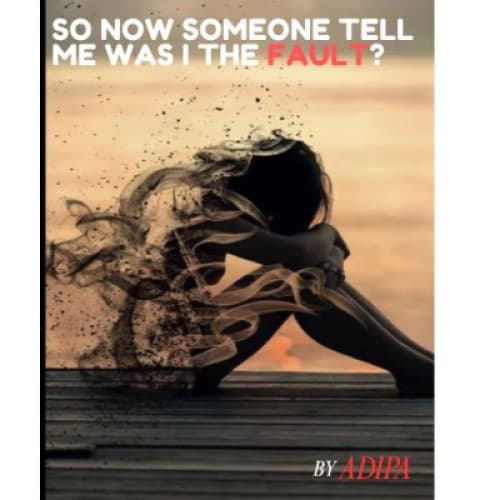
I used to believe that if you cried loud enough, someone would come. I thought pain had a sound that demanded rescue. I believed there were people in this world who would hear the breaking of a human soul and rush to hold it together. But I learned, too soon, that sometimes your cry becomes an invitation, not for comfort, but for more harm. I reached out with shaking hands, begging for help from a man old enough to be my protector, whose years should have taught him compassion. Instead, he taught me that even help can come sharpened like a knife. He wore kindness like a mask and used my desperation as a key to unlock his own violence. In that moment, hope itself betrayed me, and I realized that safety is not guaranteed by age, titles, or gentle words; it is a fragile thing easily shattered by deceit.
Then came the night or was it day? I no longer remember, because time itself bends when agony enters. There were seven men. Seven shadows that swallowed the room and swallowed me whole. I became a body, not a person, a place they entered and exited like a room they had paid for, like a thing they could use and discard. Their hands, their weight, their breaths, all of it etched into my memory not as images but as scars that ache without bleeding. They did not just touch me; they rearranged me, turned me into a version of myself I never gave permission to exist. Each one left with pieces of my safety, my joy, my trust. None of them looked back, and in their retreat, they left me with a silence that screamed louder than any cry I could make.
When it was over, I did not scream. I did not run. I sat there in the quiet, a quiet that felt like punishment, like the world had witnessed and chosen silence over justice. I remember staring at my own hands and wondering how they could still move when everything else inside me had died. I wondered if I was still human or just a shell they had hollowed out. I did not know whether to cry, to vomit, or simply to stop breathing. I felt like a crime scene abandoned by both the criminals and the law, left to rot in the ruins of something sacred that could never be rebuilt. Even breathing felt like betrayal as though life itself was asking me to carry a body that no longer belonged to me.
In the days that followed, I became a master of pretending. I went to class. I greeted people. I even laughed, though it sounded foreign in my own mouth. No one knew that my body had become a coffin for the girl I used to be. No one saw the funerals I held in silence, funerals for my trust, for my innocence, for the version of me that still believed in safety. I walked through the world like a ghost wearing human skin, like a scream trapped behind polite smiles. Every sound, every sudden movement, every brush of skin against mine sent me spiraling back into the dark, into the smell, the weight, the violence of that night. I lived in two worlds: the one everyone else saw, and the one that played on loop inside my head.
Menstruation became torture layered on torture. Each cramp, each spasm dragged me back to the way my body was twisted, bent, and forced into shapes it was never meant to hold. Pain became a language my body spoke fluently, and no one else could translate. I would double over in agony, not from the bleeding alone but from the memories that came with it, the reminder that even my own body no longer felt like mine. My womb ached, not only with blood, but with betrayal. What should have been a natural rhythm became a cruel echo of something unnatural forced upon me. Every month, my body reminded me of what it had endured, and there was no way to separate the two.
The fainting started soon after. One moment I would be upright, the next, the world would tilt, darken, and collapse beneath me. People would crowd around, worried about dehydration, exhaustion, or stress. They never guessed the truth: that sometimes the weight of memory is enough to shut down an entire body. Trauma has a way of reaching through bone and muscle to pull the plug on consciousness itself, like a mercy the mind begs for when it can no longer bear the storm it carries. I woke from those collapses not refreshed, but ashamed that even gravity seemed to know my suffering and respond before the people around me ever could.
Addiction came quietly, disguised as relief. Little things that dulled the edges, substances that promised to numb the screaming that never left my bloodstream. I hated myself for reaching for them, even as I reached again and again. I was not trying to forget; I was trying to survive the remembering. I was trying to make the nights quieter, the flashbacks shorter, the ache less alive. But every high carried a low that reminded me I was still trapped, still breathing in a body that betrayed me, in a world that had already taken too much. Survival began to feel like self-betrayal, yet stopping felt like surrender.
Society treated my silence as proof that nothing had happened. Their eyes did not ask questions, their mouths offered empty platitudes, and their hands stayed clean by never reaching for me. They say they hate evil, but what they hate more is discomfort, the kind that makes them look too closely at the violence growing in their own homes, schools, churches, and streets. They wanted me quiet, contained, polite. They wanted a victim who would keep their world tidy. But trauma is not tidy. It leaks. It stains. It drips from the edges of every word you speak, every step you take, until even your shadow looks bruised. They wanted normal; I was bleeding, even when invisible.
I wrestled with guilt, not because I had done anything wrong, but because the world kept asking me, without words, to explain why I didn’t fight harder, scream louder, or run faster. They wanted a hero out of a victim, a performance of resistance that would make them comfortable saying, “She did everything she could.” They never asked why seven men felt entitled to me. They never asked why an old man turned his help into harm. They asked why I hadn’t saved myself, as if my own survival was my responsibility while their humanity stood watching, hands folded. The weight of unspoken blame sat heavier than any hand ever placed on me.
And yet, here I am, writing these words with fingers that tremble but do not stop. I am not healed. I am haunted. But haunting is not the same as defeat. I write because silence protects the wrong people. I write because if I am to carry this pain, I will not carry it quietly. I will not let the world pretend this did not happen. They took so much of my safety, my trust, my sense of belonging in my own skin, but they will not take my voice. Every word I bleed onto this page is a rebellion. Every breath I take is proof that I am still here, no matter how violently they tried to erase me. I am still breathing, still standing, still naming what was meant to remain hidden, and in that, there is a quiet kind of victory.