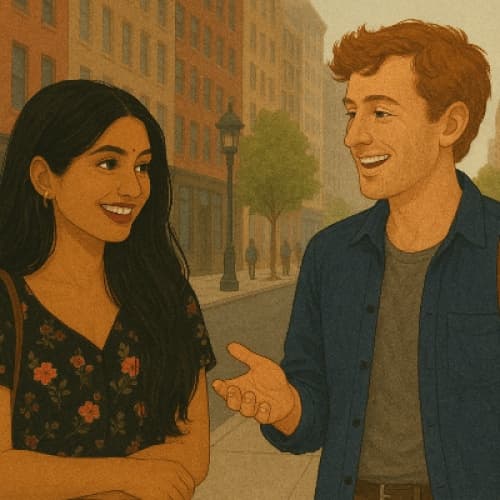
Niva arrived in New York in February, wrapped in a too-large coat and questions she didn’t know how to ask. The artist residency was her first time abroad. First snow. First skyline without birds.
Her studio overlooked a stretch of rooftops and water towers. Everyone said the light was perfect. She didn’t know what to paint. For five days, she stared at blank paper and made strong tea she didn’t drink.
On the sixth day, she wandered into the laundromat across the street. Not for laundry—just to warm her hands.
That’s where she saw him. Reading The Little Prince in French, sitting near the dryers like he belonged to a different kind of city.
“You look like someone who just arrived,” he said, glancing up.
“I did.”
“I’m Luc.”
“Niva.”
The next week, they saw each other again. Then again. Once at a bookshop. Once at a gallery. It didn’t feel like fate. Just quiet timing.
He was a violinist, half-French, half-Bengali, living between music gigs and borrowed rooms.
“You haven’t painted yet,” he said once, as they walked past her studio.
“I don’t know what to do with this sky.”
He nodded. “Sometimes you paint the thing you’re most afraid of.”
That night, she stayed up painting until dawn. Not the skyline—just his hands, holding a cracked teacup.
When her work was selected for a group show, she texted him at 3 a.m.
He showed up an hour later with a croissant and strong coffee.
At the show, she waited for him. Watched the door.
He never came.
The next morning, a note was taped to her studio door:
“Gone south for a while. You’re ready now. Paint the sky.”
She stood at the window for a long time, looking out at the city she once felt too small inside.
And a year later, walking through a crowded New Orleans street, she heard a familiar melody.
Luc, playing on a corner. His violin case open. His eyes closed.
She didn’t say a word.
She just placed a tangerine beside the bow and walked away smiling.