


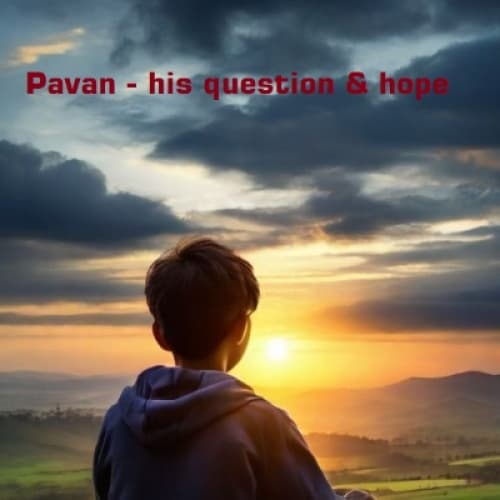
Pavan came from a modest family and was the second child. When he was 13, he experienced the loss of his father, a situation he struggled to comprehend at the time fully. His mother and older brother shielded him from the harsh realities of life to protect him from the absence of their father. His mother worked in a leather garment factory, earning a meagre 2000 rupees a month, and took on the responsibility of providing for her children without complaint, despite the emotional and physical toll it took on her. In his innocence, Pavan was unaware of the true depth of their struggles, feeling secure in the protective environment created by his mother and brother.
Being left-handed in his traditional village set him apart, leading to scolding from his mother and relatives who considered the right hand auspicious and the left hand not. Pavan questioned why his hands, created equally by nature, were treated differently by society, pondering the inequality between his hands.
In his village, breaking coconuts as offerings to the gods was a common ritual, but Pavan hesitated to participate due to fear of judgment from his community. He longed to join in but lacked the courage to use his left hand for this sacred act.
Pavan was a curious thinker, often left unsatisfied by the explanations adults provided, particularly about traditions and religion. Encouraged by his devout mother to pray daily, he asked God to bring his father back, visiting the shrine every day in hope of a miracle. His disillusionment grew when he realized that the gods his mother had faith in couldn’t even help themselves, leading him to stop praying and become more introspective, concealing his feelings from those around him. The loss of his father deeply impacted him, leaving him feeling abandoned and heartbroken, causing him to withdraw and keep his emotions hidden, even from his mother.
After his father passed away, Pavan's mother, who was now a widow, faced her own struggles. In their village, widows were unfairly viewed as women of lower status. Pavan's mother was prohibited from taking part in rituals, wearing bangles, or adorning her hair with flowers, all of which she had previously enjoyed. It pained Pavan to see his mother in this situation. He wished for her to regain the strength and vibrancy she had before his father’s death, but his mother felt constrained by societal expectations.
One day, Pavan discovered his mother in tears in her room. When he inquired about the reason, she revealed that the neighbors had reprimanded her for participating in a temple ritual, which was forbidden for widows. Filled with a sense of injustice, Pavan marched to their house and confronted them. "What’s the problem with my mother being involved in the rituals? She is no different from anyone else." From then on, Pavan urged his mother to refrain from participating in any rituals, if only to shield her from the cruelty of others.
However, one thing continued to trouble Pavan: the hypocrisy of it all. His mother was excluded from the rituals because she had lost her husband, but those who were permitted to participate were far from faultless. They had committed their own wrongdoings, yet no one questioned their right to perform sacred rites. Pavan struggled to comprehend how such irrational and unjust regulations were upheld.
As Pavan matured, he began to realize that children like him—children caught in the midst of tradition, grief, and societal expectations—were not uncommon. There were millions of young individuals shaped by the events and environments around them. They absorbed the morals, ethics, and ideas of the adults in their lives, for better or for worse. And at such a tender age, between 10 and 16, the experiences they went through left lasting impressions, shaping the people they would become.
Now on the brink of adulthood, Pavan carried the weight of his experiences with him. He understood that the world was not fair, but he also believed that it could be improved. The injustices he witnessed and the unanswered questions turned him into a thinker, a kind of rebel. He vowed to never let others dictate his beliefs or his path in life.
The world is teeming with children like Pavan, children whose hearts and minds are shaped by their surroundings. What they see, feel, and are told in those formative years determines who they become. Will they grow into compassionate, rational adults, or will they turn against the world that betrayed them? It is up to the rest of us to ensure that the environment we create for them is one of understanding, fairness, and love.
Just as Pavan learned, the path we walk in life is not determined by which hand we use, but by the choices we make and the society we build. And perhaps, in time, even left hands will be seen as equal.