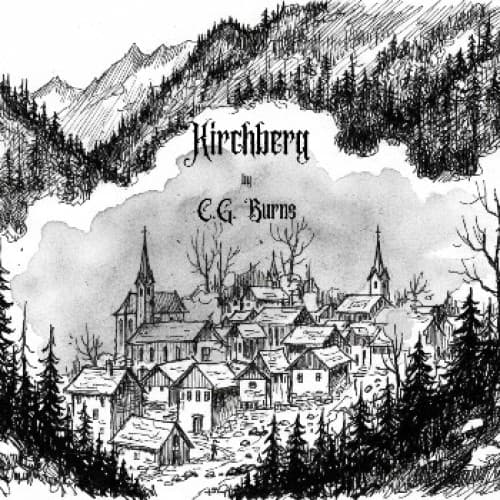

The village was called Kirchberg, a gray smudge huddled between wooded slopes, where the fog hung in the alleys—heavy, damp, and close, like soaked wool left out overnight. Father Thomas had been there for three months. He’d dusted out the sacristy and put his predecessor’s ledgers in order.
Thomas sat in the crypt. A single candle threw hard, leaping shadows across the parchment he was studying. He’d been a philologist before putting on the collar, intimately familiar with the Old Bavarian dialect that bled into corrupted, bastard Latin.
Every seven years, the village observed “The Great Cleansing.” It was meant to bless the harvest and wash away the sins of the fathers. But as Thomas read the lines in the original text, the translation didn’t add up.
One word kept catching his eye. Retinere. It had been translated as vanquish: By Thy will, we vanquish all evil. But that wasn’t what the verb did here—not in this construction, not with the surrounding phrasing. If the prayer meant vanquish, it would have reached for vincere or debellare. Retinere was simpler. Older. Meaner.
Contain.
The prayer wasn’t a plea to the Almighty. It was a binding ward. Precise. Procedural. An operator’s manual for an unholy ritual.
Thomas brought it up at the next parish council meeting. He was looking for reason; he found only a flat, practiced silence. The men at the table didn’t argue the point. They didn’t even look surprised. Chairs scraped. Boots shifted. When Thomas pushed back from his seat, he realized the room had already decided what he was.
When he tried to leave the hall, heavy figures blocked his path. The mayor, the blacksmith, the miller. Hard, weathered faces. Hands that smelled of damp loam and backbreaking labor. No cultish masks, no ceremonial robes. Just the thick, damp wool of their everyday work clothes, dragging the stench of the abattoir and the pigpen into the room.
“You should have left the book in the cabinet, Father,” the mayor said. His voice was bone-dry. “One life in exchange for seven years of peace.”
“What are you keeping down there?” Thomas asked. His heart hammered blindly against his ribs.
He didn’t get an answer. Hands seized him—rough, calloused, practiced hands. They dragged him down toward the riverbank, to the place where the church’s foundation plunged into the earth and the stonework was older than any whispered prayer.
The blacksmith stepped forward and worked a tool into an inconspicuous seam in the ground. With a dull, grinding crunch, a massive stone slab gave way, revealing a hidden oubliette.
A sickly-sweet, putrid stench wafted up. Stagnant water. Shed amphibian skin. Thomas looked down into the dark.
Scorched into the floor below was a circle of black salt and crusted, flaking blood. Inside it squatted the thing. Ten feet long, its skin a translucent, sickly white. Beneath it, Thomas could see the slow throb of dark, bloated organs. No scales—just a slick mucous sheen like a blind cave salamander. Six withered, stunted limbs clawed blindly at the stone. Where a face should have been, there was only a vertical, fleshy slit. A wet, bubbling hiss leaked from it.
“A demon,” the miller said flatly. “Slithered up through a fissure in the bedrock three hundred years ago. We’re the wardens.”
“This is madness,” Thomas whispered.
The blacksmith grabbed his arm. The grip was inescapable, like an industrial vise.
“It’s tradition,” the mayor said. “Without it, the crops rot in the soil. The babies are born twisted and still. It leeches the poison out of our earth. But it has to feed. And the secret has to stay buried.”
They dragged a length of coarse rope from a nearby shed. Raw, unwashed hemp that reeked of the stables and axle grease. Tackle meant for slaughtering livestock.
“You’re the new priest,” the mayor said, his tone bordering on pity. “It’s a damn shame. A waste of good blood.”
The rope bit brutally into the fabric of his cassock as they slowly lowered him into the pitch-black. Thomas’s screaming was no longer a liturgy; it was a raw, mindless animal shriek that beaded and rolled off the damp cavern walls like water on cold stone.
At the bottom of the pit, the thing shifted. Blind, but driven by an old, inexorable hunger that had outlasted centuries. Its skin dragged across the rock floor like a soaked rag across glass—soft, sucking friction in the dark. A pale, fleshy appendage whipped out from the vertical slit in the monstrosity’s head. It slapped against Thomas’s chest and latched on, as cold and uncompromising as the vacuum of a slaughterhouse machine.
High above, the stone slab grated shut.
Outside, beyond the churchyard walls, the wind finally scoured away the fog. Sunlight struck the slope. And there, in the very front row at the edge of the field, it was already clearly visible: the first flawless stalk of wheat of the season. Heavy, and perfectly golden.