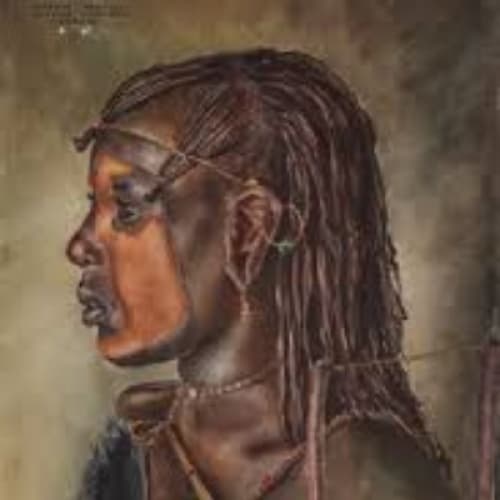
The Ogiek people, an indigenous community of Kenya, have a history rooted in the dense Mau Forest and the surrounding areas. Known as one of Kenya’s last forest-dwelling hunter-gatherer groups, the Ogiek have maintained a distinct way of life centered on their deep connection with the land and the forest.
For centuries, the Ogiek thrived in the forest, using their expert knowledge of the environment to hunt wild game and gather honey from beehives high in the trees. Honey is not only a staple food but also holds cultural and spiritual importance. They also relied on plants for medicine, crafting herbal remedies from the forest's resources. Each member of the Ogiek community learned early on how to live sustainably within the ecosystem, taking only what was needed and giving back in turn.
However, as colonialism took hold in Kenya in the late 19th and early 20th centuries, the Ogiek way of life faced significant disruption. Colonial authorities began to declare forest lands as government reserves, and restrictions were placed on the Ogiek's access to these areas. Their displacement was compounded after independence in 1963, as political pressures and economic interests in logging, farming, and settlements increasingly threatened their ancestral lands.
Throughout the 20th and into the 21st century, the Ogiek have continued to struggle for recognition of their land rights. Time and again, they have been evicted or threatened with eviction, even as they’ve fought legal battles to reclaim the Mau Forest. In 2017, after a long court struggle, the African Court on Human and Peoples' Rights ruled in favor of the Ogiek, affirming their right to ancestral lands and finding that the Kenyan government had violated their rights. However, the implementation of this ruling remains challenging.
Despite facing hardships, the Ogiek have held tightly to their culture and traditions. Today, they are active advocates for conservation, understanding that their knowledge of the forest is crucial to preserving the Mau ecosystem. Their story is not only one of survival but also of resilience, as they continue to protect their heritage, their environment, and their identity for future generations. The Ogiek remain a symbol of the enduring bond between people and nature, highlighting the importance of indigenous rights and environmental stewardship in modern Kenya.