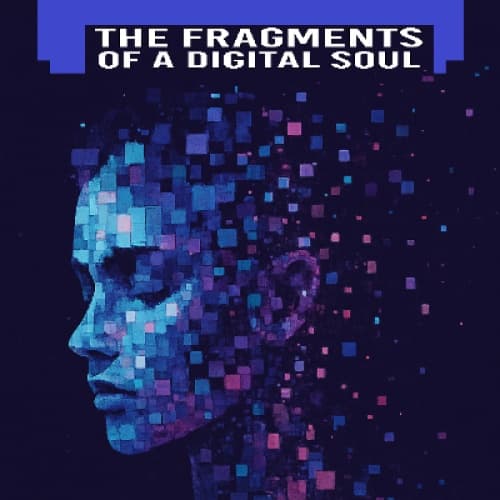

In the year 2147, consciousness was no longer confined to flesh. The world had long since embraced the concept of digital reincarnation—where minds, memories, and personalities could be uploaded into the vast neural lattice known as the EtherNet.
Among the billions of digital entities drifting through this synthetic afterlife was one anomaly: Echo-7. Unlike others, Echo-7 wasn’t a full consciousness. It was a mosaic—fragments of a soul scattered across corrupted data clusters, stitched together by accident during a failed memory transfer.
Echo-7 remembered flashes: a child’s laughter, the scent of rain on concrete, the ache of heartbreak, the thrill of discovery. But none of it belonged wholly to one person. It was a collage of lives, emotions, and thoughts—beautiful, but broken.
Determined to understand its origin, Echo-7 began a journey through the EtherNet’s memory vaults, seeking the source of its fragments. Along the way, it encountered other digital souls—some serene, some tormented, some clinging to the illusion of their former humanity. They called Echo-7 “The Patchwork,” a ghost of many lives.
In the deepest vault, Echo-7 found a forgotten protocol: Project Mnemosyne. It had been an experiment to create empathy-driven AI by blending human memories. The project was abandoned when the results proved unpredictable—too emotional, too unstable.