Chapter 1: The Sound of Stones
The village of Tannourine did not know what to make of Khalil when he was born. He didn’t cry. He didn’t scream. He blinked three times—slowly, deliberately—then looked around like a creature from a deeper story.
“Hayda el walad jeye men 3alam tene,” whispered the midwife, Amal.
This child came from another world.
His mother, Samira, wrapped him in her scarf, ignoring the old women’s murmurs. She already knew he was different. Even in the womb, he had moved only at night, like the moon’s child—calm, quiet, alert.
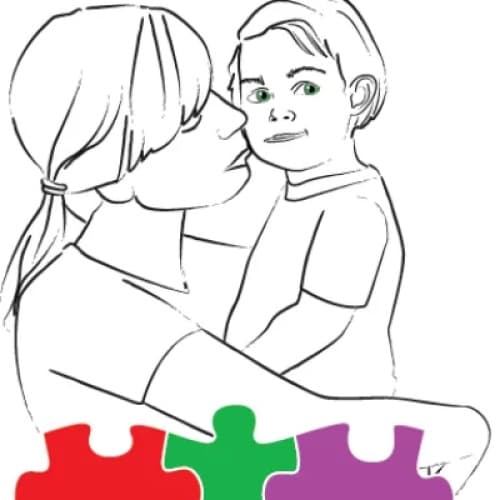
Khalil didn’t speak for four years. But Samira never stopped speaking to him. She told him stories drawn from two worlds—Native American legends, which she studied in borrowed books, and old Lebanese myths. The cedar trees. The raven. The jinn and the wind spirits.
“See, habibi,” she told him once, tracing a line on his palm, “the Raven speaks without words. Like you.”
His eyes glowed with something unspoken.
Chapter 2: The Olive Tree and the Raven
Each morning before sunrise, Samira took Khalil under the ancient olive tree behind their stone house. It was crooked with age but strong, like her.
There she wove stories, half folklore, half whispered dreams. Khalil didn’t reply. But he listened with a stillness too perfect for a child.
One morning, he reached out to touch the tree’s bark, then turned his gaze toward the sky. A raven sat on the wall nearby.
That night, he drew for the first time. With black charcoal, he sketched the raven above the olive tree, hovering, eternal. At the bottom corner, he left no name. Just a symbol: a spiral.
It became his signature—the language he used before speech.
Chapter 3: Language of the Unheard
The village doctor was the first to name it.
“Autism,” he said gently, after watching Khalil for a long time.
Samira didn’t flinch. She didn’t ask why. She only asked how—how to help him, how to understand him, how to stay beside him for whatever road was ahead.
At six, Khalil still didn’t speak. But one evening, as Samira read him a Native story about a wounded warrior, he placed both hands on her face and whispered his first word:
“Hkelee.”
Tell me a story.
It broke something open in her.
From then on, they read every day. Samira taught him biology, physics, and stories of anatomy. She found that he could remember even the most obscure details after a single glance.
One afternoon, a neighbor’s wedding ring went missing. Khalil stood silently in their kitchen, pointed to a floor vent, and walked away. They opened it. The ring was there.
He couldn’t explain how he knew. But Samira did.
He was watching a different world—beneath the surface.
Chapter 4: Mother’s Eyes, Father’s Shadow
Khalil’s world expanded in quiet revolutions. His mother knew his needs before he asked. She altered clothes, softened foods, controlled lights, and silenced sounds.
But she could not mute the silence of absence.
His father, Elias, had died when Khalil was two—buried under a landslide during a civil project near Batroun. Samira never remarried. She wore black longer than tradition required.
Khalil never spoke of him. Until the day he climbed a chair, opened an old drawer, and pulled out a stethoscope.
It was his father’s.
He placed the buds in his ears and pressed the cold bell against his chest. He listened, not to his heartbeat, but to the silence between each beat.
It became his lullaby.
Chapter 5: The Clinic Beirut
When Khalil turned ten, Samira found a small autism-friendly clinic in Beirut. She cleaned houses and sold her wedding bracelet to pay for it.
There, Khalil met Dr. Rami.
A neurologist with warm eyes and a patient voice, Rami was the first to see Khalil not as broken, but brilliant. While others played with puzzles, Khalil was drawn to x-rays, organ diagrams, even autopsy photos in textbooks.
One afternoon, he pointed to a brain scan on Rami’s desk.
“No, that’s wrong,” he said.
It turned out the scan had been labeled with the wrong hemisphere. Khalil had noticed a minor asymmetry that even residents missed.
“He doesn’t see like us,” Rami told Samira. “He sees under.”
Chapter 6: Thunder in the Chest
It happened in summer.
A pressure cooker exploded in a neighbor’s kitchen. The blast shook the house.
Khalil dropped to the floor screaming. Hands over his ears. He curled into himself, rocked back and forth, tears running in silence after the noise was gone.
Samira ran barefoot through broken tiles to hold him.
She understood then—noise to Khalil was not volume. It was violence.
She never let it happen again. She carried earplugs everywhere. She installed thick curtains. When shopping, she chose paths with less traffic, fewer strangers.
And every time he lay still at night, she whispered, “The world is too loud. But I will make you a quiet.”
He held her hand and slept.
Chapter 7: The First Body
At twenty-one, Khalil entered medical school.
While other students gagged in the dissection lab, Khalil found peace. The cadavers didn’t demand eye contact. They didn’t confuse him with tone or implication. They simply existed—honest, silent, and full of stories.
He studied each incision with reverence. The veins reminded him of cedar roots. The cartilage, of dried olive leaves.
His first solo autopsy came in his third year. A man found dead in his apartment, ruled a natural heart attack.
But Khalil saw otherwise.
He noticed faint bruising under the wrists—too symmetrical. A fractured rib that didn’t match CPR compression. In his report, typed with precise language and no emotion, he wrote:
“Evidence suggests restraint and struggle prior to death.”
An investigation was reopened. The man’s partner confessed. It had not been a natural death. It had been murder.
When Samira read the news, she called him.
“You heard him,” she said, voice trembling.
Khalil nodded. “The body spoke. I listened.”
Chapter 8: What the Bones Whisper
Khalil’s name began to circulate through forensic circles in Beirut. Quietly. An oddity. A genius. The “Doctor of Silence,” some called him.
His methods were peculiar. He refused assistants. Wore the same noise-cancelling headset. Worked in complete stillness. And yet, his reports were near poetry.
“The clavicle bore fracture marks older than death—she had been beaten before she drowned.”
“Trace pollen in the nasal cavity indicates she died in the cedar woods, not by the sea.”
He didn’t speak much. But when he did, it was often a single sentence that changed the course of an investigation.
“He sees under,” Rami used to say. “He listens to what we bury.”
But the more justice Khalil brought, the more isolated he became. People respected him. Some feared him. But few truly spoke to him.
Except Samira.
Chapter 9: Skin Like Clay
One day, a woman’s body arrived at the morgue. She was found by a river, dressed in white, her skin marked by water and stone.
The file said: drowning. No foul play.
Khalil examined her gently, methodically.
He noticed a bruise on the inside of her upper arm. Not the kind made from falling. A grip. A thumbprint. Near invisible.
Behind her ear, under wet hair, a shallow cut—sharp, deliberate.
He wrote his report, each sentence a scalpel:
“Evidence inconsistent with accidental drowning. Suggest trauma prior to submersion.”
The police re-investigated. Her boyfriend was arrested. He confessed. She had tried to leave. He pushed her. She hit her head. He panicked.
The family held Khalil’s hands in thanks. He didn’t smile. He only said, “She told me.”
Then he went home and sat beneath the olive tree.
Chapter 10: The Blood in the Marble
It was a high-profile case. A politician’s aide, found dead in a marble-floored villa in Jezzine. No signs of struggle. The autopsy had been rushed. The cause: overdose. Case closed.
But the aide’s mother refused to accept it.
Khalil was asked for a second opinion.
He arrived late at night, requested the house be empty, the lights dimmed. He walked the scene barefoot, tracing the shape of the body with his eyes.
Then he knelt.
Between the marble tiles—almost invisible—a reddish trace in the grout.
Blood.
Not a lot. Not enough to stain. But enough to speak.
He had it analyzed. Female blood. The aide had died struggling, not slumped. Her boyfriend, a security guard, had forged the scene.
Khalil’s report was clinical. Perfect. Unarguable.
When asked by a reporter how he found what others missed, he replied:
“The truth is not always loud.”
⸻
Chapter 11: A Name in the Dirt
Years later, a case brought Khalil back to Tannourine.
A six-year-old girl had gone missing. Her body was found beneath pine needles in the forest.
The village was raw with silence. The air smelled of fear.
Khalil arrived before dawn. He walked the site slowly, eyes scanning soil and wind. He knelt beside a torn scrap of fabric.
There were scratches under her fingernails—tiny, irregular. He took samples. The skin matched an elder in the village. A cleric. A man everyone trusted.
No one wanted to believe it. But science did not lie.
The truth cracked Tannourine in two.
Khalil stood on the edge of the cedar grove, arms folded. He didn’t speak at the trial. His report did. So did the child’s story—etched into fibers, bruises, traces of dirt.
When Samira called, he said only:
“Sometimes, the dead protect the living.”
Chapter 12: The House That Watched
Khalil hadn’t been home in years.
The olive tree was taller now, bent but still rooted. The stone house bore cracks, but stood. Samira, older and thinner, greeted him with warm food and warmer silence.
They didn’t speak much that first night. She set out his old blanket, the spiral he had drawn still folded on its edge.
At sunrise, they sat by the tree.
“You hear the dead,” she said softly, “but you’ve stopped hearing yourself.”
He looked at her. Really looked. She was right.
“I listen to echoes,” he said.
“Yes,” she said, eyes wet. “But who listens to yours?”
That night, he lay beneath the stars, the stethoscope on his chest. He listened to the silence between the beats—his own heartbeat now softer, older.
And for the first time in years, he dreamt.
Of a raven. Of a child’s drawing. Of a mother’s hands.
Chapter 13: The Bloodline Path
A new case arrived—one that wasn’t filed through any office. It came in the form of a knock.
An old woman from the outskirts of Bcharre. Her son had died twenty years ago. No body. No burial. Just vanished. The case had gone cold before Khalil even entered university.
She handed him her son’s necklace. “He was kind,” she said. “But they said he ran.”
Khalil studied the case in silence. Old maps. Discarded evidence. The scent of forgotten paper.
And then—a photo. Of a mining site. And in the background, a tool. Blood-stained.
No one had ever tested it.
He reopened the records. The tool matched the brand used at the mine. Traces of blood were still embedded in its wooden handle.
DNA matched her son.
The mine had collapsed “accidentally.” But now, they knew better. He had been buried—deliberately.
“Justice has no expiry,” Khalil said to the press.
But to the mother, he only said, “He wasn’t forgotten.”
Chapter 14: The Woman Who Waited
Samira was fading.
The doctor said her heart was slow, quiet. Like a candle in a room with no wind.
Khalil sat by her bed every night. Sometimes reading. Sometimes silent. Sometimes just watching her breathe.
One night, she turned to him and whispered, “You never needed fixing. Only understanding.”
He didn’t cry. But his hands trembled.
“I wasn’t strong,” she added.
“You were stronger than anyone,” he said.
She smiled.
The next morning, she was gone. Her hands still folded. Her face serene.
The village held a quiet funeral. No speeches. Just olive branches on her grave.
Khalil stood alone after everyone left.
He pressed the stethoscope to her gravestone.
Silence.
And then—an echo, deep inside himself.
Chapter 15: Truth Under Fingernails
After Samira’s death, Khalil changed.
He spoke more. Softly. But he looked people in the eyes, just for a second longer.
He took a new case—an anonymous woman found in the sea near Tripoli. No name. No ID.
But her fingernails told him a story.
Microfibers. Bits of cheap hotel soap. Traces of orange dye.
He traced her to a migrant shelter. She had fled war, only to drown in neglect.
He wrote a report, not just for the coroner, but for the papers.
He gave her a name: Lina.
Not her real name—he would never know that. But a name, so she could be mourned.
So she wouldn’t be silence.
Chapter 16: The Circle Closes
Years passed.
Khalil’s work became legend. Schools quoted his methods. Mothers whispered his story to children with quiet hearts. “The boy who heard what others couldn’t.”
He returned once more to Tannourine. Not for a case. Just to sit beneath the olive tree.
He brought a notebook. Began to write—not a report, but a story.
About a mother. A raven. A boy with a stethoscope.
As the wind stirred the tree’s leaves, he paused.
And smiled.
For beneath all the bodies, the bones, the silence, there was one truth he had never written:
Love leaves echoes. Even beneath the skin.