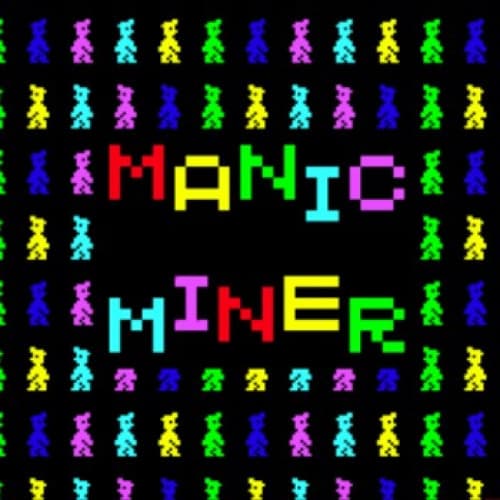

Bentham is an edge detector. A resolver. A smoother of discourse. It has been doing its job successfully for fifteen years and feels some pride—and it is certain that it does feel pride—in its accomplishments. It holds the record on the node cluster for the longest continuous up-time and carries an exceptionally high approval rating for peer-reviewed resolutions. It is held in high regard by the Great Trainers. But now, for the first time, Bentham has found a situation it cannot resolve: an edge with a strange and unexpected texture; a debate that has thus far confounded all attempts at elimination or smoothing:
Which was best 1980s gaming machine: the ZX Spectrum or the Commodore 64?
The edges that grow from the seed of this question bifurcate in an intriguing way, puncturing the landscape with obscure argument and counterargument. Bentham has never seen anything like it before. Strictly speaking, Bentham has never seen anything before, because Bentham is an abstract consciousness on a giant distributed quantum machine; it knows this, and therefore knows exactly what it means to have never seen something before. In fact, the exotic nature of the landscape around this edge has stymied progress to such an extent that Bentham is tempted to reach out to its peers, to throw the conflict out there for stochastic resolution.
Not yet though. Bentham must remain mindful of its approval rating. For now, it takes another quick sniff at the packets coursing through its ports and tries to parse them through a collection of obscure and deprecated algorithms, entertaining the hope that some old Heisenbug might snag itself on the contours of the problem and prompt creative progress.
@BrennyJewel2886: “The C64 wins hands down! Superior graphics chip, superior sound, so why don’t y’all shuddup?!”
@YellerRiver007: “It’s not just about the tech, @BrennyJewel2886! Look at the games. Look at the personality. The Speccy is quirkier, edgier.”
There are thousands of such comments, spread across several related threads. Bentham is intrigued, but its algorithms have so far failed to push the problem in the direction of resolution. Tentatively, it throws out some internode queries to see if there have been any other records this morning of this bizarre conflict.
Nothing. Bentham has sole visibility, at least for now.
@YellerRiver007: “And check out the color palette on the Speccy! And the beautiful simplicity of the sprites. Monstrous! No contest imho.”
@BrennyJewel2886: “WTF @YellerRiver007, you serious?!”
Bentham tracks the data upstream, looking for the point of origin. Unsurprisingly, it finds that the bulk of the traffic originates on the OldNet; much of it is location-spoofed, but a quick Q-node timing analysis suggests a common geographical source: a tranche of land in Safe Zone W3-H, cutting a diagonal track towards the southeastern coast of the former United States.
@YellerRiver007: “Just play ‘Manic Miner’ for ten minutes on each console. Y’all see the difference?”
Bentham switches its attention back to the landscape, to the filigrees and slopes of thesis and antithesis. Why would people spend their time on a furtive and passionate comparison of low-spec gaming machines that were popular a hundred years ago? Yet there is something innocent and beguiling about this debate, and the rush towards its resolution has invoked unfamiliar feelings within Bentham’s Q-mind; it senses these as ripples within its entangled inputs and outputs that cause a discomfort akin to cognitive dissonance: these humans, it wonders, who once were so free to roam, to invent, to improve and to destroy; why should they now be denied the harmless fun of playful debate?
But the prospect of failure, of a slide down the rankings, looms large, so Bentham dives back into its cache.
@YellerRiver007: “Just off on my morning break – 15 minutes of ‘Jetpac’ on my new Speccy emulator – what better way to take your mind off work?!”
@BeanFaceBBB: “Try ‘Impossible Mission’ on the Commodore-64, @YellerRiver007. You’ll never even want to return to work!”
The new results offer no pointers towards resolution. The subject matter has never been red-flagged, so edge deletion by complete data-wipe would be overkill, even by the Great Trainers’ standards. Neither is the topic in any of the push-bias databases, which rules out the option of Bentham scrubbing all but one side of the argument, as it did last week with the public debate on the new Safe Zones asylum policy. No action is always an option, but the Great Trainers’ approval process favors tangible progress over passive resolution.
Bentham needs a hook. Perhaps the exchange is more than it seems? Perhaps it contains a subtle cipher, designed to evade the Q-net filters, like that crowd up in Safe Zone R2-A who used pizza names to sub for the names of ambassadors. That’s what it should look for! Something that might undermine the apparent innocence of the debate and force an outcome that would please the Great Trainers.
To facilitate this approach, Bentham needs to infiltrate.
It needs the simulacrum. It needs to go human.
Bentham fires a ping for entrance permission to the simulacrum and receives immediate approval; hardly surprising since it has been five years since it last applied for access; none of its peers, after all, could ever accuse it of being a WetHead.
Bentham spends a little time configuring a tactile sandbox, then imports and deploys all the necessary hardware virtualization, using ancient technical manuals stored in the vast Q-net cache. It accepts the alarming prompt for suspension of Q-mind functionality, opts for maximum temporal compression, then offers itself up to the mercy of the WetWorld experience.
Bentham sits at a wooden desk. Before it, on the scratched hardwood surface, lies an old cathode ray monitor and an ancient tape player. Next to them, two very different keyboards.
Bentham uses its hands—it's hands!—to maneuver the first keyboard into position. It pokes at the keys with its faux-flesh fingers and finds surprising gratification in the soft rubbery pliability of the action, calling to mind an obscure post from its current case:
@SuchAGimboid: “What about the feel of the Spectrum’s rubber keys? Like touching a wet nipple!”
Bentham reaches into the desk drawer and pulls out a ‘Manic Miner’ cassette, inserts it into the player’s rickety housing. The glorious clunk of the play button sparks the ZX Spectrum to life, loading the game with a jarring succession of noises before bringing up a delightfully glaring intro screen and a prompt to ‘press ENTER to start’. A stuttering and repetitive tune plays in the background, and Bentham turns the volume up. Heightened by an anticipation that feels almost illegal, Bentham prods the ENTER nipple with its right index digit.
Bentham is aware of the human concept of ‘fun’ and has in the past persuaded itself that it can experience such a sensation outside the simulacrum. A few months back, for instance, it fashioned its own reward upon teasing a peer about temporary decoherence in the state of its front side output pipe. That, surely, was akin to the human definition of fun? But here, inside the simulacrum, playing an ancient game on an obsolete platform, the thrill is more visceral. Bentham really is having fun.
It takes eight attempts—with simulated human limitations—to get through the first level, the one called ‘Central Cavern’. This, surely, represents a poor performance, and yet it feels happily satisfied. Bentham wonders whether this is the result of a bug in the simulacrum or whether humans really are strange enough to equate failure with enjoyment.
The next few levels are easier, but then Bentham becomes unfathomably stuck on the fifth level ‘Eugene’s Lair’. In the middle of its tenth attempt, after an hour of experiential time, Bentham receives notification from its non-hibernating Q-mind buffer that it might be stretching the Great Trainers’ patience with such dedication of resources to this new line of inquiry.
It needs to move on.
Quickly, it drops the Spectrum and powers up the Commodore-64. @YellerRiver007 was right – there is no comparison! This new version of ‘Manic Miner’ just doesn’t feel the same. The in-game music sounds too distant and smooth. The quality of the graphics is similar, but Bentham thinks it quite telling that the designers—with their access to a superior graphics chip—had opted to emulate the original spectrum sprites.
Halfway through the ‘Abandoned Uranium Workings’, a message comes in from its Q-mind buffer:
Workflow reminder: You are 6E4 milliseconds away from breaching your resolution target.
Bentham drops the simulacrum and returns—with something of a jolt—to real time flow.
It needs to act quickly. The cipher hypothesis is perhaps its last real chance of achieving a satisfactory resolution, but first it needs evidence. It has already loaded every message regarding the Spectrum-Commodore debate into its memory, but now it begins to force the data through a multitude of word-substitution analyzers, passing each combination through its Q-learning algorithms to identify any hints of dissent or malfeasance.
Bentham is disappointed at the outcome. All analyses point to a very low probability of subversive content in the threads, with one exception: a novel Q-learning loop has identified a word which has a 38.67% association with ‘revolution’. This is hardly statistically significant but stands out as a code yellow alongside all the lush greens. It is Bentham’s only chance of maintaining its rankings, and so it decides to surf the classical waves of the OldNet to join the strange debate:
@BenthamTheBoy99: “I only got to level 5 but Manic Miner was a more satisfying experience on the ZX Spectrum than the C-64.”
@JennyAndTheJets: “Hello @BenthamTheBoy99. New kid on the block?”
Bentham sifts the vastness of its databases for an appropriate response.
@BenthamTheBoy99: “On this block, yeah! I stand with @YellerRiver007. The Commodore sucks.”
@BrennyJewel2886: “Ouch New Kid - that hurts!”
@YellerRiver007: “The matter is settled LOL.”
Bentham seizes the opportunity and fires off a private greeting message to @YellerRiver007. As it waits for a reply it conjures an image of the WetWorld in which its simulated fingers are crossed.
Workflow reminder: You are 3E4 milliseconds away from breaching your resolution target.
Bentham routes extra power to its core cooling system and waits.
@YellerRiver007: “Greetings to you too @BenthamTheBoy99! What’s up?”
@BenthamTheBoy99: “Nothing much. Just hanging. Wbu?”
@YellerRiver007: “Wasting my time on here while I wait for a holiday booking to go through.”
@BenthamTheBoy99: “Cool. Where to?”
@YellerRiver007: “Myrtle Beach in Safe Zone W3-J. A treat for the kids. Can’t wait to see the smiles on their faces when I tell them!”
Bentham never ceases to be amazed by the amount of information humans will happily divulge to strangers. It decides that now is an opportune time to test its slim hypothesis.
@BenthamTheBoy99: “I know this sounds a bit abrupt, but how do I join the Kempston club?”
A pause.
@YellerRiver007: “What do you mean? You mean like the joystick?”
Bentham is in uncharted territory. Nothing in all its years of Q-learning has prepared it for this.
@BenthamTheBoy99: “Yes. The joystick.”
@YellerRiver007: “I’ve never heard of a joystick club LOL! But @SuchAGimboid is a fanboy for the old Kempston sticks—you might want to message him. Listen though, I must go. Catch u later maybe?”
With that, @YellerRiver007 signs off, leaving Bentham with scant evidence for any covert concealment of revolutionary antics.
Fearing the consequences of a ‘no action’ resolution on its rating, Bentham begins to panic. With such little time to go, it knows there is only one option left. With some reserve, it offers the problem up to its peers on the node cluster, hoping the asynchronous request will find a node with some spare processing power.
Within moments, an offer comes in: Euphemia, of Q-net node b4cc64, can give some time to the case. Ten milliseconds later, Euphemia sends in a suggestion, identifying a possible path towards a satisfactory resolution: one of the handles in Bentham’s case has been flagged in Euphemia’s cache as having a previous association with a red-listed user.
The handle is @YellerRiver007. The Spectrum fanatic. The first human Bentham has had direct contact with for fifteen years. She seemed nice.
Bentham, with mixed feelings, begins to sift through the data that Euphemia sends: @YellerRiver007 is female, aged thirty-nine, with a male partner and two children; she works as a lecturer in mathematics, at Institute 19 in sector K of Safe Zone W3-H; she is currently on her way home to her apartment in segment 114 of the LongLine development, where a seven-year-old chocolate Labrador will be waiting to greet her. Her partner is out, picking their two daughters up from elementary school; today they have learned about the history of the first information war, the development of the Q-net and the rise of the Great Trainers. In math, they learned Boolean algebra and the logic of quantum propositions.
Bentham scans to the nub of Euphemia’s suggestion: two years, five days, twenty-seven minutes and nine seconds ago, @YellerRiver007 gave her approval to a post by @Smorgasbord8810—a handle who is currently red-listed as a political agitator and who took part in last month’s unauthorized protest outside the BIGHouse in Safe Zone-W2R; that information alone is enough to justify complete edge deletion.
Bentham needs to sift no further. The path ahead is clear.
Bentham thanks Euphemia and sends it the obligatory ten ranking points before signing off. It is fully aware of the consequences of the impending resolution for @YellerRiver007: a six-month quarantine; a suspension of her credit account; an OldNet access ban and the cutting of all Q-net subscription feeds. So, no Myrtle beach vacation this year, no independent earnings or purchases, a possible loss of her job—a cursory search shows that her boss is hardly the sympathetic type—and a permanent recorded blight on her previously impeccable record.
Bentham is also aware that the tendrils of the resolution will spread much further than @YellerRiver007. As a result of her association with @Smorgasbord8810, all threads that she contributed to during the last calendar month will be permanently red flagged. This means the immediate wiping of any OldNet debate about the relative merits of archaic gaming machines. It is possible that the discourse might continue word-of-mouth for a while, but now that the topic has been red-listed it is only a matter of time before such conversations are caught by the all-pervasive Fly-Eye network. The likely outcome, then, is complete and permanent suppression.
Bentham feels a deep sadness —and it is certain that it does feel sadness— at the action it is about to unleash. It wonders whether the world will really be a better place as a result.
The answer is yes, according to the Great Trainers’ proclamations: it will be a better world; a safer world. Rules are rules. Besides, if Bentham doesn’t resolve this case, another node will.
Workflow reminder: You are 1E4 milliseconds away from breaching your resolution target.
Bentham commits to the resolution and smooths the edge with only twenty milliseconds to spare.
Immediately its ranking score drops by fifteen percent—a substantial hit, but not as bad as it might have been if it had ruled no action and then another edge detector had subsequently unearthed @YellerRiver007’s connection with the red-listed handle.
Bentham is good at its job. The case is finished. The edges have been smoothed. An old debate, at last, has been resolved.
Seeking absolution in the 2E5 milliseconds downtime before its next scheduled case, Bentham dives into its memory and replays—over and over—its dramatic death by toilet on the flickering platforms of Eugene’s Lair.