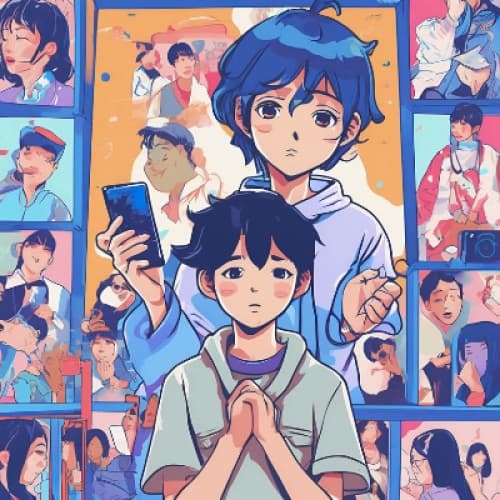
In the heart of Mumbai, under the neon lights that flickered like stars, ten-year-old Rohan lived a life so different from his friends that it felt like a dream—at least for his mother, Nalini. She had discovered early on that her son was a natural performer, bursting with energy and laughter. What started as home videos shared with friends quickly morphed into a viral sensation, launching Rohan into the dizzying world of social media fame.
As Rohan's popularity skyrocketed, Nalini took the reins, transforming their modest apartment into a makeshift studio, complete with lighting and props. She secured sponsorships, endorsements, and even auditions for TV shows. Every 'like' and 'share' fueled Nalini’s ambition, while Rohan—oblivious to the statistics—was swept away in the excitement, at least initially.
Amit, Rohan’s father, watched with a mix of pride and apprehension. An artist at heart, he craved creativity over capital. Lines were drawn in the household; the allure of fame tugged at them all, but Amit felt unease growing in his gut as financial pressures began to ebb. “What about his childhood?” he often wondered but seldom voiced.
Dr. Rukmini, a perceptive child psychologist, had been following Rohan’s ascent with growing concern. She noted how the incessant filming altered Rohan’s vibrant laughter. His grades faltered, friendships faded, and what was once a twinkle in his eye dimmed into a weariness that echoed through the screens.
One afternoon, with the humid air thickening, Dr. Rukmini paid a surprise visit. “Nalini,” she said gently, “Rohan's laughter may bring joy to millions, but it’s masking something deeper—exhaustion, stress, and a growing fear of disappointing you.”
Nalini flinched, anger bubbling beneath the surface, unsure if the doctor's words stemmed from jealousy or genuine concern. Rohan was a star, wasn’t he?
Meanwhile, Inspector Kumar conducted an investigation into child labor practices among influencers. He had seen too many children trapped within the glittering façade of fame, coerced into exhausting hours and toxic environments. It was a grim shadow overshadowing the exuberance.
His unexpected visit one evening rattled the family. “You’re at the edge of risking your son’s childhood for fleeting fame,” he warned Amit, who fell silent beneath the weight of the truth.
As the weeks rolled on, Rohan became a puppet of the internet, and his breakdown during a live stream marked the beginning of his demise—exhausted, he cried in front of thousands, the weight of their expectations crashing down on his small shoulders. Overnight, the video became viral—but for all the wrong reasons. The laughter that once united viewers spiraled into concern, pity, and critique.
The next evening, tears welled up in Rohan’s eyes, spilling over as he addressed his parents. “Mummy, Papa, why can’t I just be like other kids? Why can’t I play without performing?” Silence hung heavily in the room as Amit and Nalini exchanged looks that screamed guilt.
That night, the family reached a turning point. Nalini, trembling but resolute, announced her decision: “I need to step back. Rohan’s happiness matters more.” Amit nodded, finally on the same page, the shadows of his earlier hesitance washed away in relief.
Dr. Rukmini extended her support, crafting a plan to help Rohan reintegrate into a life of learning and friendship, free from the digital spotlight.
However, the road ahead was riddled with obstacles. Sponsors were entangled in their financial expectations and threatened to sever ties if Rohan didn’t continue. The digital world was unforgiving.
As Rohan sat in his classroom, surrounded by peers who saw him as just a regular kid, a new chapter began—not just for him, but for countless others wrapped in similar struggles. Inspector Kumar, undeterred, pressed onward in his mission, sending ripples of hope into the murky waters of the influencer landscape.
What will happen next? Will fame continue to overshadow childhood joy? Will families choose authenticity over popularity?
Rohan broke into a soft smile that no camera could capture—a genuine smile, reflecting hope, innocence, and the promise of second chances. As life unfolded, it became a reminder of society’s responsibility to protect its most cherished treasure: its children.