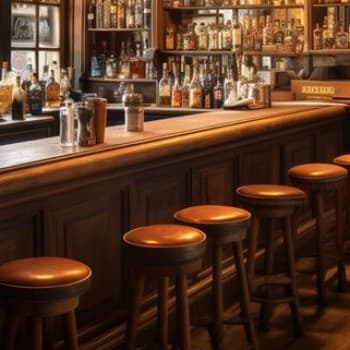
All you can eat was a bar for low-level men like me. It was the 1920s, and the latest plague of the century had hit our small town. All the fruit and trees went rotten, like our morals.
Due to our small payment fees, I was advised—or more so forced—to sleep with the other bartenders upstairs. We had a small attic, with mattresses cramped together for all ten of us.
The space was indeed too small for the number of workers we had, but it was the only choice we had. That said, we became our own weird little family.
"Edmund! Help me out; the bedsheets are stuck," one bartender shouted. We'd all jump at the opportunity to help. All of us were starved and exhausted, but the one thing we had was our will... until the plague hit.
"There's a storm coming!" one of the bartenders hollered.
"Repair the works!" another shouted. I ran outside and guided a few stranded civilians into the warm shelter of the bar. Once everyone was inside, I rolled down the metal gate and locked the door.
The other workers brought the people blankets, coats, and a free drink for all their troubles, but something bothered me. This storm was unlike any other storm I'd seen.
One week later, it was revealed there had been some climate change, something unfamiliar at that time.
We pulled out a large brown box and twirled the tiny wheel; it was our way of communication.
"We've received some devastating news, there's been lots of crazy weather these past few days, a tsunami on the east and a flood in the north, destroying multiple buildings along with innocent lives", the news reporter said, the radio shut off and I ran to the attic with my fellow friends, outside our bar is filled with water, the ground invisible beneath disastrous amounts of wreckage. I could already sense the change in the other bartenders... fear.
Two weeks later, our customers and workers were starved to the point of fatigue and unconsciousness. We'd foraged and hunted, but nothing was out there except wreckage.
Finally, the bar manager arrived, sneaking through a crack in the door. "I see, loss of food is everywhere, I've spoken to the presidents and we've come to some... agreements", the owner revealed.
He got us to put the customers in line. An elderly woman comes up to me as I have to write down answers to a list of questions.
"Are you higher upper-class or lower-class? " I read out the question.
"Lower-class," the elderly woman responds, and I gesture for her to one side of the room as I grab a stamp to place on the paper to signal finished. We separate the customers into groups of upper-class, middle-class, and lower-class.
Then, we received lists of food portions for each class. Once everything was organised, the new eating plan began. But after a while, the lower-class people disappeared without a trace. Most of them were customers who complained about the upper-class privileges.
I asked my questions about it, but they ignored my existence, acting like I was a burden or the face of reasoning they didn't want to confront.
One day, I sat on my bed eating, when three other people disappeared.
I raised my fork to bite on the meat and felt something slimy and wet. I pulled it out, and my face paled; it was someone's eye. I jumped off my bed and waved it around.
"We're eating people! The owner lied to us!" I warn them, but they keep eating nonchalantly.
"We know," a guy confesses, and my blood runs cold. "What?" my voice comes out sharp and raspy. I considered them family, yet here they were, confessing to being a part of a heinous act.
"I don't understand. Why?" I ask my best friend, Radford. My friend walks circles around me; I barely recognise him.
"Because we're starved, " he replies.
"We were starved before", I retort, but Radford shakes his head.
"It wasn't the same, we HAD food, but our owner was an dickhead who wouldn't share... but now, there's no one to rely on, no certainty... no control", Radford comments. The other bartender nods, explaining his reasoning.
"What happened to you all?" I question, my voice laced with disdain, horror and disgust.
"We stopped fighting with our darkness and let it embrace us instead," Radford explains as he looks at me in an unreadable way. Times have changed, and morals can't exist if everyone is gone to starvation." He reasons with me, receiving a scoff.
"Yeah, so why not go ahead and kill them first?" I say sarcastically.
"That... is exactly what we do. Time is running out, and food is coming to an end, so decide... will you stick to your morals... or your needs?" Radford interrogates. The workers leave me alone in the attic as I think and consider each word.
A slow smile creeps up on my face.
I KNOW WHAT TO DO.