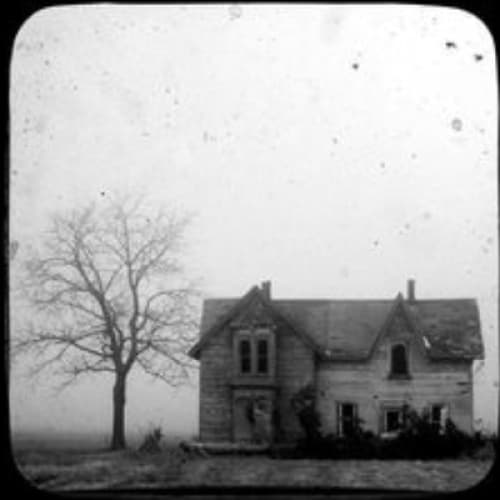
In a forgotten corner of the world, nestled between shadowed trees and whispering winds, stood an old house with peeling paint and a crumbling fa�ade. It was here that a boy named Eli lived, confined to the dimly lit rooms and narrow hallways of his home. Eli was crippled from birth, his legs twisted in ways that made walking impossible. His mother, Lydia, was his only companion, leaving every day to forage for food and other necessities.
Lydia often spoke of a dark past - one that Eli never fully understood. His father had left before he was born, vanishing into the night as if swallowed by the very shadows that now surrounded their home. As Eli grew, so did the mystery of the house. It was said among the villagers that the house had its own will, and it was not easily left behind.
One foggy evening, as Lydia prepared to venture out for supplies, Eli gazed out the dusty window, his eyes catching the fleeting light of the setting sun. A chill ran through him, but he brushed it off, attributing it to the evening's gloom. His mother had always warned him never to try leaving alone, for the house - once considered a sanctuary - held a secret that kept them bound within its walls.
Despite her warnings, Eli's curiosity grew with each passing day. One night, driven by a mix of courage and desperation, he decided to test the house's limits. With great effort, he managed to drag himself to the front door, a glimmer of hope in his heart. As he reached for the handle, a cold, unseen force pressed against him, making it impossible to grasp the door. Fear gripped him, but he steeled himself, determined to uncover the truth.
In his explorations, Eli discovered a hidden room behind a false wall in the basement. The room was filled with old books, faded photographs, and peculiar trinkets. Among them was a journal, its leather cover worn but still intact. Eli opened it with trembling hands, revealing entries written by his father - a man who had been obsessed with a curse linked to the house. The journal detailed rituals and incantations intended to break the house's grip on its inhabitants, but the final entry was incomplete, a mere fragment of the truth.
One entry stood out: "The house is not a prison but a protector. It feeds on the fear and despair of those within, binding them to a purpose greater than themselves." Eli's heart raced as he read these words. The house had always seemed alive, its creaks and groans echoing with a life of their own. Could it really be protecting them?
The next day, Lydia returned with a solemn expression, carrying a heavy sack of supplies. She noticed the open journal and immediately knew what Eli had discovered. Tears welled up in her eyes as she confessed the truth: the house was cursed, but not in the way they had believed. It had been designed to keep them safe from a greater evil - one that would have consumed them had they left.
Desperation turned to resolve as Eli and Lydia faced the truth. They could not leave the house, but the house's protection came at a cost. It fed on their fears and regrets, holding them close to shield them from a darker fate. The journal's final, incomplete entry revealed that the only way to break free was through an act of pure selflessness and love - one that Eli and Lydia had to undertake together.
As the days passed, Eli and Lydia worked tirelessly, performing the incomplete ritual described in the journal. Their bond deepened as they confronted their fears and regrets. One stormy night, as lightning illuminated the sky, they completed the ritual, a wave of intense energy surging through the house.
When the storm subsided and dawn broke, the house's oppressive grip seemed to lift. Eli, with Lydia by his side, approached the door once more. This time, it opened effortlessly, a symbol of their newfound freedom. Yet, as they stepped outside, the house seemed to whisper one last secret, a faint, almost imperceptible cry that echoed in their hearts.
The villagers spoke of seeing them emerge, but their fate remained uncertain. Some said they had escaped forever, while others whispered that the house's curse had simply changed form. In truth, Eli and Lydia had discovered that the house, while a prison, had also been their guardian, and their journey had transformed their understanding of freedom and protection.
The true escape was not from the house itself, but from the fears that had bound them. As they walked away, the house stood silent, a sentinel of love, regret, and discovery, leaving behind a lingering question: Had Eli and Lydia truly escaped, or had they merely become part of the house's eternal story?