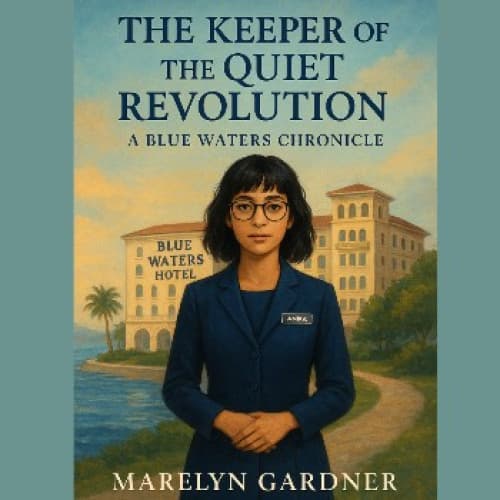
The decay at the Blue Waters Hotel was a subtle corrosion, felt more than seen. It was in the way the salt-laced breeze from the Marine Parade seemed to carry the sigh of the staff. It was in the slight delay between a guest's question at the front desk and the hollow, scripted response. The hotel itself, a landmark of Durban's golden mile with its iconic curved facade overlooking the Indian Ocean, was as beautiful as ever. But its heart, Anika felt, was beating a tired, arrhythmic pulse.
From her station in the lobby, with its soaring ceilings and timeless, slightly dated elegance, she was the hotel's chief diagnostician. The problem wasn't the stunning sea views from the balconies or the vibrant energy of the swimming pool area. The problem was the people paid to uphold that magic.
She saw it in Benjamin, a bellhop whose university dreams were slowly being crushed by the weight of endless suitcases. His uniform, once worn with pride, now seemed to hang on him like a shroud. She heard it in the silence of Lena from Housekeeping, whose cart, laden with linens for the hotel's 262 rooms, seemed to push her further into the ground with each passing day. They were drowning in a sea of demands, their spirits as worn as the patterned carpets in the corridors.
Management's response, from the well-intentioned but harried Mr. Singh, was a cascade of "Ineffective and Demotivating Leadership." Memos pinned in the staff room fixated on the microscopic: "Pool Towel Retrieval Rate Down 5%!" *"Check-in Time Exceeding 3.5-Minute Target!"* They were trying to cure a patient by counting its coughs while ignoring the raging fever.
Anika's "Profound Emotional Intelligence" allowed her to see the truth. The staff's exhaustion wasn't a personal failing; it was a systemic one. They were given impossible schedules, treated as cogs in a machine, and then chastised for not producing warmth.
The catalyst was a rain-soaked Friday. A tour group, their plans for uShaka Marine World ruined by the storm, had taken their frustration out on the staff. Anika watched Benjamin absorb the vitriol of a soaked and angry man, his face a mask of stoic misery. Later, she found Lena in a housekeeping nook, not crying, but simply staring at the wall, her hands resting on a stack of towels as if she lacked the strength to lift even that.
That night, in her small flat in the Berea, the sounds of the city a distant hum, Anika opened the "Blue Waters Family" WhatsApp group. It was typically a stream of logistical dread. She began to type, her words a form of gentle archaeology, digging for the dignity buried under the fatigue.
"I want to speak of the strength that goes unseen," she wrote. "Today, I saw Benjamin stand as a breakwater against a tide of frustration. I saw Lena, whose own spirit must be weary, ensure every room was a sanctuary. These are not small things. They are the quiet acts of valour that hold this hotel together. Thank you for your fortitude."
She attached a single, powerful emoji: a lighthouse.
The digital silence was profound. Then, a single rose appeared from the head of Housekeeping. Then, from Bennie, the chef at the poolside grill: "We see you, Ben. We see you, Lena. Stay strong."
Benjamin, reading the message, felt a crack in the ice around his heart. The shame of the day began to melt. Anika had reframed his humiliation as heroism.
This was the genesis of Anika's quiet revolution, a masterclass in "Unassuming Leadership and Influence." She became a collector of stolen moments, a curator of invisible excellence.
She wrote of how Lena, while cleaning a family room, had noticed a child's drawing left on the desk. Instead of discarding it, she had placed it in a cheap frame from the pharmacy and left it on the bedside table with a note: "This masterpiece deserved to be displayed. The Hotel Art Curator." "Lena," Anika wrote, "you didn't just clean a room. You honoured a child's imagination. That is the soul of why we are here."
She celebrated Samuel, the kitchen porter, who had used his lunch break to teach the new dishwasher how to stack plates silently, a lesson in "Non-Verbal Communication and Teamwork."
But Anika knew praise was merely oxygen. The staff were suffocating from a lack of rest. The scheduling was a brutal, rotating shift pattern that allowed for no real recovery. She needed to address the source of the smoke. She requested a formal meeting with Mr. Singh.
In his office, with its panoramic views of the pool and the ocean beyond, she presented her case with "Strategic Persuasion and Data-Driven Empathy." She had not come to complain, but to consult.
"Mr. Singh," she began, her voice as calm as the ocean on a windless day. "Our reviews on Booking.com are still strong for 'location' and 'views,' but they are declining in 'staff friendliness' and 'value for money.' A tired employee cannot be friendly. An overworked employee makes mistakes that diminish value."
She laid out her own analysis. She showed him how Benjamin had worked 16 days straight, how Lena's 18-room quota was unsustainable, how the constant turnover was costing more in training than a slightly higher payroll would.
"Look at the pool, sir," she said, pointing to the glorious, curved expanse of water. "Guests see a paradise. Our staff see a relentless cycle of wet towels and sunscreen-stained loungers. We are asking them to manufacture magic, but we are not giving them the time to recharge their own batteries."
She presented a revised, staggered scheduling model, a testament to her "Operational Intelligence." It was designed around the concept of "reset time" guaranteed consecutive days off to allow for actual rest.
Mr. Singh stared at the plans, his mind wrestling with the budget. "Anika, the owners... the bottom line..."
"Sir, with respect," she said softly, her gaze steady. "What is the cost of a broken spirit? What is the price of losing a guest forever to the hotel down the road because our service has no heart? We are not just selling a room with a sea view. We are selling a feeling. And feelings are created by people who are allowed to feel themselves."
Her words, delivered not as an attack but as a truth long unspoken, landed with the force of a revelation. Mr. Singh, for the first time, saw the human cost of his spreadsheets. He approved a three-month trial of the new schedules.
The change was a slow, deep tide. Benjamin, after his first full weekend off in months, returned to work whistling. Lena, finally able to go to Church and spend a Sunday with her family, came back with a new light in her eyes. The staff began to use the hotel's amenities themselves swimming in the pool on their days off, sharing a meal in the staff canteen that now felt like a refuge, not a prison.
The ultimate test came during the December holidays. The hotel was at 100% capacity, a maelstrom of check-ins, crying children, and overflowing ashtrays. The air conditioning in the main restaurant chose that moment to fail.
It was chaos. But a different kind of chaos.
Anika, demonstrating "Unshakeable Resilience," didn't panic. She sent a single message to the WhatsApp group: "Team, the restaurant is heating up, and so are our guests. Let's be the cool breeze. Poolside drinks and snacks, on the house, for everyone waiting."
What happened next was a symphony of "Empowered Initiative and Cross-Functional Teamwork." The rested, valued staff became a single, cohesive unit. Benjamin and the porters set up a makeshift bar by the pool. Lena's team circulated with chilled face towels. Samuel and the kitchen staff brought out platters of bunny chows and samosas. They laughed with guests, they told stories, they turned a potential disaster into the most memorable part of many holidays. They were no longer employees; they were hosts in their own home.
Watching from his office, Mr. Singh saw it all. He saw the genuine smiles, the effortless service, the guests who were not just pacified, but delighted. He found Anika later, her forehead glistening with sweat, directing traffic with a calm smile.
"You were right," he said, his voice thick with emotion. "This... this is the product."
He didn't stop there. He used the success of the holiday season and the glowing guest feedback to secure a "People & Culture" fund from the owners. He instituted cross-training, allowing Samuel to learn front desk skills. He negotiated discounts for staff at uShaka Marine World and the Sibaya Casino. He started a "Blue Waters Book Club," stocking the staff room with books on hospitality and personal growth. He had finally understood that investing in his people was the highest-yield investment he could make.
At the year-end gala, held in the hotel's conference room with its stunning ocean views, the air was electric with a new, vibrant energy. When Mr. Singh stood to speak, he didn't talk about occupancy rates. He talked about the day the air conditioning broke. He talked about pride. And when he announced the "Employee of the Year," the entire staff, from the gardeners who tended the lush palms to the sommeliers rose as one. The applause was not rapturous, but deep and resonant, a tidal wave of respect that washed over Anika.
She stood before her family, her heart full to bursting.
"You honour me," she said, her voice clear and steady. "But this award is a mirror. It reflects the strength, the compassion, and the resilience I see in each of you every day. Mr. Singh gave us the gift of time and belief. You used that gift to become the true artists of this beautiful hotel. The Blue Waters is not just its stunning views or its perfect pool. It is made of you. And you... you are its greatest treasure."
As the party spilled out onto the terrace, the warm Durban night air filled with laughter and the rhythmic crash of the waves, the last vestiges of decay were swept away. Anika had not just improved morale. Through her masterful application of soft skills—Emotional Intelligence, Strategic Persuasion, Influential Leadership, and Unwavering Empathy—she had facilitated a transformation that reached from the staff schedules to the very soul of the business. She had proven that the most powerful revolutions are not announced with shouts, but are built, brick by brick, with quiet understanding and a steadfast belief in people.


