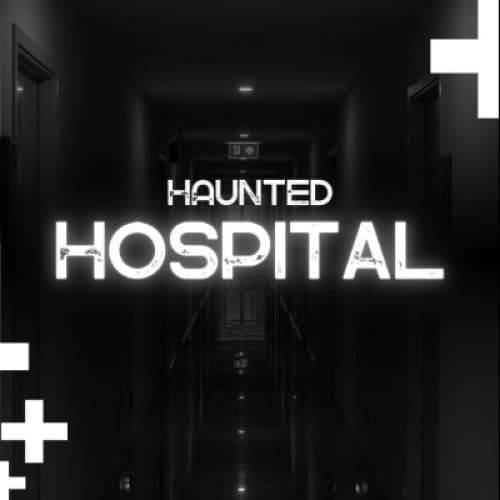

In the small town of Blackthorn, the old St. Agnes Hospital stood abandoned at the edge of a dense, fog-shrouded forest. Its cracked stone facade and shattered windows loomed like a forgotten relic, whispering dread to anyone who passed by. Decades ago, it was a bustling medical center, but a string of unexplained deaths and botched surgeries in the 1970s forced its closure. Locals claimed the hospital was cursed, built on land where something ancient and malevolent slumbered. By 2025, it was a place only the reckless dared to enter.
Clara, a 22-year-old nursing student, didn’t believe in ghost stories. She’d heard the rumors about St. Agnes—patients waking during surgery, screaming in agony as their hearts stopped; nurses vanishing mid-shift; strange shadows flickering in empty halls. But Clara needed to prove herself. Her friends, egged on by a dare and too many drinks, bet her $200 to spend a night inside the hospital and bring back proof. Armed with a flashlight, a camera, and her phone, she agreed, laughing off their warnings.
The hospital’s rusted gates creaked as Clara pushed them open at midnight. The air was heavy, thick with the scent of mildew and something metallic, like old blood. Her flashlight beam cut through the darkness, illuminating peeling paint and overturned gurneys in the lobby. The silence was oppressive, broken only by the distant drip of water echoing through the corridors. Clara’s footsteps crunched on broken glass as she ventured deeper, her camera clicking at the eerie decay—syringes scattered on the floor, a wheelchair tipped over in a corner, its wheels rusted still.
She reached the second floor, where the surgical ward waited. The air grew colder, her breath visible in the faint light. Her phone, fully charged an hour ago, flickered and died. “Great,” she muttered, shaking it. The flashlight dimmed too, casting long, wavering shadows. She pressed on, drawn to a door labeled “Operating Theater 3.” The rumors said this was where the worst incidents happened—patients who woke mid-surgery, their screams haunting the staff who fled.
Pushing the door open, Clara froze. The room was pristine, unlike the rest of the hospital. The operating table gleamed under her flashlight, its steel surface polished as if used yesterday. Surgical tools—scalpels, forceps, bone saws—were neatly arranged on a tray, their edges glinting. Her stomach churned. This wasn’t right. No dust, no decay. It was as if time hadn’t touched this room.
A low hum filled the air, like the buzz of an old fluorescent light. Clara’s flashlight flickered again, and the shadows seemed to shift, stretching toward her. She backed away, her heart pounding. “Just a dare,” she whispered, trying to steady herself. Then she heard it—a faint, rhythmic tapping, like fingers drumming on metal. It came from the operating table. She aimed her flashlight at it, but the beam caught something else: a figure standing in the corner, draped in a tattered surgical gown. Its face was obscured, but its head tilted unnaturally, as if studying her.
Clara’s scream caught in her throat. She stumbled back, tripping over a loose tile. The figure didn’t move, but the tapping grew louder, faster. Her flashlight died completely, plunging the room into darkness. Panic surged as she fumbled for the door, her hands shaking. The air grew thick, pressing against her chest. Whispers filled the room, overlapping voices, some pleading, others angry, all unintelligible. She felt cold fingers brush her neck, and she bolted, running blindly through the corridors.
The hospital seemed to twist around her. Hallways stretched endlessly, doors she hadn’t passed appeared, and the whispers followed, growing into wails. She found the staircase, but it spiraled downward far longer than it should have, leading to a basement she hadn’t known existed. The air here was suffocating, heavy with the stench of decay. Her flashlight flickered back on, revealing walls lined with old medical charts, their pages yellowed and scrawled with frantic handwriting: “It won’t let us leave,” “The surgeon is still here,” “It’s in the walls.”
At the end of the basement corridor, a single door stood ajar. Against her better judgment, Clara approached. Inside was a small room, its walls covered in faded photographs of patients—eyes wide with terror, mouths open in silent screams. In the center, a gurney held a figure covered by a stained sheet. The sheet moved, rising and falling as if the figure were breathing. Clara’s legs locked in place. The whispers stopped, replaced by a single, clear voice from beneath the sheet: “You shouldn’t have come.”
She ran, her footsteps echoing as the hospital seemed to scream with her. The walls pulsed, the floor tilted, and the air grew so cold it burned her lungs. She didn’t know how she reached the exit, but when she stumbled outside, the gates slammed shut behind her. Dawn was breaking, painting the sky blood-red. Her camera was gone, her phone still dead, but her arm bore a new mark: a faint, surgical scar she hadn’t had before.
Clara never spoke of that night, but she never returned to Blackthorn either. The hospital still stands, its windows dark, its halls silent—except for the faint tapping that locals swear they hear on moonless nights. Some say it’s the surgeon, still waiting for his next patient. Others say it’s the hospital itself, hungry for those foolish enough to enter.