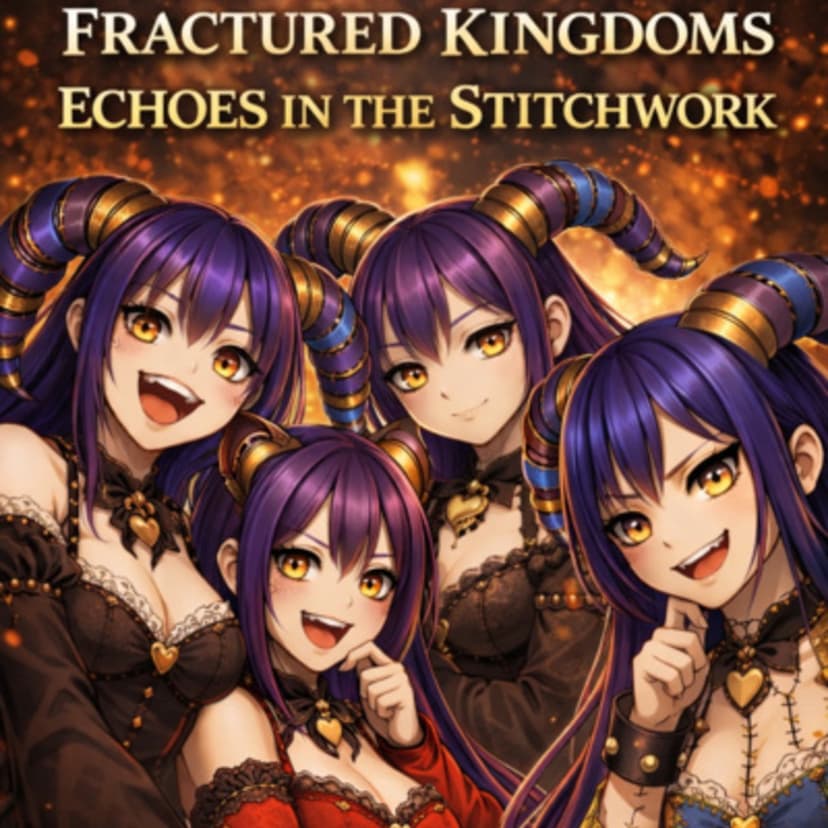
When Joker and ace falls, Seraphine doesn’t retreat. She marches straight into the inn with her people, seizes the room, and turns a moment of fragile recovery into a forced war council. Secrets are dragged into the open, alliances are tested, and no one is allowed to sit comfortably in silence. Vespera awakens—but diminished. With only a single ring left, her power and awareness are crippled, leaving her to navigate strategy and magic half-blind while the pressure mounts. The party is faced with an impossible choice: cooperate with Seraphine long enough to recover Derpy… or risk open conflict with her and the Elven Kingdom before they’re ready. Meanwhile, Derpy is no longer missing—he’s contained. Transported under heavy security, he quickly learns this isn’t a ransom or a rogue operation. The elves are testing him, probing not just for his Calamity book, but for what he is, what reacts to him, and what makes him valuable. The tone isn’t cruelty—it’s industrial. State-level. Weapons research. As the narrative cross-cuts between the inn’s strategy table and Derpy’s captivity, a disturbing truth emerges: the Elven Kingdom is manufacturing knockoff Calamity books. Worse, they’ve found a way to make them function—barely—using a mysterious catalyst. The book ends on two shocks: Derpy witnesses proof of a prototype knockoff Calamity in use. And the party’s carefully formed plan fractures as surveillance tightens, loyalties strain, and Seraphine’s “help” comes with sharper, more dangerous terms. This is no longer a rescue mission. It’s the opening move of a war—one where Derpy isn’t a pawn, but a resource everyone wants to control, and the cost of stopping the Stitchwork may be higher than anyone is prepared to pay.