


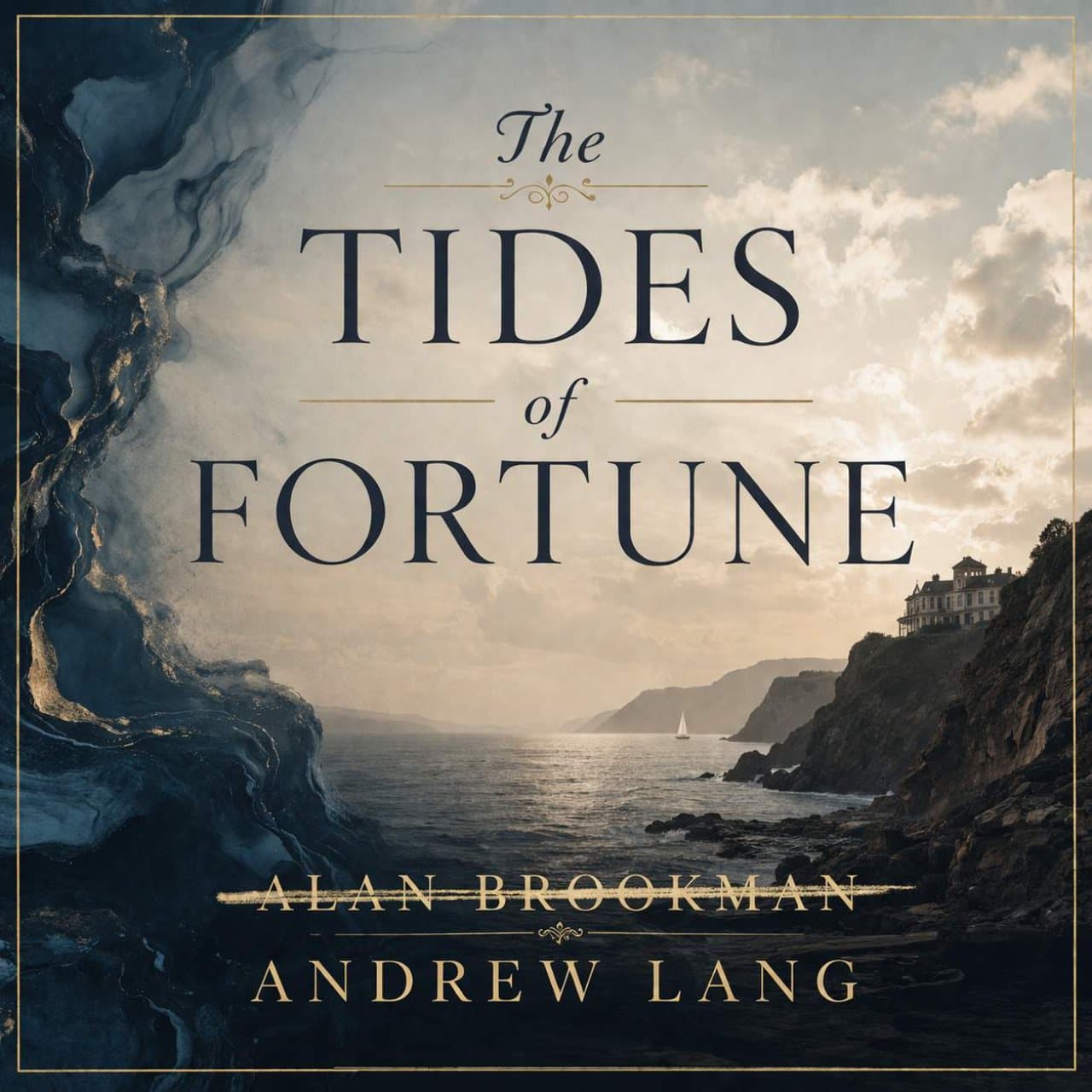
It was Alan’s idea, of course. No journalist had called in months — possibly years. Eaton-Holt had seen to it that Alan was under media embargo, claiming he prefers the quiet life. So he called them. Said he had “something the public ought to know.” The Chichester Herald sent a feature writer — Lydia Carr, mid-forties, print-era survivor, eyes that had seen too many press junkets. She walked into the café with the body language of a woman entering a dental appointment.
Alan was already there, two cups of tea deep, rehearsing candour. He rose when she arrived, polite, cardiganed, unthreatening — a man you could almost overlook. But she noted something new behind his smile: the faintly deranged brightness of someone who had stopped pretending to care.
She began gently, notebook poised. “Mr Brookman, congratulations on the new book — out next week? — that’s the third in the Tides series, isn’t it?”
Alan smiled, small and deliberate. “Out next week. And third, yes. And the second one I didn’t write.”
Her pen hesitated. “You didn’t—?”
“I didn’t write it. Or the last one. Or, if I’m honest, I wish I hadn’t written the first. There’s a kind of poetic symmetry in that, don’t you think? My name appears on three books I can no longer stand by — one morally, two literally.”
She blinked. “You mean—ghostwritten?”
“Possessed,” Alan said. “It’s a stronger word, and I think more accurate.”
Lydia frowned, intrigued despite herself. “But they’re still your books, aren’t they? Your characters, your world?”
Alan laughed softly. “My world? No, no. It’s the publisher’s world now. I’m a license agreement with legs. The books come out with my name, and I find out what I’ve been thinking about six months later. If there’s a moral in there, it’s not mine. It’s whatever sells best in Kent.”
He stirred his tea, eyes unfocused. “It’s funny, you know. I used to think the worst thing was being misunderstood. Turns out the worst thing is being accurately represented by someone else.”
Lydia looked up, surprised. She’d expected platitudes — yachts, sunsets, the ‘joy of reaching readers.’ Instead, here was this middle-aged man talking like a defrocked priest of the paperback industry.
“So why tell me this?” she asked.
“Because I’m tired,” Alan said simply. “Tired of being polite about rubbish. Tired of pretending these books are art when they’re just merchandise. If there’s one virtue left to me, it’s honesty — and that’s still free, for now.”
He leaned back, the faintest smile returning. “You know, my ex-wife used to say my writing embarrassed her. She was right. I just wish she’d said it sooner.”
Lydia exhaled — a kind of laugh. “I’ll be honest, Alan. I thought this was going to be excruciating. I’ve interviewed so many authors — self-congratulatory, evasive, high on their own supply. You’re different. Refreshing, actually. A man happily detonating his own career.”
Alan smiled. “A man finally owning it.”
They talked for an hour — about contracts, ghosts, the narcotic of minor fame. Lydia filled two notebooks. At one point she said, “If you could, would you take it all back — the success, the deals?”
Alan thought about it. “Not all of it. Just the part where I mistook being seen for being known.”
When they stood, he insisted on paying. She protested, he waved her off. “This is on the real Alan Brookman”.
Outside, the wind came off the water, snapping the café awning. Lydia turned her collar up and smiled. “You know, Alan, you should write again. Something real this time.”
For a second he didn’t answer. The words seemed to pass through him, warming something long dormant. It was absurd — he’d been praised by editors, blurbed by celebrities, quoted in trade reviews — and none of it had ever felt like this. Her sentence was simple, unadorned, and it went straight in.
He felt it in the chest, not the head — that unfamiliar pulse of permission.
When he finally spoke, his voice was small but clear. “Maybe I will.”
She smiled, not indulgently but as though she believed him, and walked off into the salt wind, her umbrella catching the light like a sail.
He watched her go, the words still burning faintly inside him.
He didn’t know it then — how could he? — but that was the afternoon Alan Brookman met his future wife.