


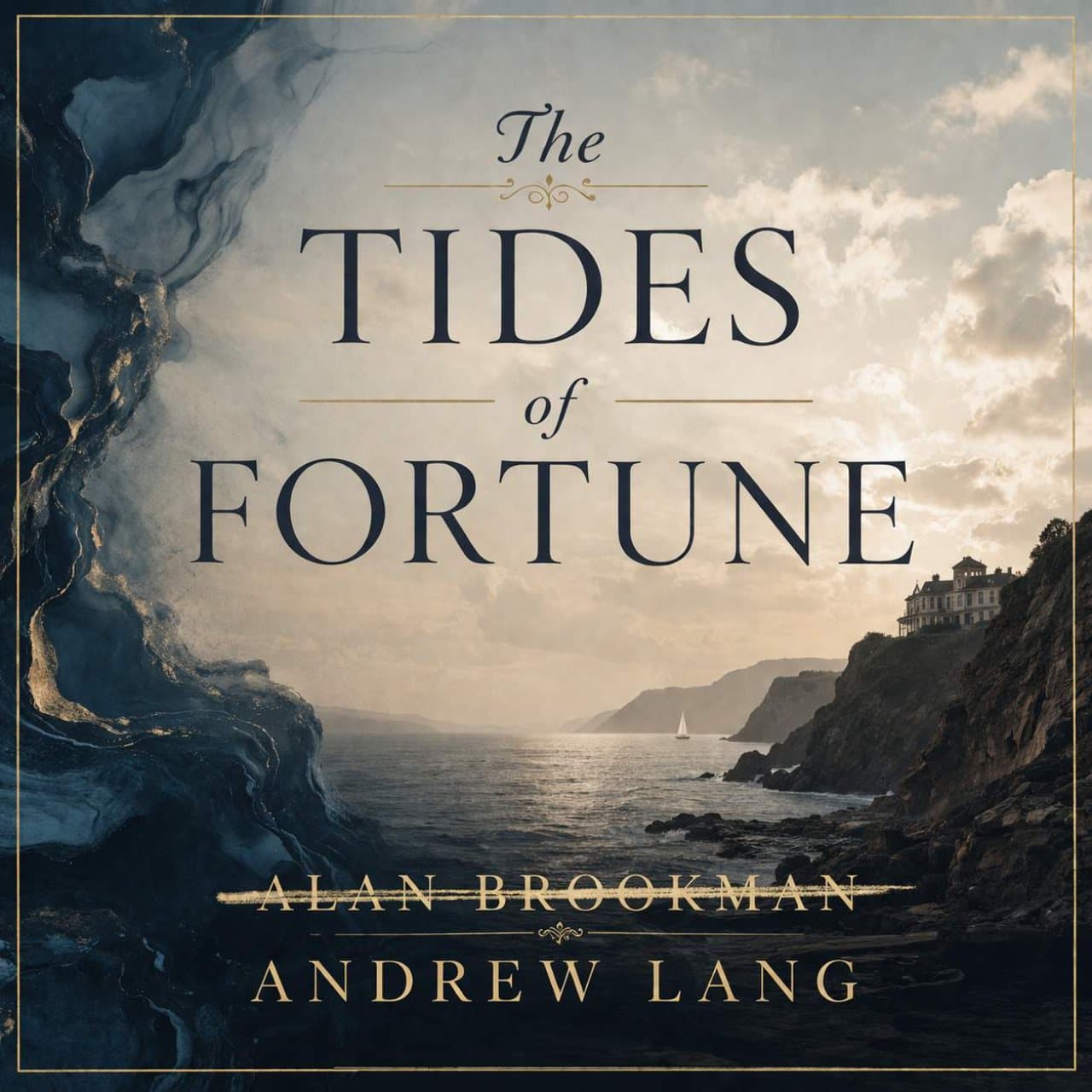
Alan came into the office sideways, clutching a vast parcel of papers — hundreds, maybe thousands of pages, tied up with garden twine. He dropped it on the desk. The impact made the lawyer’s fountain pen wobble slightly, which seemed, to Alan, a victory.
The lawyer — pale, thin, maybe forty-five, maybe embalmed — did not flinch. He simply looked at the heap with the calm curiosity of a man watching an unfamiliar sea creature breach the surface.
Alan stood, breathing hard. “That,” he said, “is everything.”
The lawyer nodded once. “Everything.”
“All the letters, the correspondence, the sales figures, my contract—”
“Ah.” The lawyer touched one corner of the stack with a single finger, as though confirming it was solid. “You’ve brought quite a lot of… context.”
Alan sat down, eyes bright. “I’m being exploited,” he said. “Held hostage, really. You might have seen my name — Alan Brookman?”
“Possibly,” the lawyer said, as if deflecting a sneeze.
“They’ve taken my name. Literally taken it. Eaton-Holt Publishing. I signed the first contract — yes, I’ll admit, I was naïve. But now they’re using my name on books I didn’t write. They’re lying to the public.”
The lawyer leaned back. “And you’d like to… sue yourself?”
Alan blinked. “What?”
“Well, the public are being misled by Alan Brookman. You are Alan Brookman. You’re alleging the misrepresentation of your own brand.”
“That’s not funny.”
“No,” said the lawyer. “Not especially.” He gave the papers another cautious glance. “Though, forgive me — you did sign a contract, yes?”
Alan launched into it: the fine print, the percentages, the publishing schedules, the way Victor Halliday had said ‘we own the name, Alan’ with that smile that meant it wasn’t a metaphor. He spoke of the Melvin Bragg debacle — “I gave them a scoop! The South Bank Show! I was offering cultural insight, moral outrage! And you know what they said? Melvin says for the level of fiction we're talking about, ghostwriting is standard procedure. That’s the phrase. Standard bloody procedure to use a ghostwriter.”
The lawyer nodded, the way doctors nod while you die.
Alan’s voice picked up again. “And now we’ve got Howard’s Way on the telly! Ever seen it? BBC, Sunday evenings, yachting and infidelity and all that? It’s mine. The whole setup — Daniel, Maria, the marina, the bloody moral compass at sea — they’ve lifted it straight from Tides of Fortune. I mean, what are the odds? What are the statistical odds of two people having the exact same idea — yachts, relationships, emotional weather systems?”
The lawyer raised an eyebrow. “I can’t say I follow television much, Mr Brookman. But from what I gather, people have started noticing yachts. That’s not a crime, is it?”
Alan stared. “It’s theft. It’s cultural theft.”
“Yes,” the lawyer said softly. “Well, if you could copyright the English Channel, I imagine Eaton-Holt would have done so already.”
Alan went on. “So I thought, fine, I’ll fight back. I organised my own book tour. W.H. Smiths, Waterstones — I called them all personally. I said, ‘I’m Alan Brookman, the author of Tides of Fortune.’ I thought, you know, the people would want to meet me. But no! They said, ‘The book’s in paperback, Mr Brookman. It’s not really appropriate.’ Appropriate! Like I was trying to gatecrash my own funeral.”
“That would’ve been three months after hardback release?” the lawyer said.
“Yes.”
The lawyer sighed softly, as if giving free advice was a violation of his religion. “I’m not a marketing expert, Mr Brookman, but that’s rather late for a promotional tour. Usually these things coincide with the release itself.”
Alan stared. “You’re saying I mistimed it?”
“I’m saying it’s possible the moment had passed. And you breached contract by promoting Eaton-Holt's brand.”
Alan shifted, frustrated. “Look, I’m stuck on a two percent deal. I can’t survive on that. But I can’t use my own name because they’ve trademarked it. Eaton-Holt owns Alan Brookman. Owns me. You see why I came to you.”
The lawyer adjusted his tie, the gesture of a man reestablishing distance. “Mr Brookman, I’ve looked over your contract. You say you want to protect your name, but I’m afraid you did the opposite. You transferred the rights — right here, clause twelve — ‘The Author hereby assigns exclusive use of their personal name, likeness, and associated branding to Eaton-Holt Publishing until the 1st of January, 1995, renewable after that date.’”
He slid a five-page document across the desk.
Alan stared at it. “That’s it?”
“That’s it,” said the lawyer. “That’s the important part. Not,” he nodded at the leaning tower of paper, “whatever that is.”
Alan reached for the papers, untied the twine, and spread a few sheets in front of him — letters, annotations, receipts, drafts. “There’s got to be something in there,” he muttered. “Something that proves I’ve been wronged.”
The lawyer folded his hands. “You haven’t been wronged, Mr Brookman. You’ve been published.”
Alan blinked. “What’s the difference?”
“About thirteen percent,” said the lawyer.
Silence settled.
Alan looked down at his hands. “So you’re saying… there’s nothing I can do?”
The lawyer gave a small, professional smile. “Well, you could write another book.”
Alan laughed once, a bark. “Under whose name?”
The lawyer checked his watch. “That,” he said, “is a philosophical question. We charge extra for those.”
Alan stared at the stack of papers — his evidence, his grievance, his ghost — and realised the man across the desk had seen hundreds like him: authors, actors, dreamers, each convinced their pain was exceptional.
To the lawyer, Alan wasn’t tragic. He was paperwork.