


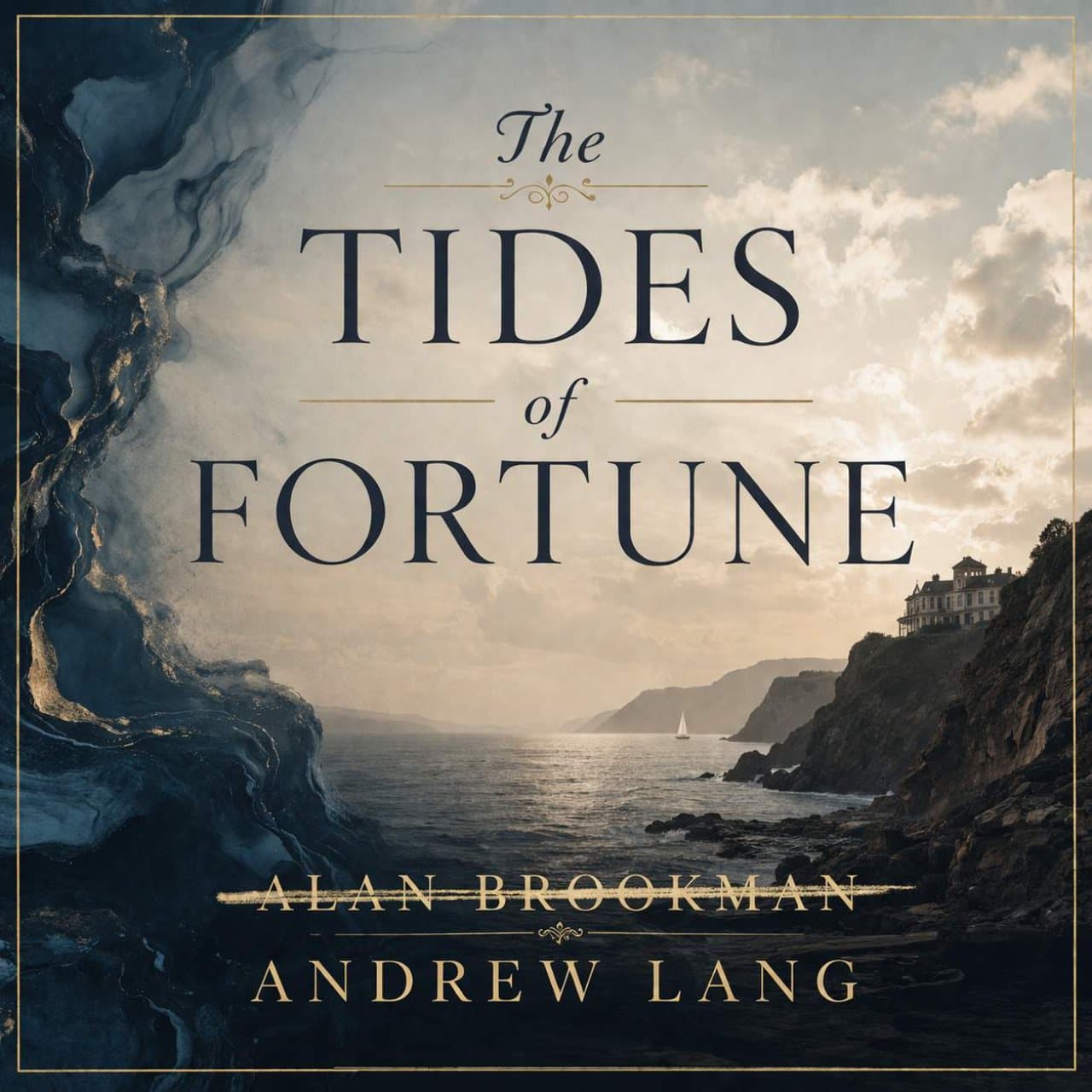
The second book had arrived without him. There it was, in the front window of W.H. Smith — Tides of Fortune II: The Long Horizon, by Alan Brookman. Alan bought the book he hadn’t written. He paid full price. He even refused the offer of a bag, as though to carry it openly might prove ownership.
He’d told himself it was curiosity, professional curiosity, but even he didn’t buy that. It was closer to voyeurism — the forbidden pleasure of reading himself as others now did: simplified, improved, repackaged.
He read it in the car, parked between a florist and a video rental shop, the afternoon light the colour of tinned peaches. The paper smelt cheap, the font earnest. He flipped to the first page and began to read.
Daniel stood at the rail, the sea spread out before him like a clean conscience. Behind him, Maria waited, patient as ever, her hands folded in that way he loved — calm, capable, certain. He would sail again, and she would wait again, and that was the rhythm of their love: the voyage and the harbour, each giving the other meaning.
Alan shut the book. Christ.
He stared out at the high street, the passing shoppers with their bags of soap and stationery, as if one of them might confirm that yes, this was drivel. But it was his drivel, improved, fortified.
The prose was too smooth, too balanced. He could never write a sentence that neat. It was like seeing his own handwriting forged, but more legible. He despised it. He admired it. He despised that he admired it.
He tried again.
Maria knew Daniel would return. She always did. There was no jealousy in her, no doubt, no storm she couldn’t outwait. She was his lighthouse, unblinking, forgiving the tides their folly. Love was not about possession, she thought, but patience — the art of holding steady while others drifted.
He laughed — a small, unsteady sound. The sort of laugh that ends in silence.
Maria. The patient, undoubting wife. The lighthouse. Always waiting, always understanding. Alan closed the book again and placed it face-down on the passenger seat, as though to suffocate it.
He hated her. He hated Daniel with his decency and his tan, his moral weather always fair.
He hated the ghostwriter for understanding exactly what people wanted — and worse, delivering it.
It wasn’t just that the book was bad — he could live with bad. It was successful. You could feel the competence in every phrase. The easy beat of sentences written by someone unburdened by doubt.
He’d always thought style was a soul’s fingerprint. Now he saw it could be stamped, factory-made, mass-produced. Fungible.
Somewhere in the text, Daniel and Maria were embracing in their spotless moral universe — and outside, Alan Brookman sat in his car, alone, rereading the lie that bore his name.
He was both reader and ghost now — haunting a world that no longer required him.