


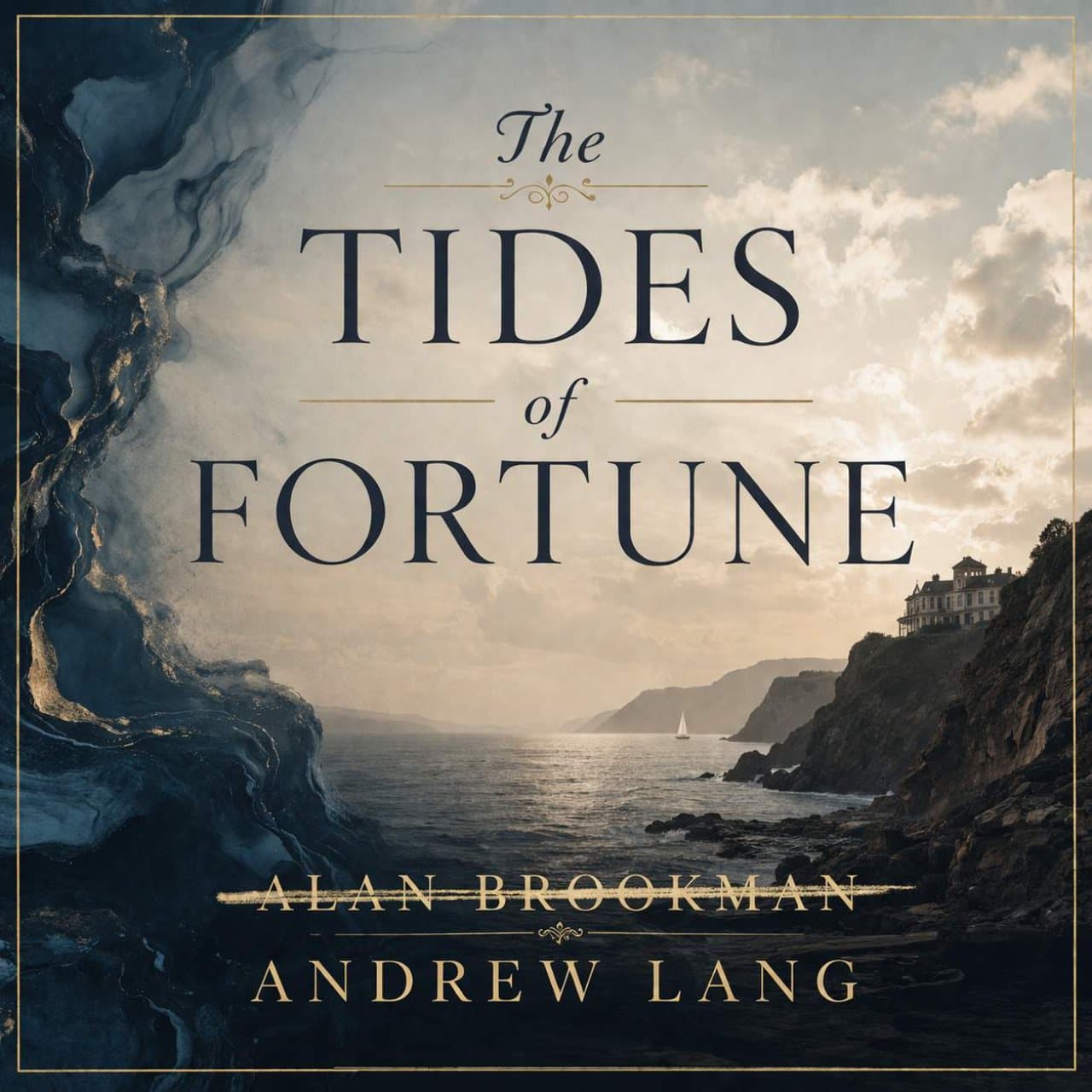
He should have been working on Chapter Two.
Safe in his study, curtains half-drawn against the day, the sound of the typewriter like distant rain. That was where he was meant to be — writing, producing, living the disciplined life of the professional author.
Instead, he was sitting in his car, on a street he didn’t belong on, in a part of town that didn’t know him.
The notebook lay open on the passenger seat, a few abandoned lines sprawled across the page: “Daniel walked to the harbour, the gulls calling like old friends.” He’d stopped after that. He couldn’t write a thank-you note, let alone bestselling prose.
His pen rolled to the floor when he shifted in the seat. He didn’t bother to pick it up.
Alan had been parked down the street for forty-two minutes. He knew because he kept looking. The car was still running — not for warmth, but as if the idling engine could stand in for purpose. The windscreen had fogged three times; each time, he cleared it with the back of his hand, and each time the same nothing stared back at him: the small semi-detached, the drawn blinds, the universe’s complete indifference to Alan.
He wasn’t directly outside, of course. He had sense enough for that. He’d parked a few doors down, angled the car away like a getaway driver awaiting a botched heist. From here he could see the door — that door — the one she’d gone into thirty-seven minutes ago.
Joanne. His wife. Alan’s own “lighthouse” he privately called her in his mind. The moral fixed-point. The radiant one. Now she was in there, in some stranger’s house, with his curtains, his carpet, his lightbulbs.
Alan’s mind had turned into a small dog, panting and circling the same questions: How long? Who is he? Why that house?
And then, movement. The door opened. She came out.
No hurry. No furtive scan. She shut the door carefully, the way you do when you expect to return. Then she walked away, not toward him — thank God — but down the road, the other direction. Head high. Nothing guilty about her posture. The body language of the entirely justified.
Alan sat there, feeling his blood carbonise. He’d imagined confrontation, a showdown, but now that she was out in the air, real and ordinary, all the air went out of him. He started the car. He didn’t follow. He just drove.
At home the air was thicker, close with the smell of leftover coffee and toast. He’d been sitting in the dark for ten minutes when the key rattled in the door. Joanne came in. Calm. Wifely. As if from errands. She didn’t even seem winded by deceit.
She put her things down. Her bag, her keys, her phone — her life, in pieces.
Alan cleared his throat, testing the air.
“Good day?”
“Fine.”
“You been out?”
“Yeah.”
“Where’d you end up?”
She looked at him like a nurse might look at a talkative corpse.
“Alan, I think we need to talk.”
He nodded too quickly.
“I think we do. I’ve been worried about you. You’ve been—”
“No,” she said. “I mean we need to talk.”
There it was. A new pronoun in an old marriage.
“Look,” she said, “I think we’ve grown apart.”
“Have we?” he said. “I don’t think so.”
“I do.”
“You’re seeing someone, aren’t you?”
Silence. The silence of confirmation.
“I saw you,” he said. “Coming out of some guy’s house today.”
She breathed out, as though she’d been saving it for this moment.
“Oh, for God’s sake. You followed me? You’re actually following me now? Alan, that’s creepy. You’re creeping around, spying on me.”
“Creepy? Why are you talking like this? This isn't you. You’ve been off for weeks. You’ve changed.”
“No, Alan. You’ve changed. Ever since that bloody book.”
He straightened. “What do you mean bloody book? It’s going well! We’re on a roll, you said—”
She laughed then. A short, breaking laugh. Not amused — relieved.
“Oh my God, it’s a relief just to say this. You know how long I’ve wanted to tell you how shit your work is, Alan? Honestly. I’m sorry to dump this all on you now, but you’ve made me put up with so much. So much ego. So much self-mythologising. That book — I mean, my God — it’s the most sterile, middlebrow, sentimental sludge I’ve ever trudged through. It’s trite, Alan. It’s cliched. It’s fiction for people who move their lips when they read.”
He blinked. “Put up with what? What’ve I—”
“You didn’t even get a good contract on it,” she said, rolling on. “You talk about art, but you let them shaft you. That’s what gets me. You’re deluded and underpaid.”
Alan’s voice came back as a rasp. “The second book, that’s where the real money is.”
“Oh, it doesn’t even matter about the money. I don’t care about that. I’m just not happy. That’s all. I’m not happy, Alan.”
And then the tears came. Not from her — from him. His face seemed to have gone rogue, twisting, leaking. He didn’t so much cry as malfunction.
She looked at him, head tilted, brow furrowed — the expression of someone witnessing a man reduced to pure awkwardness. “Oh God,” she said. Not horror, not pity. Just...cringe.
She grabbed her bag.
“I’ll be in touch. I’m staying out a few days.”
“With him?”
She didn’t answer. The door closed like punctuation.
Alan stood in the kitchen, surrounded by the debris of their domestic life. Her mug sat on the counter, the tea-bag floating like a drowned lung. He watched it sink, then rise again, like a trick of gravity.
He heard himself say, softly, “Middlebrow.” Then again, lower: “Sentimental sludge.”
The words, her words, were still warm in his mouth — radioactive, transforming, decaying his self-worth. And right there, in the slow silence of the house, he felt something internal die — cleanly, without struggle — the sentimental organ that used to believe in happy endings.