


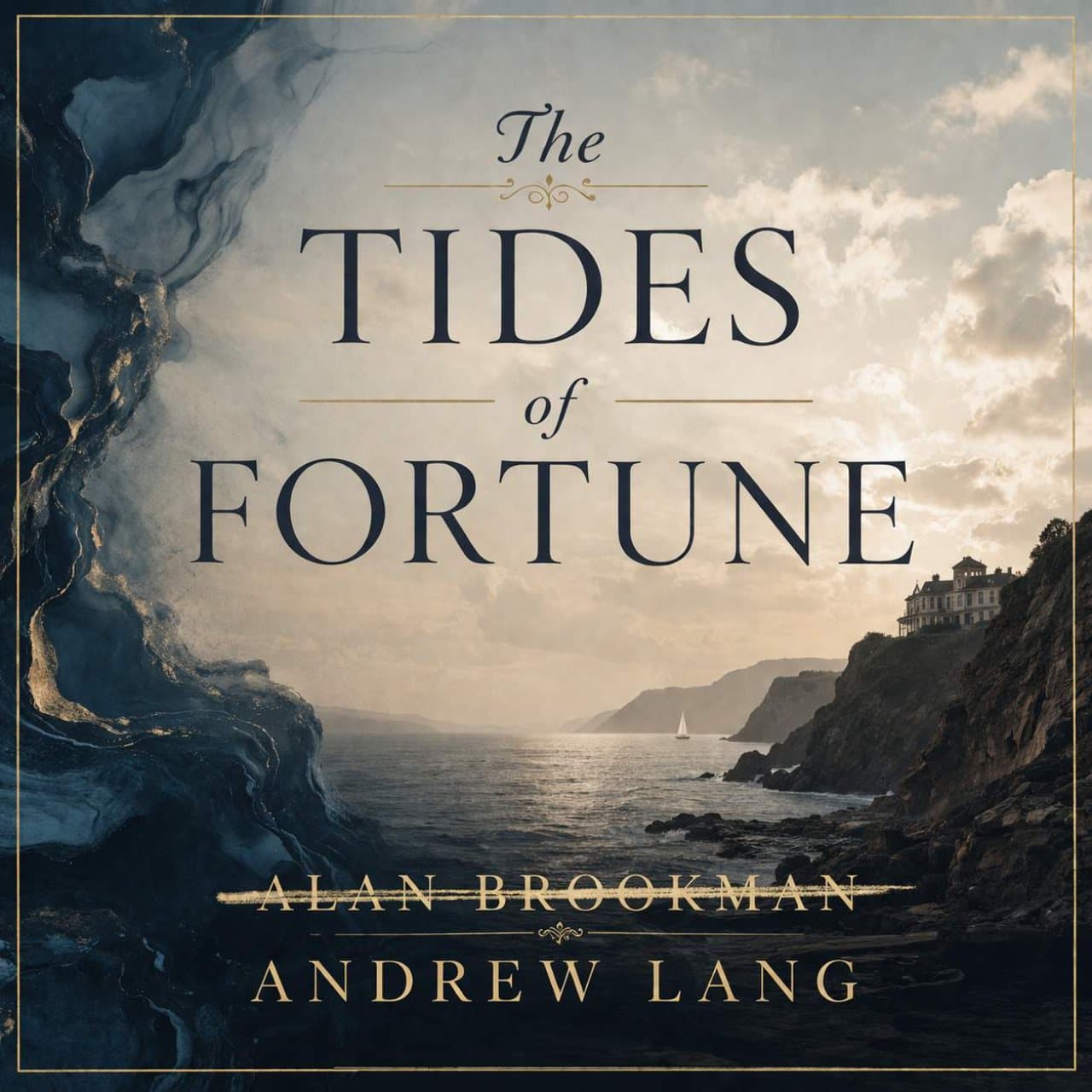
Alan had decided that success required performance. Not the crass, chat-show kind, but something more civilised: a dinner. Candles, wine, conversation — the theatre of the thinking man who’d made it.
He’d even ironed the napkins himself.
Around the table sat the approved cast: a local arts journalist with a mane like a lioness; a neighbour who’d once reviewed paperbacks for the Express; Victor’s assistant Marla, dispatched as the publisher’s “presence”; and a couple from the sailing club, recruited for ballast.
Joanne had done the flowers. Alan had done the menu.
He carved the lamb with a studied flourish, the wine doing its quiet work on his tongue.
“I suppose the challenge now,” he said, letting the sentence hang like a toast, “is whether to raise the tone. You know — higher register, deeper themes. Or stay the course. Keep the old Brookman touch.”
He smiled — that half-apologetic, half-proud grin that had become his signature expression of modesty.
“The problem,” he continued, “is that the style — the one everyone seems to like — it’s too easy. It’s almost mechanical. I could write a chapter before breakfast, and I sometimes do. And yet… it sells. That’s the conundrum, isn’t it?”
The journalist made a sympathetic noise. “Don’t undersell yourself, Alan. Accessibility is an art in itself.”
Marla nodded dutifully. “Victor says it’s your voice that sells, not the plot.”
Alan raised his glass to that, pleased. “The voice, yes. Exactly. The Brookman timbre.” He liked the sound of that — timbre — as though his prose had resonance, something orchestral.
Joanne, across the table, smiled in that thin way that could mean anything. She’d been mostly quiet, speaking when spoken to, but not unkindly. Just… absent. When the journalist mentioned how Tides of Fortune “really captured the marital dynamic,” she gave a polite laugh and topped up her glass.
“Well,” Alan said, easing back into his chair, “I’m not sure readers want Dostoyevsky with deck shoes. They want uplift. They want decency rewarded. The moral tide, turning in the right direction.”
The sailing couple murmured about how true that was, how refreshing it was to read a book where “nice things happen to nice people.” Alan nodded, as if this were a compliment and not the faintest of insults.
Joanne checked her watch.
“Anyway,” Alan said, recovering, “book two’s on the horizon. Victor wants the first draft in six months — says we’ll catch the Christmas market if we move quickly. I told him, ‘Victor, you can’t rush quality.’”
He grinned, waiting for the laugh that didn’t quite come. “Still,” he added, “I suppose I’d better prove him right. Can’t disappoint the goose that lays the golden yacht.”
He gave a small, private grin — the sort of joke only he seemed to get.
Later, as he cleared the plates, he heard Joanne telling Marla that she envied her the London life, the variety. Her voice was light, unconcerned.
Alan poured himself another glass and stood in the doorway, watching the candlelight play across the empty glasses, the wine stains on the linen. The dinner had gone well, he told himself. Very well indeed.
Outside, the street was hushed, the neighbours’ windows glowing. Success, it seemed, was a kind of quiet.