


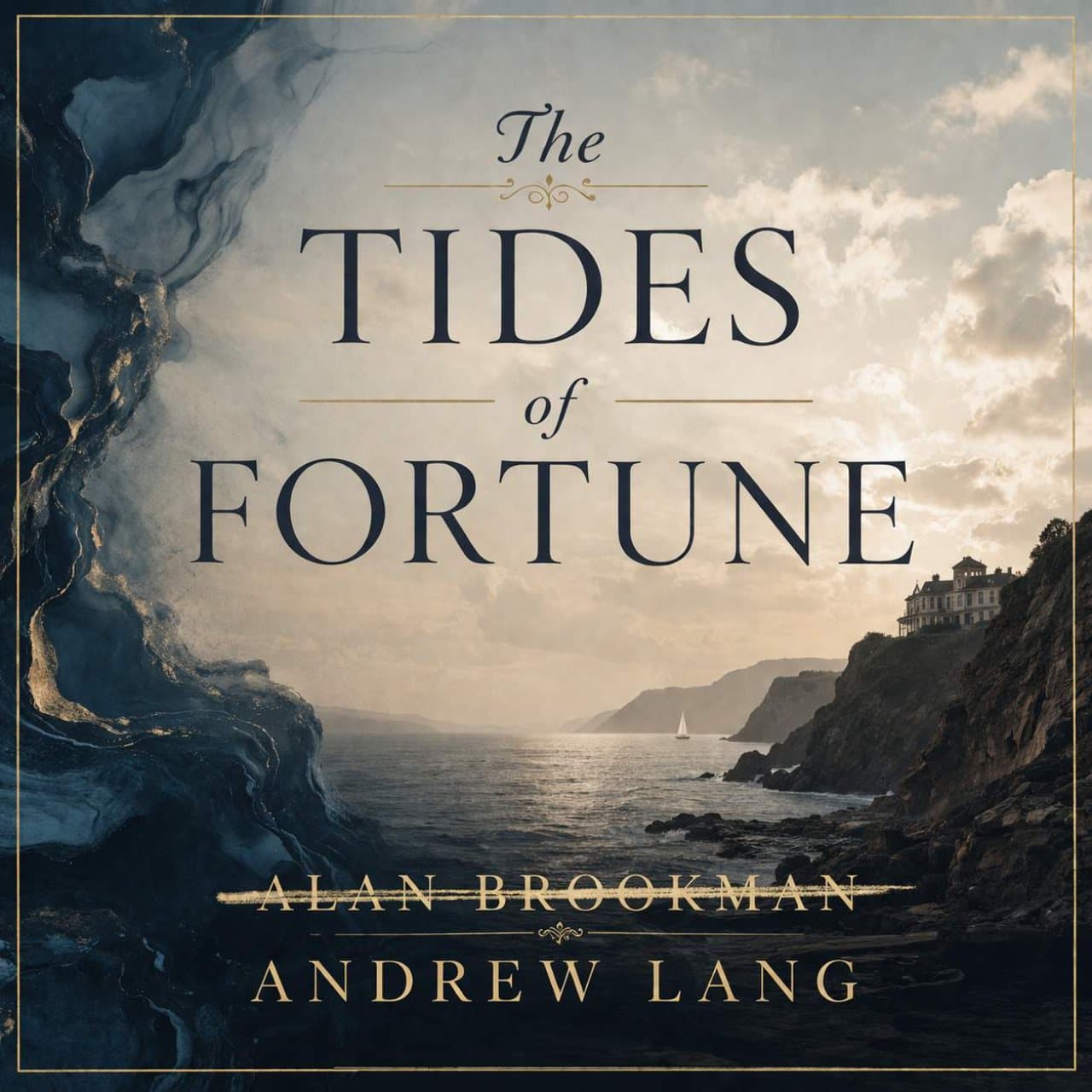
The week after the Whitbread, London was still slick with its own applause. Alan Brookman, golden boy of middle England, sat in his publisher’s office (Eaton-Holt) on Great Marlborough Street. Outside, Soho hummed with neon and exhaust; inside, the air was all mahogany, coffee, and quiet triumph.
Victor was in his shirtsleeves, his tie loosened in the manner of a man so successful he could afford informality. “Alan, my boy,” he began, opening his hands as though releasing a dove of goodwill. “You’ve done something I haven’t seen in twenty years of publishing — you’ve built a world that people actually want to live in. Do you know what The Telegraph called Tides of Fortune? ‘A novel of decent men in indecent times.’ That’s you, Alan. You’ve caught the national mood. They love Daniel — love him. The good man in the bad world. The family, the wife, the kids — all of it.”
Alan smiled, trying to appear modest but feeling gloriously inevitable. “I think people respond to the moral struggle. To doing the right thing. And then, the home life. His wife, Maria. She's like...Daniel's lighthouse.”
Victor nodded, approvingly paternal. “They respond to Daniel. He’s your everyman Odysseus — steady hand at the helm, bad weather, worse company. The drug smuggling, the dead body at sea — but always the anchor of home. It’s adventure with a conscience. And that’s what we’ll give them again.”
Alan leaned forward, alive with vanity. “So, you want a sequel?”
“I want a series.” Victor’s voice dropped to a conspiratorial purr. “Book Two, Book Three — we’ll keep Daniel afloat for a decade. He’s a franchise, Alan. A moral franchise. Housewives, executives, kids at boarding school — they all want to know what happens next. We’ll grow this thing together.”
Victor opened a folder, sliding a document across the desk with a magician’s flourish. “And here’s where it gets serious. That first contract — two percent net. I’ll be honest, Alan, you got stitched up. But this—” He tapped the fresh typescript. “This is the proper deal. fifteen percent of the hardback cover price, ten percent for the paperback. If book two sells as well as book one, that takes you into the millions, Alan.”
Alan’s eyes widened. “Now that sounds like a proper deal.”
“No funny business. You’ve earned it. You’re the goose that lays the golden yacht, my friend.”
They both laughed. Victor passed him a fountain pen, fat and heavy as a relic.
Alan flicked through the pages with an air of casual literacy. His eyes skimmed the legal topography: subclauses, schedules, definitions. It might as well have been Latin. The important part was there in black ink — fifteen percent on hardback cover price, ten percent on paperback. Numbers as clean and round as a promise.
He told himself there was no need for fuss. Trust was implicit — mutual, almost noble. If I succeed, we all succeed, he thought. They were partners now, comrades in prosperity. He was the name, the face; they were the machinery behind it.
He signed with a small, satisfied flourish — not so much a signature as a coronation.
Victor smiled, slow and professional.
He gathered the contract with delicate hands, sliding it back into the folder as though tucking away a secret.
Alan rose, euphoric, his imagination already adrift on the next story: Daniel in new waters, new temptations, new triumphs. He could almost smell the salt air, the diesel, the moral clarity.
Victor poured two measures of whisky. They clinked glasses.
Alan grinned, basking in the gold light of his own promise, already picturing his next success glinting on the horizon. He didn’t see the shape beneath the surface — the dark, still rocks waiting for men who mistake shallow waters for safe passage.