


After my father died, we came to learn things that deeply shocked and saddened us.
There were actions and circumstances that we, as his wife and children, had not fully understood during his lifetime.
Reconciling those revelations with the man we knew was not easy.
The father I knew was kind.
He was gentle.
He was devoted.
He supported us.
He cared for us.
He was present.
He loved his family deeply.
At the same time, I have learned that a human being can be complicated.
A person can carry both goodness and mistakes.
A person can be loved deeply and still make choices that hurt others.
A person can have weaknesses without every good thing they did becoming meaningless.
I do not want to create a false version of my father.
I do not want to pretend he was perfect.
He was not.
He had a temper.
He used words I disliked when he was angry.
He could be stubborn.
He had choices I disagreed with.
He made decisions that caused conflict.
He carried his own imperfections.
But none of that erases the father I knew.
I also do not want to excuse what should not be excused.
Truth matters.
Responsibility matters.
If something was acquired through questionable means, then it should not be defended simply because the person who did it was loved.
I believe that.
That is why, after his death, I wrote to my family that we would not knowingly benefit from anything that was not right.
We would take moral responsibility for what could be corrected.
We would protect our mother.
We would choose truth over rumours.
We would choose dignity over public arguments.
We would choose forgiveness without pretending that everything was perfect.
I do not want to carry bitterness.
I do not want to spend the rest of my life speculating about what happened.
I do not want to allow other people’s opinions to define my father.
I know the man who came home every day.
I know the man who peeled onions.
I know the man who bought vegetables.
I know the man who took us to school.
I know the man who searched for my red shoes.
I know the man who watched me admire mountains.
I know the man who attended to every need of his family.
I know the man who loved his daughters.
I know the man who worried about his wife.
I know the man who helped people around him.
I know the man who forgave.
I know the man who gave.
And I also know that he was human.
I do not need to make him a saint to love him.
I do not need to deny his mistakes to remember his goodness.
I can hold both truths.
I can love my father.
I can acknowledge his mistakes.
I can protect my mother.
I can choose what is right.
And I can still forgive him.
That is the kind of peace I want.
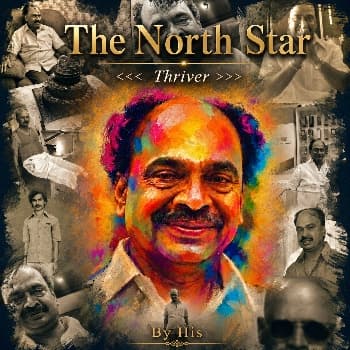
I do not carry a photograph of him with a garland because I do not see him as inactive.
I cannot imagine him as still.
I remember him alive.
Moving.
Working.
Laughing.
Dressing well.
Going to temples.
Buying food.
Helping someone.
Being my Appa.
That is how I will remember him.