


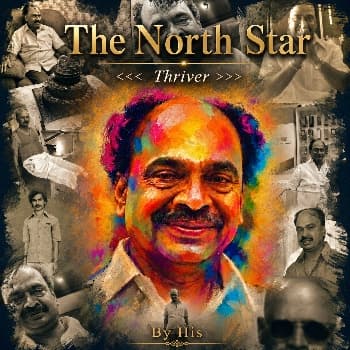

I learned something from my father that I hope I will never forget.
A person should be shaped by love, not by pain.
Even when life is difficult.
Even when childhood is hard.
Even when circumstances are unfair.
My father had every reason to become bitter.
He had grown up with very little.
He had worked odd jobs.
He had known poverty.
He had carried responsibilities far beyond what one person should have had to carry.
And yet, somehow, he did not allow the hardships of his childhood to become the only thing that shaped him.
Instead, he tried to give us the life he had never had.
He gave us what he had missed.
He gave us more.
Sometimes, perhaps, he gave us too much.
But I had almost everything I wanted as a child.
Sometimes, more than enough.
There is almost nothing I remember wishing for and not having.
I had not even asked for many expensive things.
But now, looking back, I realise that perhaps I did not need to ask.
My father had already done his best to give us everything he could.
I had forgotten how much he had already given me.
As I grew older, I changed.
I became more minimalistic.
I began to believe that I needed less.
My father, in some ways, became the opposite.
Perhaps that was because he had grown up without much.
When someone has spent their childhood wishing for things they could not have, sometimes the desire to provide remains inside them forever.
He liked nice things.
Good clothes.
Good shoes.
Sunglasses.
Jewellery.
Beautiful things.
He enjoyed the feeling of being able to provide.
And I understood that more as I grew older.
I also understood that my father had his own contrasts.
He could be strict about discipline and completely careless about his messy table.
His table was always full of things.
Papers.
Small gifts.
Objects.
Memories.
Things he had collected.
Things he had been given.
Things he had probably forgotten he had.
He never wanted to clean it.
And I could not understand how he could live with such a mess.
I am almost the opposite.
I like things organised.
Clean.
In their place.
This was one of the many things we quarrelled about.
I would look at his table and feel frustrated.
He would look at my need for order and probably feel equally amused.
Perhaps he believed that life looked best when it was messy.
And perhaps I believed that life looked best when everything was where it belonged.
Even our messiness was different.
But some things were completely alike.
My father loved photographs.
He loved surprises.
He did not smile easily for everyone.
But he smiled for me.
And when he did, his smile was long and beautiful.
It changed his entire face.
I gave him many small gifts over the years.
Nothing extraordinary.
Just little things.
But he treasured them.
He kept them.
And somehow, many of them ended up on that same messy table.
The table I wanted to clean.
The table he wanted to leave exactly as it was.
My husband also loved surprising him.
Whenever we visited our hometown, whether we were coming from nearby or travelling from far away, there was always something special about arriving unexpectedly.
My father loved those surprises.
I had imagined one more.
I had planned it in my mind many times.
I had imagined the moment I would arrive.
I had imagined his face.
I had imagined his surprise.
I had imagined how he would react.
I had rehearsed it in my mind.
I had dreamed about it so many times.
But that surprise will remain unfinished.
There are some dreams that never get their final scene.
One of mine was to surprise my father one more time.
I will never know how he would have looked at me.
But I know how he would have smiled.
And perhaps that is enough.
There is one food that always takes me back to him.
Biriyani.
At any time, my father could buy me my comfort food.
If any events offered Biriyani, he wouldn’t miss the chance to take me there.
He liked almost everything I cooked, even when I was still an average cook.
He loved my chutneys.
He loved my biriyani.
He was a mindful eater.
He was strict with portions.
But his taste buds wanted to taste the best things.
He knew good food.
He enjoyed good food.
And when he loved something, he loved it properly.
Even food became a language between us.
A way of saying:
I know what you like.
I thought of you.
I brought this for you.
That was my father.
Even when he was busy, he was thinking about what would make someone happy.
Another fond memory is that no one saw Appa with grey hair because he dyed it so often, and he used to try different creams and oils to keep his skin and hair healthy.
Ironically, he would say he wanted to use my extra hair to make a wig to fix his baldness.
I also cannot think of my father without thinking of Diwali mornings.
Around four o’clock in the morning, before the day had even begun, he would wake us up with the largest chain of firecrackers.
It began with a 1,000-wala.
Then a 10,000-wala.
The noise would fill the entire morning.
I hated the noise sometimes.
Today, I do not like bursting crackers because I think about the environment.
My father saw it differently.
For him, bursting crackers was a way of releasing everything.
A way of bursting away his sorrows.
A way of turning every bit of energy into happiness.
I will miss that noise forever.
I never thought I would say that.
But grief changes the meaning of ordinary things.
The noise I once wanted to escape from has now become a sound I would give anything to hear again.
My father had a way of turning life into celebration.
Even when he had known hardship.
Even when he carried worries.
He would find a way to celebrate.
He would find a way to make his children happy.
And that is one of the things I learned from him.
Not to allow pain to become the only story of my life.
To make space for happiness.
To celebrate what is still here.
To continue loving.
My father loved our pets with the same tenderness he gave people.
Dogs.
Birds.
Fish.
Chickens.
He never easily said no to a pet.
He would care for them like they were human.
He would walk them two or three times a day.
He would worry when they were sick.
He would cry when they were in pain.
And when they died, he mourned them like a little child.
He would bury them in our garden so they could remain close to us.
He would perform rituals for them.
He treated their lives as meaningful.
He did not believe that love belonged only to human beings.
That stayed with me.
I also remember the way he protected me.
If someone hurt me, he was immediately on my side, fighting against the other.
If a teacher scolded me, he became like a teacher himself.
If I was in danger on the road, he became like a traffic police officer.
He would react immediately.
He would protect me.
But when it came to my own behaviour, he was not always blindly on my side.
If I was morally wrong, he would warn me.
He would try to protect me from my own choices.
That is something I admire now.
He did not simply tell me that I was right because he loved me.
He loved me enough to tell me when I was wrong.
And yet, one of the things I admired most about him was the way he could still show compassion towards people who had been cruel.
Even people who had behaved in ways that seemed inhuman.
He could still comfort them.
He could still see that they were human beings.
That was something I struggled to understand.
But I learned from watching him.
Perhaps forgiveness was one of his greatest strengths.
Revenge was never his language.
And perhaps it is one of the things I am still learning.
When I was little, I was probably the child who was beaten the most in the family.
Not because I was bad at school.
Not because I was undisciplined in every way.
Mostly because I did not eat properly.
Because I was loud.
Because I had strong opinions.
Because I saw things differently.
Because I was not always willing to quietly accept what everyone else accepted.
Perhaps my father was trying to prepare me for the world.
Perhaps he wanted me to learn how to live like everyone else when I was surrounded by people who thought differently.
Perhaps he wanted me to understand the old saying:
When in Rome, do as the Romans do.
Maybe he thought that would make life easier for me.
But I could not completely do it.
I was rebellious not only in my emotions, but also in my thoughts.
And when things became too much for me, I did not always fight.
Sometimes I disappeared.
Sometimes I became silent.
Sometimes I hid.
That was my way of surviving.
And perhaps, in the end, that is what I did one final time.
When life became too complicated, when I felt ashamed, when I felt overwhelmed, I went into hiding.
I did not know that the silence would become permanent.
I did not know that my father would leave the world while I was still hiding from it.
The days after his death were heavy.
My husband was performing the last rites.
My daughter and I were here, far away.
My daughter had a very special bond with my father.
She was his most beloved grandchild.
He was also her greatest model and inspiration.
She admired him deeply.
They talked a lot.
He would ride her, just as he had once ridden me.
She was naughty with him.
He enjoyed watching her try things.
He admired the way she never gave up.
He would quietly watch her.
And then he would tell me:
“See, she is your lesson. Keep trying hard, just like she does.”
That was my father.
Even in a child, he could see a lesson.
Even in small things, he could see strength.
And I think of that now.
Because in my dream after his death, the schoolboy version of my father came happily into my daughter’s room.
He was jumping with joy.
He had his schoolbag.
He was wearing his white shirt and khaki trousers.
He was young.
He was alive.
And perhaps, somehow, he was going to see her.
I think that is one of the things that made the dream so meaningful to me.
My father and my daughter had their own bond.
And perhaps he wanted to find her before he came to me.
The day he died, my intuition flared—I felt a sudden ache inside and couldn't sleep, knowing something was deeply wrong.
After I knew this happened, I did not cry the way people expected me to.
Mourning is personal.
There is no correct way to grieve.
I know that one day I may cry.
Perhaps I will cry when I realise that I can never celebrate him physically again.
Perhaps I will cry when I understand that there will be no more surprise visits.
No more birthday calls.
No more conversations.
No more long smile.
But grief does not have a timetable.
I had my own way of mourning.
I spoke to him.
I waited for him.
I felt him.
I avoided photographs and videos of him after his death.
I could not see him inactive.
I did not have the strength to see him still.
I wanted to remember him moving.
I wanted to remember him alive.
My friends who attended the funeral told me that he appeared to be resting peacefully.
They said he looked as though he were simply sleeping, with a smile on his face.
It was a sunny day.
And he left for his final journey wearing his favourite sunglasses.
He was surrounded by flowers and music.
It was a very Indian farewell.
A respectful farewell.
My King’s farewell.
A final journey.
I was deeply hurt for my mother.
I kept thinking about how she would live without him.
They had spent so much of their life together.
Life, however, does not stop because one person has left.
It continues.
That is one of the most painful things about death.
The world keeps moving.
People still eat.
People still sleep.
Children still go to school.
Birthdays still arrive.
The sun still rises.
Even when someone you love has disappeared from the physical world.
I stayed in close contact with my mother for few days.
I said what I needed to say.
I tried to be present in the ways I could.
And then, in a strange way, I also took my own virtual farewell.
My family and I had already had our own conflicts.
There were differences in financial decisions and in the way things were handled.
I was asked to stay away because my opinions did not match theirs.
And once again, I felt alienated.
Without my father, that feeling was unbearable.
He had always been the person who made me feel that I belonged.
So I stepped back.
I went into hiding again.
But even then, I could not completely stop caring about everyone.
I asked my husband to make sure my father had his favourite dessert.
Pista ice cream.
Everyone else would serve the food he loved.
But I knew that his favourite dessert might be missed.
So I wanted to make sure someone remembered.
That was my way of being there.
Even when I could not physically be there.
And perhaps that is what love does.
It keeps noticing the small things.
The things no one else may think about.
The things that seem unimportant to everyone else.
My father was 65 when he died.
I have found a strange peace in that number.
He did not have to suffer through a long period of old age.
He did not become completely dependent.
He was active and healthy for his age until his last day.
He took an auto to the hospital himself.
He was still moving through the world.
Still independent.
Still himself.
He left suddenly.
And perhaps that was what he would have wanted.
He had spent his entire life working.
Helping.
Providing.
Carrying.
Perhaps he finally received the rest he had denied himself all his life.
I am sad that he is gone.
But I am also peaceful knowing that he is no longer carrying the unfairness of life.
No more financial worries.
No more responsibilities.
No more pain.
No more having to solve everyone’s problems.
I imagine him resting.
And I hope he is finally peaceful.
I also believe that he has not disappeared.
His references live through my daughter.
Through anyone who carries even a small part of him.
Sometimes I see something in someone and think of him.
A way of speaking.
A smile.
A habit.
A stubbornness.
A kindness.
A love of music.
A love of beautiful things.
A willingness to forgive.
And then I remember him again.
I will never stop talking about him.
I will tell his stories.
I will talk about the boy he was.
The father he became.
The grandfather he was.
The man he tried to be.
I will talk about his mistakes too.
Because remembering someone honestly is also a form of love.
My father believed deeply in prayer.
He visited temples every day.
On birthdays and special occasions, he would perform prayers and ceremonies.
He would tell us:
“I performed these many ceremonies in these many temples.”
I used to listen.
Sometimes I would not understand the depth of what it meant to him.
But now I do.
I feel as though he has left all of us with his blessings.
I feel that his prayers are still around us.
Protecting us.
Guiding us.
Perhaps that is why I feel him near me.
Perhaps that is why I believe he found his way to Canada.
Perhaps that is why I believe he sits somewhere beside my grandparents.
Watching.
Listening.
Smiling.
And perhaps, when he looks at me now, he sees the woman I have become.
He sees the mistakes I made.
He sees the pain I caused.
He sees the things I could not fix.
But he also sees the person I am still trying to become.
And perhaps he is proud.
My father believed my husband was the second-best man in my life after him.
And he believed that he would be the first-best man for my daughter.
I loved that bond.
They were almost like a son and father.
Even though my husband was not everyone’s favourite in my family, I knew he was my father’s favourite.
My father forgave him for the pain he had caused me.
He believed that sometimes people go through bad times.
He noticed the effort my husband made to change the grey areas in his life.
He saw the goodness, witnessed his pure intentions, his devotion, deep love, constant care and how fiercely he protected us.
He saw the human being behind the mistakes.
And I learned something from him.
To see the human side.
To understand that a person can make mistakes and still have goodness inside them.
To forgive what can be forgiven.
That gave my father a peaceful ending in my heart.
I believe he knew that my husband would take care of us.
And perhaps that was one less thing for him to worry about.
My whole family has spoken about him.
We have all remembered him.
We have all mourned him in our own ways.
And underneath everything, one truth remains:
He was loved.
He is loved.
I do not think his blessings ended when his physical life ended.
I believe his prayers remain with us.
I believe the kindness he gave to people continues through the people he touched.
I believe the values he gave us will travel through our children.
Through our grandchildren.
Through the generations that come after us.
And perhaps that is the real meaning of leaving something behind.
Not only property.
Not only money.
Not only possessions.
But a way of being.
A way of loving.
A way of forgiving.
A way of caring.
A way of continuing.
I do not want to be shaped only by the pain of losing my father.
I want to be shaped by the love he gave me.
I want to take that love and give it to my daughter.
I want her to feel as rich in love as I felt as a child.
I want her to know that someone believes in her.
That effort matters.
That kindness matters.
That being different is not wrong.
That forgiveness is strength.
That love can survive disagreement.
That a person can come from nothing and still create something beautiful.
And perhaps, if I can give even one percent of what my father gave me to my daughter, I will consider my life a success.
Because my father gave me more than a childhood.
He gave me a way to love.
And now I have the rest of my life to continue it.
I know I will miss him forever.
I know there will be days when I want to call him.
Days when I want to tell him something.
Days when I want to surprise him.
Days when I want to hear his long smile.
Days when I want to sit beside him and do absolutely nothing.
But I also know this:
He did not disappear from my life.
He became part of me.
He lives in the way I love my daughter.
He lives in the way I forgive.
He lives in the way I notice the small things.
He lives in the way I try to help.
He lives in the way I admire music.
He lives in the way I look at mountains.
He lives in the way I care for the people I love.
And whenever I see even a small piece of him in someone else, I will recognise it.
I will smile.
And I will say:
“That is my Appa.”
Perhaps that is how a person continues to live.
Not in one photograph.
Not in one garland.
Not in one memorial.
But in all the little pieces of themselves they leave behind.
My father left many pieces.
And I will keep finding them.
I will keep talking about him.
I will keep loving him.
I will keep carrying him.
And one day, when my daughter looks back at her own life, I hope she will understand that the love she received from me began long before she was born.
It began with a man who once toiled.
A man who built a life slowly.
A man who gave his daughters everything he could.
A man who loved his granddaughter.
A man who prayed.
A man who worked.
A man who forgave.
A man who was imperfect.
A man who was real.
My father.
My Appa.
My North Star.
And I know now:
I do not have to become him.
I only have to keep the light he gave me burning.