


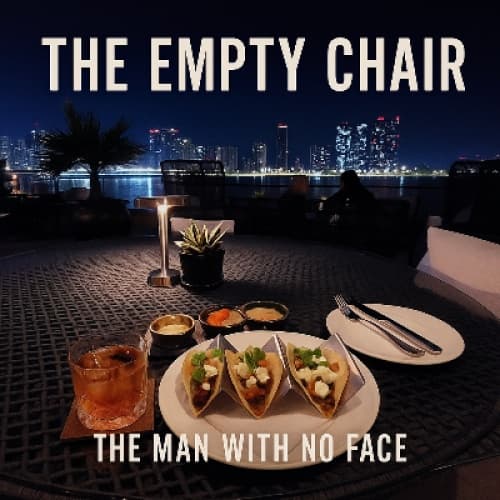

You never see his face.
The desert doesn't care. It takes names, ranks, flags, and folds them all into dust until everything looks the same. What matters here is not the face but the movement - the way a man carries himself, the way his shadow behaves when the sun punishes the ground.
The mystery man steps off the transport plane into heat that slaps him like a rival. Even at night, the desert breathes fire. The air is thick with kerosene and gun oil. Soldiers file off in a line, rifles across their chests, their boots sinking into the powdery dirt. He is not in line. He is never in line. He walks alone, unhurried, his duffel hanging from one shoulder like an afterthought.
Unlike the soldiers, he wears no insignia. Contractors are ghosts that governments hire. He's not bound by their salutes or their slogans. His paychecks come from contracts written in ink but enforced in blood. He belongs to no nation and every nation at once.
But you are always with him - the second presence, the invisible companion. You sit in the seat beside him on the transport. You walk behind him as his boots crush sand into finer sand. You wait at the empty chair he pulls out each night. He never introduces you, but he keeps you close.
---
The Forward Operating Base
The base is a patchwork of wire, shipping containers, and tan tents sagging under their own exhaustion. Generators growl like chained beasts. Spotlights carve the dark into slices. The smell is constant: diesel fuel, scorched bread, sweat baked into uniforms that haven't been washed in days.
Contractors don't bunk with soldiers. He sleeps in a steel box disguised as housing, a cot bolted to the floor, a desk barely big enough for his elbows. On the desk:
A photo of his family. His wife, smiling but with eyes that look like they've practiced too hard. A boy grinning through the loss of baby teeth. A girl whose hair tangles into questions no comb can answer.
A leather-bound notebook. Inside: codes, names, numbers, sketches of routes. Pages that smell like ink and danger.
Two objects that do not belong together - yet somehow define him. And then there's you. He always leaves an empty chair at the desk, pulls it out as if someone might use it. He sets down an extra plate in the mess hall, slides half of his bread to it. For you.
---
Streets of the Ruined City
His contracts carry him beyond the walls of the base. Into streets where buildings lean like broken teeth, their windows hollow-eyed, their doors swallowed by dust. Children chase a soccer ball stitched from rags, laughter cutting through the smoke. Women balance baskets on their heads with the grace of royalty, stepping over rubble as if it were nothing.
The soldiers walk with rifles raised. He walks with his hands low, measured. He is a foreigner who refuses to wear fear like cologne.
The locals call him *Al-Shaabah* - the shadow. They don't know his name, don't know his face, but they know his presence. He buys fruit at the markets, pays fair coin, never cheats. He accepts tea from old men who offer it with trembling hands. He does not point his weapon unless he must.
One boy sells him pomegranates. He buys two, though he knows he will eat only one. The other sits in his quarters, split open, its ruby seeds shining in the dust-lamp glow. A gift for the empty chair.
---
Fire in the Night
The first mission comes under the cloak of moonlight. He rides in the back of an armored vehicle, its metal belly rattling across uneven ground. The desert outside is silver, the dunes rising like frozen waves.
Across from him, a young soldier stares too long. Finally, the boy speaks:
"You're not military. So why are you here?"
The man lifts his water bottle, tilts it like a toast. "Because someone has to sit in the empty chair."
The boy frowns. Doesn't understand. You do.
The convoy halts. Ahead, a building crouches in the sand, hollow and angry. Intel says armed men wait inside, clutching rifles like lifelines. The air is too still. The moon leans low, curious.
He moves with the soldiers but not like them. They rush. He glides. They shout orders. He speaks with silence. When the shooting starts, it is thunder in a small room - walls bleeding dust, windows shattering into teeth. He does not flinch. His weapon cracks, short and controlled. He wastes nothing, not breath, not bullets.
When it ends, the air tastes of cordite and fear. A soldier barely older than his son lies in the dirt, blood blooming beneath him. The mystery man kneels, presses a hand to the boy's, whispers something you cannot hear. A promise, perhaps.
Later, they will say the contractor doesn't pray. They're wrong. His entire life is prayer with no amen.
---
Loneliness in the Barracks
After, he showers in rust-stained water, scrubbing until the desert refuses to leave his skin. He sits at his desk. The pomegranate waits. He cracks it open, seeds spilling like rubies. He eats half. The other half he places on the empty plate.
"You'd have liked this," he murmurs. To you. To the silence.
Outside, the wind claws at the tin roof. The generator hums like a tired heart. His shadow stretches across the wall, longer than the room should allow.
---
Letters in Ash
At night, he writes letters. Long, aching ones.
To his wife: describing sunsets that bleed red across the dunes, the way dust storms devour even tanks, the way loneliness curls into his cot like a second body.
To his children: telling them stories about stray dogs that guard the gates, about scorpions that glow under UV light, about the stars that look close enough to pluck like grapes.
To no one at all: confessing fears, carving promises, begging forgiveness.
He signs each with *Love always. Come home soon.*
Then he burns them. The desert wind carries the ashes away, scattering them like secrets it will never repeat.
---
The Man With No Face
Weeks turn into months. Soldiers rotate out. Contractors linger. His contracts stretch like shadows - longer than expected, never quite ending. He watches flights take soldiers home. He never boards. Home is always delayed. Always promised.
He doesn't complain. He doesn't explain. He just lives the ritual: an empty chair, a second plate, letters turned to ash.
You never see his face, but you know him better than anyone. You know the way his shoulders stiffen when artillery echoes across the horizon. You know the way his hand softens when he touches the photo of his children. You know the way he eats for two, prays for two, survives for two.
The desert remembers men like him. Silent. Faceless. Present.
And so do you.