



The night air smelled of iron and pine when Ruth woke up, before dawn, to the sound of her mother's cough. A weak lamp burned on the table, casting their one-room home in copper light. Outside, the Alabama fields stretched black and endless, waiting to be plucked by hands that never seemed to rest.
Ruth was Isaiah's eldest daughter - quick with a broom, quicker with a book.
By sixteen she had memorized Psalms and the names of every senator who had voted against her people's rights. But reading was still an act done in shadows.
She learned early that silence was a shield; you did not boast about knowing too much.
Every morning before walking to the white family's house where she worked as a maid, Ruth copied a single sentence into a small journal she kept hidden under a loose floorboard. Some were Scripture. Some were just her own words, jagged with anger or soft with longing:
We are here. We are watching. We will not disappear.
It was her protest. Her evidence. Her way of testifying when she had no witness stand.
The family she worked for, the Claytons, had a wide porch and peeling blue shutters. Mr. Clayton was mostly absent, off in Montgomery at "business," while Mrs. Clayton floated around the house in crisp dresses, smelling of lilac water and boredom. She called Ruth "girl," though Ruth was twenty-two with a spine like rebar.
"Girl," Mrs. Clayton would say, dropping her gloves into Ruth's hands, "you do that ironing yet?"
"Yes ma'am," Ruth would answer, eyes lowered, though her mind was somewhere else entirely - on the children at church, on her younger brothers, on the article she'd read about colored teachers being fired in another county.
At night she'd return home, hands red from lye soap and steam, and read to the little ones by lamplight. Sometimes she copied a quote from the newspaper onto the wall in chalk. Other times she read her own journal entries aloud, telling the children, "This is the truth they won't print."
Her father Isaiah was older now, shoulders stooped but voice steady. He would sit in his chair by the fire and watch his daughter, his eyes soft with pride.
"Your great-granddaddy Josiah would've been proud," he'd say.
Ruth would nod. "One day we won't just write these words, Papa. We'll live them."
But the South in the 1920s had sharpened its teeth. Lynching postcards passed hand to hand like dark currency. "Whites Only" signs sprouted on doors like weeds. When Black men tried to vote, the poll tax and the beans-in-a-jar test waited like wolves. Even the church was careful about who it invited to speak and what it dared to pray out loud.
So Ruth waged her battle quietly. She saved scraps of paper, gathered clippings from newspapers left on trains, and kept a record of every name whispered about in town - the names of people beaten for registering to vote, jailed for "loitering," or simply vanished. She stitched each story into her journal like a quilt she'd never show anyone.
One day, walking back from the Claytons' with a basket under her arm, Ruth saw a line of cars idling near the courthouse. A group of white men leaned against the hoods, hats tipped low, rifles slung casual. Another Black man, maybe twenty-five, was being led out in handcuffs. Ruth felt her heart hammer.
She lowered her eyes and kept walking, but her fingers squeezed the journal in her pocket. That night she wrote only one sentence:
They want us afraid. But fear is not forever.
She would not know for decades that her words, hidden and fragile, would one day be read by her own granddaughter as proof that history lived in their blood.
On Sundays Ruth sang in the church choir, her voice high and clean, her hymn book trembling in her hands. Between verses she'd lean to the little girls lined up beside her and whisper, "Hold your head up. God made you whole." She taught them to write their names in the margins of their hymn books, small rebellions between the notes.
Years passed like this: work, prayer, hidden ink. Ruth's younger cousin Isaiah Jr. left for Chicago, part of the great river of Black bodies fleeing the South for a different sky. His letters came back describing snow and unions, jazz and paychecks that actually matched the hours worked. Ruth read them aloud to the family, the words tasting like another life. But she stayed. Someone had to keep the record. Someone had to hold the ground.
One evening, Isaiah pressed his daughter's hands in both of his. "You're my memory-keeper," he told her. "But you're more than that. You're the seed planter. One day a child of yours will grow tall enough to see over this wall."
Ruth's eyes burned. She thought of Josiah, of Isaiah, of all the names in her hidden journal. She thought of the courthouse and the men with rifles. She thought of the little girls at church scribbling their names like secret promises.
"I'll keep planting," she said. "And I'll keep the records."
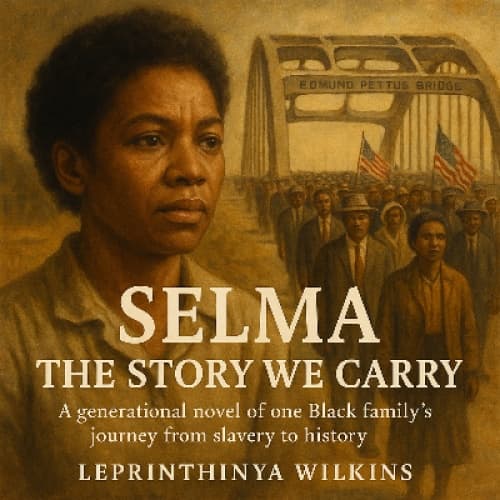
She did. Through droughts, through floods, through new laws and old tricks. Her journal grew fat with stories nobody wanted to remember. But she knew one day someone would need them. One day someone would walk across a bridge and carry them like a banner.
Late at night, she'd rock her baby niece - Sarah - in her arms, humming the old tune her great-grandfather had sung:
"Wade in the water… God's gonna trouble the water…"
Sarah would grow up with that song in her bones. And when the time came, she would know where to walk.