



The first time Isaiah held a paper that said he was free, it smelled like lamp oil and wet wood. The Union man who pressed it into his hands was tired-eyed and kind. He looked at Isaiah as if he saw a person, not property.
"Keep this," the man said. "You'll need it."
Isaiah folded the paper and tucked it against his chest like a second heart. He was sixteen, long-limbed, quick with numbers, and haunted by the memory of his father's voice: They can chain your body, but not your mind.
For a breath of years, freedom felt almost real. The church bell rang on Sundays without fear. The Freedmen's school opened in a clapboard shed, and Isaiah learned letters by tracing them with a stick in the dirt: A like a ladder, B like a door with a hinge. His hands - callused by cotton - shook the first time he wrote his own name. Isaiah Duncan. He said it out loud and waited for someone to say he had no right to it. No one did.
He married Lila under a pine tree when the air smelled of rain. They built a one-room house with their neighbors and called it home because they had nailed it together with their own hands. When their daughter Ruth was born, Isaiah went out to the field, looked up at a sky so wide it felt like a promise, and told the wind, "You're not going to own her."
But promise became bargain, and bargain became trap. Sharecropping found them like a bad debt that never died. Old masters became landlords. Contracts showed up with tiny letters that bled like thorns. "Seed and mule on credit," the storekeeper said, tapping a ledger with a nicotine-yellow finger. "We'll square up after harvest."
Harvest came, and the math never worked. Flour, lard, seed, the broken plow handle, the doctor's visit when Lila coughed all winter - each line item pulled the total down like an anchor. "Owe us half your crop," the storekeeper said, smiling like a man who never lost. "And next year we'll get you fixed up better."
Next year. Next year. Next year. Isaiah began to hate those words.
Still, he fought where he could. At night, after long days bent over white bolls that bit his fingers raw, he set a chipped plate under the lamp and taught Ruth to read by moving corn kernels along the rim. One for every word she learned.
When Isaiah Jr. came along - wide-eyed, quick-footed - Isaiah taught him numbers the way his mind loved them:
rows of kernels in tidy sums. Lila hummed while she mended clothes, a tune that braided Scripture and sorrow into something like hope.
"Ruth," Isaiah said, tapping the newspaper, "what's this headline say?"
She squinted, tongue tucked to her lip. "E-lection. New e-lection."
"That's right." He smiled. "And what's an election for?"
"To choose," she said, then grinned because the word felt big in her mouth.
"We choose."
"We do," Isaiah said. He didn't tell her that choosing, for folks like them, lived mostly in books and kitchens and church pews - places where men with batons didn't stand in doorways.
One hot morning in August, Isaiah put on the only shirt he called Sunday-clean and walked to the courthouse with three other men from the church. The steps were warm as bread. A white deputy lounged in the shade, chewing a toothpick, eyes sliding over their faces as if deciding which one to bother first.
"We're here to register," Isaiah said, holding his freedom paper because it made him brave.
Inside, the registrar sat behind a high desk that made him look like a judge. He was thin and smiling, the smile of a man who enjoyed puzzles he'd never have to solve. "Name?"
"Isaiah Duncan."
"Your age?"
"Twenty-nine."
"Can you read?"
"I can." Isaiah steadied his breath.
"Splendid," the registrar said, pulling a long sheet of paper from a drawer.
"Please recite, from memory, the third section of the Constitution of our great state, and then - if you don't mind - explain its intent."
Isaiah's mouth went dry. He knew letters. He knew words. He knew how to add a ledger faster than most men could blink. But this was a maze built to make him fail. The men behind him shifted, every boot scrape a prayer.
"I - " Isaiah began.
The registrar leaned back in his chair and sighed as if bored in advance. "Or," he drawled, "we could do the jar test." He produced a glass jar filled with dried beans: a hundred, maybe more, hard to tell through the glass. "You tell me exactly how many beans are in this jar, Mr. Duncan - exactly - and we'll get you your little card."
Isaiah stared at the jar, at the courthouse window, at the light slanting in like a blade. He saw Josiah's hands, cut and bleeding, lifting cotton to a sky that never answered. He saw Ruth's eager face sound out the word choose as if it were a door.
He closed his eyes. "I can't tell you that," he said softly.
The registrar smiled without teeth. "Didn't think so. Next."
On the steps outside, the deputy let the toothpick dangle. "Busy day for beans," he chuckled, and the laugh followed Isaiah down into the street like a dog that had picked up his scent.
That night, Isaiah sat by the lamp and watched the flame wobble when the wind found the cracks. He told Lila what had happened, each word a stone laid neatly in a row.
She listened and then pressed his hand. "You went," she said. "You tried."
"I didn't try hard enough."
"You did," she said, and her voice was the single quiet place in the world. "And you're going back."
He looked at her. "Back to what?"
"To the schoolhouse. To the children. To the church. To any place where a mind can't be weighed in beans."
So he did. On Wednesdays he swept the school and stacked readers stamped Property of the County - the kind that came to them missing covers and whole chapters, as if the truth could be rationed. On Fridays he chalked letters on the blackboard for grown men who'd never had the chance to learn them. On Sundays he stood in the amen corner, palms open, and sang with a voice that filled the cracked plaster with something bright.
When the night riders started coming - faces wrapped in sheets, horses snorting like demons - Isaiah learned how to listen to the ground. He could feel them in the tremble of the road before the dogs barked. Once they stopped at the crossroads and lit a cross too near the church. The flames licked the sky like a cruel tongue. Isaiah stood with the pastor and three deacons, hands linked in a chain the fire could not burn.
"This is our ground," the pastor said, not loudly, just true. "You don't get to name what God already named."
The riders left boredom in their wake, the kind that breaks things for sport. The next morning, Isaiah found their garden trampled, shoots flattened under boot.
He knelt, pressed the dirt back around what could still live, and whispered to the earth, "Get up."
Years turned like pages thumbed by a rough hand. Debts rose and fell like fever.
Babies were born. Lila's cough came and went. Ruth learned to write her name and then everyone else's. Isaiah Jr. ran so fast down the lane that neighbors said he could outrun rain.
On a winter night when the frost edged the window like lace, Ruth sat by the lamp, her face tipped toward the light. "Daddy," she said, "if they won't let us choose, why keep trying?"
"Because the trying is a kind of choosing," Isaiah said. "Because every time we read, every time we teach, every time we tell the truth out loud, we move the line they drew. Might be an inch. Might be less. But it moves."
She thought about that, then nodded as if setting a vow where she kept her secrets.
Spring returned mean and beautiful, as it always did. The crop promised then pinched. The ledger bit and didn't let go. The registrar changed tests but not answers. Yet Isaiah kept showing up with his Sunday-clean shirt, clean if not pressed, ironed by hope more than heat. He kept sweeping the school. He kept counting beans he refused to count.
On the day Ruth turned twelve, Isaiah walked her to the river. The Alabama ran slow and dark, and the trees bent over it like elders blessing a child.
"Your great-granddaddy Josiah used to sing by this water," he said. "Said God would trouble it. Said the trouble would wash chains off minds before it ever touched iron."
Ruth watched the current, serious in the way of girls who have already seen too much. "Will it wash them off the courthouse?"
"Not today," he said. "But one day."
"How will we know when it's time?"
"You'll feel it," Isaiah said, the truth sitting steady in his mouth. "In your chest. Like a bell. And when you do, you walk. Even if your legs shake. Even if your voice shakes. You walk."
They stood there until the sun melted into copper and the river kept its counsel.
On the walk home, Ruth began to hum a tune Isaiah knew by heart. He joined her, the two of them stitching sound across the road like a small, stubborn banner.
The next week brought another ledger. The next year brought another baby.
The next decade would bring a new name to an old hatred - Jim Crow - and nail it over every door they'd ever tried to open. But the children's hands kept turning pages. The church bell kept ringing. And inside Isaiah's chest, the bell he'd promised Ruth began to wake.
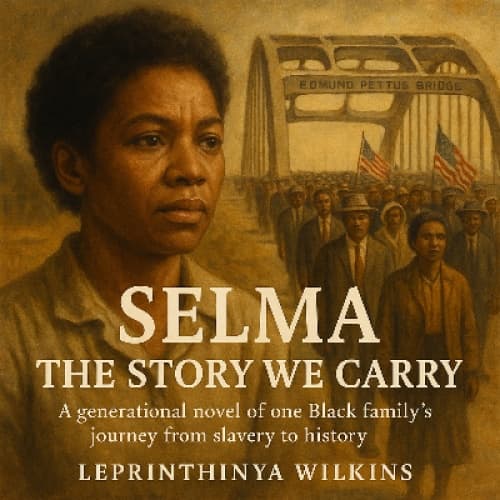
He couldn't know that one day his granddaughter would carry that sound onto a bridge and into history. He couldn't know the tear gas or the troopers or the law that would be born from blood. He knew only what Josiah had given him and what he was giving his own:
A mind belongs to God. A voice belongs to truth. And a step - however small - belongs to tomorrow.