


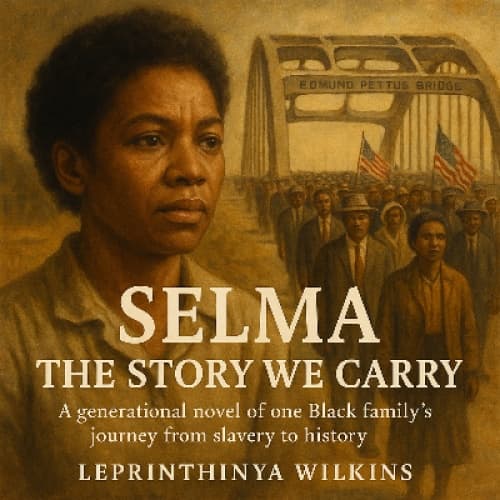

The sun rose heavy over Alabama that morning, painting the sky in streaks of gold and fire. But for Josiah, twenty-five years old and broad as an ox, the morning carried no promise. The horn had already sounded across the Duncan plantation, its shrill cry dragging men, women, and children out of wooden shacks to face another day in the fields.
Josiah's bare feet pressed into the dirt as he walked, the iron around his ankle clinking softly with each step. He had long ago learned not to fight the chains - not with his body. He had learned instead to fight with silence, with the steady fire in his eyes, the kind of fire that even the overseer couldn't beat out of him.
"Boy," the overseer spat once, tightening his grip on a whip, "you best not look at me like that."
Josiah had dropped his gaze, but only for survival. Inside, he repeated the words his grandmother had whispered when he was a child hiding in her lap:
They can chain your body, but not your mind. That belongs to God.
The cotton fields stretched endlessly before him, white bolls glistening like snow in the sunlight. But there was nothing pure about them. Each one carried thorns sharp enough to pierce skin, and by midday Josiah's hands would be streaked with blood. He bent his back and began the endless picking, fingers working in rhythm with hundreds of others who bent beside him. Children too small to pick trailed the rows, dragging heavy sacks twice their size.
A song rose low at first, barely more than a hum. An older woman with a voice rough as gravel sang, "Wade in the water… wade in the water, children…"
One by one, the others joined. Their voices carried like smoke through the hot air, soft enough not to anger the overseer, strong enough to remind them that they were more than slaves. Josiah's baritone joined last, his voice steady, his eyes fixed on the horizon. He didn't sing just for himself - he sang for his son, Isaiah, a boy of eight who watched him with wide, unblinking eyes from the edge of the field.
When the sun fell low and the day's quota was met, Josiah's body ached. But night was when he felt most alive. After the overseer's boots disappeared into the big house, Josiah sat on the steps of their cabin with Isaiah curled against him. He traced a scar across his arm, silent for a long time, before finally speaking.
"Isaiah," he said, his voice low and grave, "they can whip me. They can starve me. They can even kill me. But they will never own my mind. Do you understand?"
Isaiah nodded, though his young eyes were still learning what such words meant.
"One day, son, chains will break. You may not see it today. I may not see it tomorrow. But God sees. And when freedom comes, you hold it with both hands. Don't ever let no man tell you you ain't worthy of it."
The boy leaned closer. "Will I be free, Papa?"
Josiah swallowed, staring at the endless sky above them. He wanted to promise, wanted to say yes with the certainty his son deserved. But he had learned the cruelty of false hope. Instead, he pulled Isaiah tight against his chest and whispered, "One day. And when that day comes, you fight to keep it."
That night, long after Isaiah had fallen asleep, Josiah hummed the song again.
His voice was a prayer stitched into the darkness:
"Wade in the water… God's gonna trouble the water."
The song wasn't just a hymn. It was a prophecy.