



The first green shoots appeared quietly, almost unnoticed, in the algae trays. Tiny flecks of green against the red soil, fragile and trembling, yet unmistakably alive.
Sofia Vega was the first to notice. She knelt beside the trays in the greenhouse dome, her gloved hands hovering over the delicate sprouts. “It’s… happening,” she whispered, voice trembling. “Life is taking hold. The oxygen readings… they’re rising naturally.”
Kai Navarro crowded around, eyes wide. “It’s… it’s real! We actually made Mars breathe!”
Raj, ever cautious, crossed his arms. “It’s a start. Don’t get ahead of yourselves. Fragile ecosystems can collapse just as quickly as they form.”
Elara stepped closer, watching the tiny green shoots sway under artificial light. “After months of calculations, simulations, failures… this is what we were aiming for. Mars is awakening.”
But the awakening was not without complication. The warp anomaly still pulsed in subtle ways. Instruments recorded fluctuating energy readings. Objects seemed to shift slightly in position when unobserved. Time loops, though minor, caused the algae to appear to grow and regress in unpredictable cycles.
Sofia frowned at the monitors. “It’s not just growth. The warp residue… it’s influencing biological processes. Some plants are accelerating, others slowing. We need to monitor carefully or we risk destabilizing the ecosystem before it fully takes root.”
Kai’s enthusiasm dimmed slightly. “So… this isn’t exactly normal life? We’re… messing with nature on a scale we don’t fully understand?”
Elara placed a reassuring hand on his shoulder. “We’ve always been pioneers, Kai. Every step humanity has ever taken involved risk. But the difference now… we can observe, we can adapt, and we can learn from what Mars is teaching us.”
As the days passed, the crew saw the first visible signs of transformation. Ice in the polar regions began to soften slightly under the influence of terraforming units. Oxygen readings climbed steadily, enough for extended outdoor activity with filtered suits. Microbial colonies thrived in the soil, stabilizing nutrient cycles.
Sofia couldn’t hide her excitement. “Mars isn’t dead. Not anymore. It’s fragile, yes, but it’s alive in ways we can cultivate. One day, humans may walk freely across these plains without the need for domes or oxygen suits.”
But the progress came with new challenges. The anomaly persisted, sometimes flaring unpredictably. Instruments showed bursts of radiation and temporal distortions that could interfere with habitats or harm life-support systems. And Orlov’s influence loomed: reports from Earth suggested he continued to push for accelerated terraforming, risking everything the crew had worked to protect.
Raj addressed the team in the main dome. “We’re witnessing history. But don’t let triumph blind you. Mars is awakening—and so are the dangers that come with it. We survive by staying vigilant. We thrive by acting together.”
Elara nodded. “This planet will teach us patience. It will test our ethics, our resolve, our ingenuity. And it will reward those who respect it.”
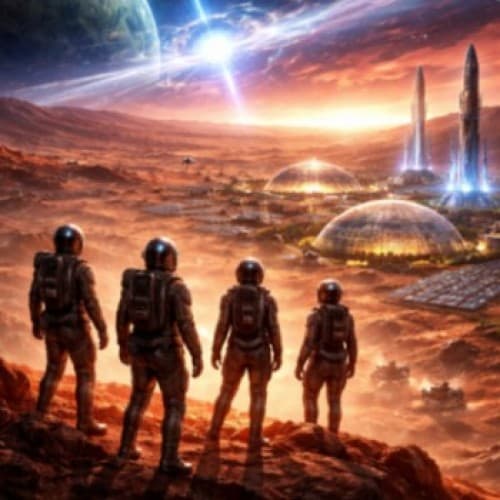
That evening, the crew gathered on the observation deck, looking out over the slowly transforming landscape. The sun dipped low, casting a golden-red glow across the plains. Tiny green patches in the domes glimmered like jewels against the red dust, a promise of life, growth, and the future.
And somewhere, faint and almost imperceptible, the warp anomaly pulsed—a quiet reminder that their triumph was only the beginning. The universe had been stirred, and it was already watching the first green heartbeat of Mars.