


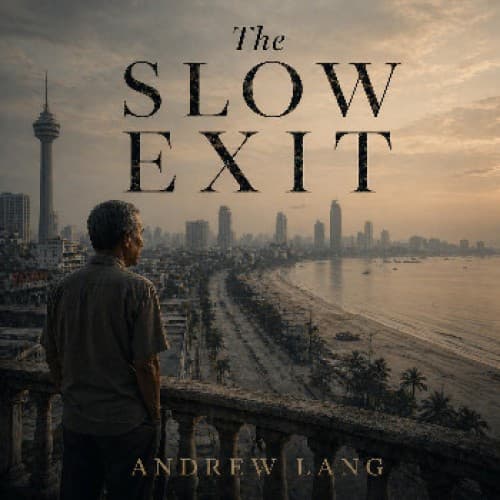
The lights on the west side of the river had gone out three days ago.
Officially, it was scheduled maintenance. Unofficially, it was the first phase of withdrawal. The engineers didn’t call it that. They called it “load shedding” or “resource reallocation.” But in the control room, they had a different word for it now.
Consolidation.
Suthep sat at his terminal and watched the map of Bangkok shrink.
On his screen, the zones blinked red one by one. Bang Khae. Nong Khaem. Lak Si. Whole districts marked for suspension. It wasn’t a sudden collapse—just the inevitable, creeping truth: the city was too big for the number of people left in it.
There were still trains, but fewer of them. Still electricity, but rationed. Still pumps to move water from the Chao Phraya, but only to the inner corridors.
The outer neighborhoods were dying quietly.
He scrolled through the latest memo from the Ministry of Civic Order. It was careful with its language:
“Effective Q3, all residential units west of Ratchadaphisek Ring are to be reclassified as Non-Essential. Residents will be reassigned. Transit services suspended. Power limited to emergency lighting only. No new maintenance orders will be processed.”
Suthep had been an engineer once. Twenty years ago, he helped maintain the fiber optic network that served the education hubs. Back when there were enough students to justify them.
Now he spent his days inputting shutdown orders for towers he once helped wire.
He stood, stretched, and looked out the office window. From here, you could still see the Grand Palace—though it was dark, its white walls barely visible in the dusk. The government had relocated most of its operations to the Core Administration Zone near Victory Monument. The palace was mostly used for state ceremonies. Birth declarations. Fertility awards.
He remembered attending a wedding there once. Real flowers. Candlelight. Laughter.
Now everything smelled like synthetic disinfectant.
Back at his desk, he reviewed the list for “Phase 3 Containment.” Forty-two towers marked for clearance. Housing blocks from the 2040s, mostly. Poor insulation. Faulty lift systems. Not worth upgrading.
He clicked on one—Block E-14—and opened the file. Four hundred registered residents. Only eighty-six still occupied. The rest had been relocated. Or left. Or gone dark.
In the comments, someone had written:
“Elevators fail daily. Water pressure unreliable. Last child reported here two years ago. Recommend full decommission.”
He sighed and clicked APPROVE.
Another light blinked red on the map.
Outside, the rain came down in sheets. Seasonal overflow had grown worse each year—drains clogged, canals thick with sludge. There used to be teams to handle it. City crews. Now it was contracted out to drones and volunteers. And still it wasn’t enough.
Suthep packed his bag. Power in the office would cut in fifteen minutes. Evening ration cycle.
As he rode the tram home, he passed buildings that were already dark. Entire blocks silent. Once home to thousands, now empty. No one lived there. No one wanted to.
And yet, on one rooftop, he saw something strange—a light, small and flickering. A cooking fire? A solar lamp? Someone hadn’t moved yet. Or hadn’t agreed.
He didn’t blame them.
At his apartment, the hallway lights buzzed on weakly. The air recycler coughed once, then stabilized. From down the hall, a baby cried—thin, tired, alive.
He turned on the tap. Water sputtered, then ran.
Just barely.
He stared at the sink, thinking about what came next. The inner city could only absorb so many more people. Already, the schools were full. The maternity clinics booked months ahead. Space was becoming scarce, even in a world growing emptier by the day.
Bangkok was still here. But only just.
He closed his eyes and listened to the city breathe.
And wondered when they would finally say it.
That they were no longer consolidating.
But retreating.