



My mother died on a Tuesday.
Not suddenly. We had time. Time to say goodbye, time to hold her hand, time to tell her what she meant to us. Time that was precious and terrible and not enough.
She was seventy-six. She had lived a life. She had raised children, buried a husband, survived the twentieth century. She had been, in her way, magnificent.
And now she was gone.
The funeral was small. She had wanted it that way. "No fuss," she had said. "No crying. Just... just get it over with."
We cried anyway. All of us. The Boomers who had known her longest. The Gen Xers who were her children. The Millennials who had learned from her. The Gen Z who had documented her. The Gen Alpha who had loved her simplest.
We stood in the cemetery, five generations represented in the crowd, and we said goodbye to the woman who had started it all. The matriarch. The casserole bringer. The "in my day" declarer. The love, underneath it all.
And then, afterward, we went home. To the house that was quieter now. That had one less voice, one less opinion, one less "in my day."
And we had to figure out what came next.
The answer, it turned out, was everything.
My mother had left behind more than casseroles and memories. She had left us each other. This impossible, ridiculous, beautiful family spanning eight decades of human history.
Dakota, now eighteen, started a podcast about "intergenerational trauma and healing" that was actually pretty good, even if I didn't understand half the terminology.
Phoenix, now sixteen, went viral for a video about their grandmother that made millions of people cry. They used the money to start a scholarship fund for first-generation college students.
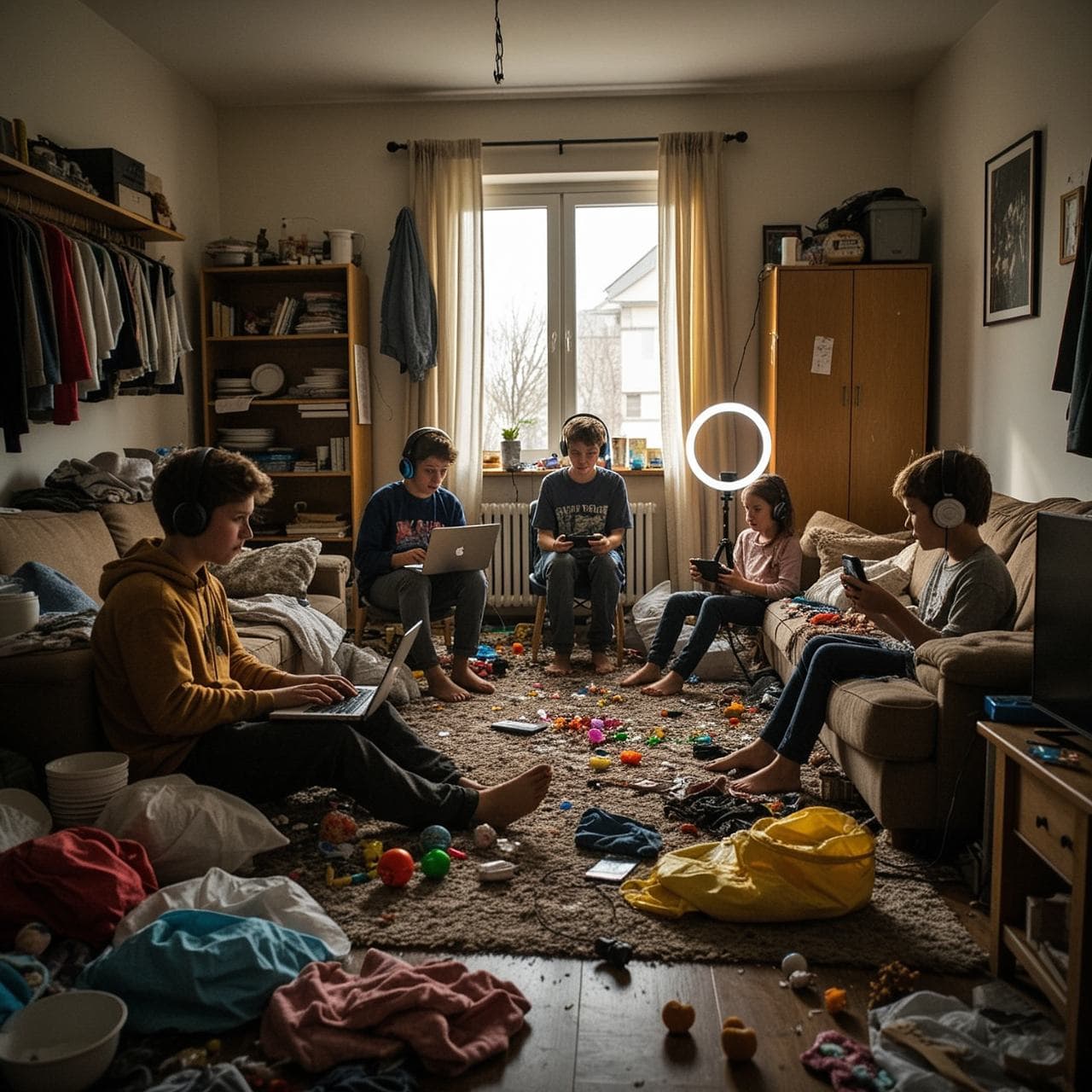
Atlas, now twelve, built a Minecraft server dedicated to preserving "vintage" technology from the 20th century. Rotary phones, VHS tapes, cassette players. Digital museums for a world they never knew.
Nova, now eight, wrote a book. Well, dictated a book to Jennifer, who typed it. A book about a grandmother who went to heaven but still sent casseroles down on special occasions.
And Morgan, now thirty-six, had a baby. A little girl named Patricia, after my mother. The first of the next generation. The first of the Gen Betas, or whatever they would be called.
We gathered for the baby's first Christmas, all of us, in the house that was too small and too loud and too full of love.
And I looked around at my family—this collection of humans who shared nothing but blood and stubbornness and the determination to misunderstand each other while loving each other fiercely—and I thought about what we inherit.
Not money. Not things. Not even casseroles, though those were important.
We inherit the arguments. The "in my day" and the "okay boomer" and the "that's very Gen X of you." We inherit the technology gaps and the communication failures and the constant, exhausting, beautiful effort of trying to understand each other.
We inherit the love. The trying. The showing up, even when we don't want to, even when we don't understand, even when we would rather be anywhere else.
We inherit each other.
The Silent Crew was not so silent anymore. They had found their voices, their purposes, their ways of being in the world. They were still impossible. Still frustrating. Still the creators of all chores and the avoiders of all responsibility.
But they were also magnificent. Each in their way. Each carrying forward something from the generations before, even if they didn't know it. Even if they would never admit it.
Dakota had my mother's stubbornness. Phoenix had her flair for drama. Atlas had her practicality. Nova had her heart.
And Morgan, holding baby Patricia, had her legacy. The next generation. The next chapter. The next "in my day" waiting to be declared.
I raised my glass, there in the living room with the mismatched furniture and the Wi-Fi that still sometimes didn't work and the memories of casseroles past.
"To Mom," I said. "To the Boomers. To all of us. To the mess."
"To the mess," they echoed.
And we drank, five generations of chaos, and called it love.