



The silence in the West Virginia hollows wasn't empty. It was heavy, like a woolen blanket soaked in cold creek water. It pressed against Jamie’s chest, demanding to be felt, a suffocating reminder that the world had kept spinning while her own axis had snapped in half.
Two brothers. Two separate headstones, carved in the same gray granite, tucked into the damp earth of the family plot just over the ridge. They weren't just names; they were the laughter that used to rattle the windows of their shanty, the scent of motor oil and stale tobacco, the only two people who had ever looked at her and seen a person rather than a problem. Now, they were just statistics buried under the rot of the woods, another pair of hollow-eyed boys lost to a poison that had turned the valley into a graveyard.
Jamie stood on the ridgeline, her boots sinking into the mossy carpet of the forest floor. Below, the trees were skeletal, reaching up like desperate fingers clawing at a leaden sky. There was no birdsong here, no rustle of squirrels in the underbrush. Even the wind seemed to hold its breath, terrified of what it might witness if it dared to blow too hard.
It was an insult. The landscape was beautiful, indifferent, and vast, while the injustice that had hollowed out her family was microscopic, synthetic, and calculated. The law called it an overdose—a tragic, quiet accident. They looked at the empty syringes and the blue-tinted lips and saw failure. They didn't see the supply chain. They didn't see the ledger.
She reached into the inner pocket of her canvas jacket, her fingers brushing against the worn, leather-bound edges of the map. It was a chaotic geography, lines drawn in ink and sweat, connecting the dots of high-level suppliers across the states. She pulled it out, the paper crisp and cold against her calloused palm.
She didn't need a torch to see the path. She knew the coordinates by heart, the distances calculated not in miles, but in the calculated cost of human life.
She unfolded the map, letting the moonlight catch the red-inked route that led out of the hollows and into the dark, systematic heart of the trade. Her thumb traced the first line—a jagged, unforgiving streak that cut across the state line. The silence of the hills retreated, replaced by the humming, rhythmic precision of the math. One by one, the names would be erased. The ledger had to be balanced.
She locked her jaw, felt the weight of the silence shift into the weight of purpose, and began to calculate her first move.
Jesse was nineteen when his lungs forgot how to pull air. He’d torn his rotator cuff at the lumber mill down in Slabtown—three hundred board-feet of wet oak dropped too fast on a rainy Tuesday. The company doctor wouldn't even look him in the eye without a supervisor present, told him to take some ibuprofen and walk it off. Two days later, a buddy from the shift handed him a round blue pill in the breakroom parking lot, swearing it was just a Percocet, just enough to sleep through the throbbing. It wasn't. It was chalk and fentanyl pressed in a damp basement three states away, and Jesse died face-down on his cot with his work boots still on, smelling of pine sawdust and old grease.
Caleb lasted six months longer, though he died the moment Jesse stopped breathing. Caleb was twenty-two, wired thin as barbed wire and twice as sharp, and he spent every waking hour of those six months tracking the paper trail of blue pills through every pool hall, gas station, and abandoned coal tipple between here and Charleston. When they found him in the rusted-out shell of an '88 Buick LeSabre off Route 52, the county sheriff didn't even bother to take off his hat. He leaned against the cruiser door, spat a stream of dark tobacco juice into the weeds, and called it "user error" and "bad judgment." Just another pair of local boys trading their breath for a cheap high, numbers on a federal grant report that justified more overtime for deputies who spent their shifts drinking coffee in empty diners.
Jamie could still smell the cabin—woodsmoke, damp pine needles, and the cold, flat scent of empty space. The two cots against the north wall stayed stripped down to the stained mattresses, their blankets folded in the cedar chest like shrouds. It was under Caleb’s floorboard, beneath a loose plank where he used to hide his spare ammunition and his battered paperback copies of old westerns, that she found the real machinery of their deaths. Not just the leather-bound ledger covered in his frantic, cramped handwriting tracking license plates and drop-offs, but the map—the entire distribution grid laid out in red ink, connecting the low-level pushers in the valley up to the slick, gray-suited men who sat in air-conditioned offices in towns that didn't have potholes.
She didn't pack a bag. There was nothing worth carrying into the future that wouldn't drag her down. Everything they owned—the clothes hanging from the wall hooks, the dented cast-iron skillet, the stack of unread letters—was piled in the center of the floor, soaked down with half a can of kerosene.
Jamie struck a wooden match against the heel of her boot and dropped it. She didn't watch the flames catch. She didn't look back as the pine logs started to groan and pop behind her.
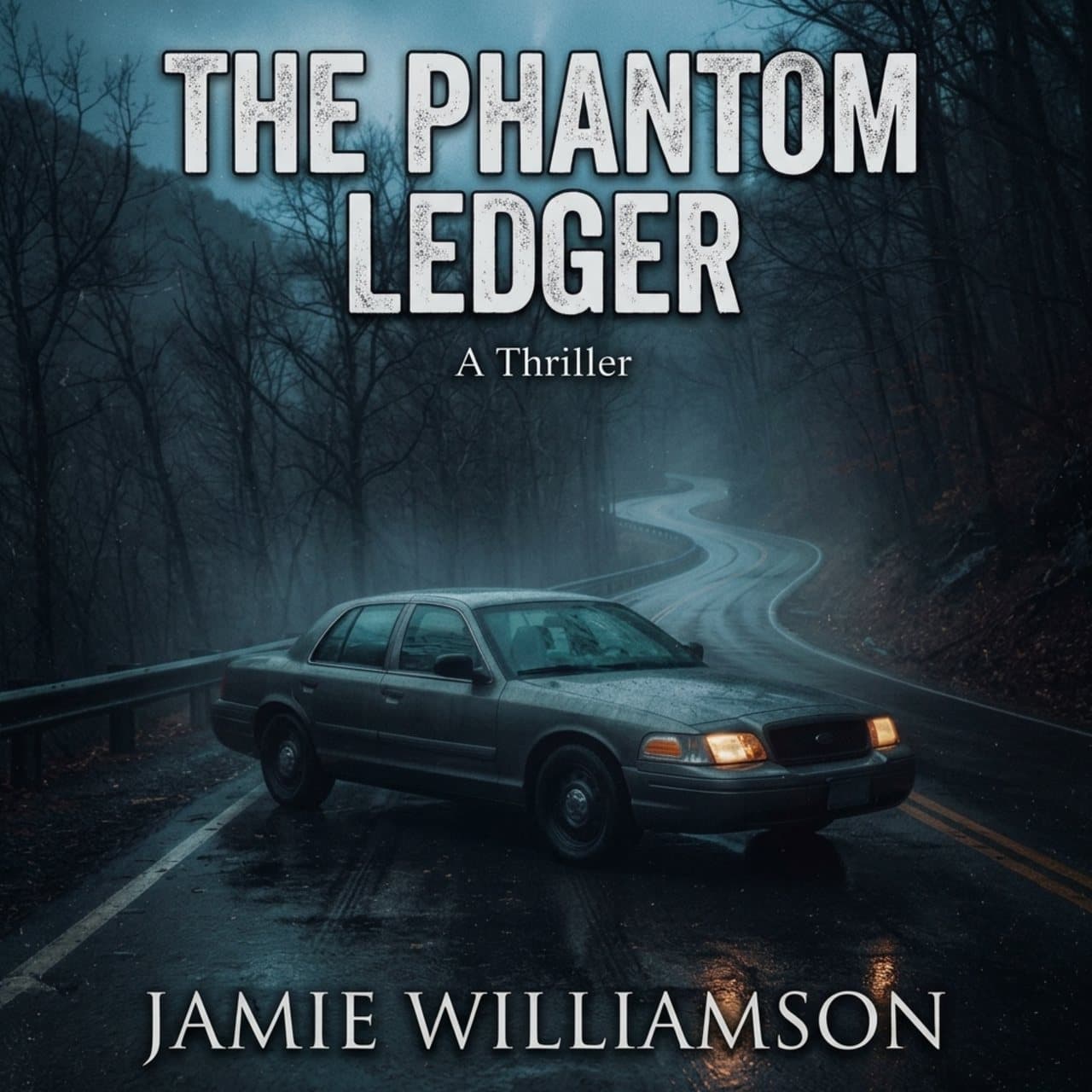
She walked down the narrow, rutted dirt track through the choking laurel, her boots crunching on the frozen gravel of the county road. There, parked half-hidden beneath the low-hanging branches of a hemlock tree, sat the '04 Crown Victoria she’d bought off an impound lot two counties over with three thousand dollars in damp, folded bills pulled from the grease trap under the cabin sink. No plates on the front, cash-bought, completely unflagged—a dull, battleship-gray ghost of a car built to swallow miles without asking questions.
Jamie opened the door, the heavy metal hinge groaning in the dark. She slid behind the wheel, smelling the old dust and stale coffee of a vehicle that had once belonged to someone else’s department. She turned the key, the V8 engine rumbling to life beneath the hood with a low, steady threat, and shifted into drive. The hollow stayed behind her, burning slow and bright against the black hills, while the road ahead opened its throat and waited.