


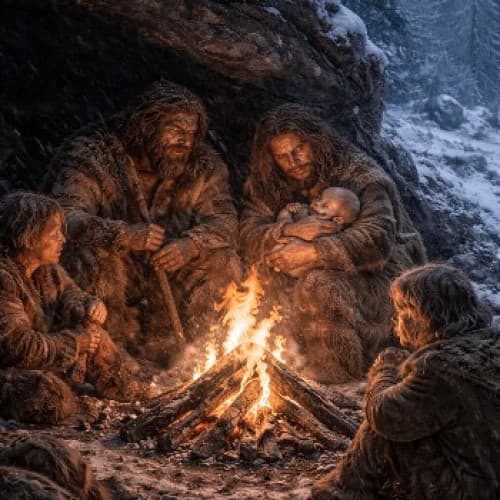
They lived before memory learned how to speak.
Long before cities, before borders, before the idea that history could be written instead of carried in bone and muscle, there were the people we would later call Neanderthals. They did not know this name. They knew the weight of winter, the patience of stone, the smell of fire when it finally caught. They knew the land as something alive and watching.
For hundreds of thousands of years, they moved across Europe and the wide stretches of Western and Central Asia, shaping their lives against ice and wind during the long ages of the Pleistocene. They were not passing through the world; they belonged to it. When modern humans would eventually arrive—leaner, faster to multiply, armed with new ways of thinking—these older people would fade, their last echoes lingering perhaps in places like Gibraltar, where the sea meets the rock and time is slow to let go.
The first of them to be recognized by the modern world emerged in 1856 from the Neander Valley in Germany: a single skeleton, incomplete and misunderstood. At first, scholars called him inferior, a relic of a lesser race. Later, they would name him a different species altogether—Homo neanderthalensis—a half-step on an imagined ladder leading to ourselves. For decades, Neanderthals were portrayed as brutes: bent, dull-eyed, almost animal.
That story was wrong.
They were powerfully built people with long, low skulls and heavy brows that shaded deep-set eyes. At the back of the head, an occipital bun rose like a signature carved in bone. Their chests were broad, their limbs short and strong, shaped by cold climates where heat had to be kept close to the heart. They were not tall by modern standards, but they were dense with muscle, capable of sudden bursts of speed across frozen ground.
Inside those thick skulls were large brains—larger on average than those of modern humans. Yet the mind within was organized differently. Their thoughts did not unfold as ours do. Language, if it existed, may have been limited, carried more by gesture, rhythm, and shared understanding than by words. What they lacked in abstraction, they made up for in immediacy. They lived close to the edge of the moment, alert, embodied, aware.
Their numbers were always few. Ice ages came and went, fragmenting populations, forcing small groups into isolation. Inbreeding left marks not just in their bones but in their future. Still, they endured. They shaped stone into Mousterian tools with practiced hands. They tended fire and perhaps kindled it themselves. They wrapped themselves in hides—blankets, cloaks, something between necessity and comfort.
They hunted what lived near them: massive animals that could kill with a single blow, as well as roots, plants, and mushrooms gathered from familiar ground. Their bodies bore the cost of survival—healed fractures, crushed ribs, scars from claws and horns. Life was dangerous, and they carried its evidence with them.
They may have adorned themselves with feathers or talons, collecting objects whose beauty or strangeness spoke to something unspoken inside them. They engraved lines into stone. They buried their dead, placing bodies carefully into the earth, though whether they imagined another life beyond this one remains unknown.
Then, around forty thousand years ago, they were gone.
Not erased completely—modern humans still carry fragments of their DNA—but gone as a people, as a way of being in the world. What remains are bones, tools, and questions.
This is not the story of a failed species or a primitive ancestor.
This is the story of humans who were different, not lesser.
Of minds shaped by ice and silence.
Of lives lived without names, yet never without meaning.
=============================================================
The Family of the River Stone
Gor
The Father
Gor was broad-chested and heavy in the shoulders, his brow casting a permanent shadow over dark, steady eyes. He was the family’s shield. When the wind howled or strange scents drifted from the trees, Gor stood first. His right arm bore an old fracture that healed crooked, earned from a bison hunt long before the youngest child was born. He spoke little, but when he did, others listened.
Una
The Mother
Una carried fire.
Not just the embers she guarded day and night, but the knowledge of when meat would spoil, when roots were safe, when storms would turn deadly. Her hands were scarred from stone and flame. She remembered paths the men forgot and songs without words that calmed the children when the night felt too wide.
Brak
The Eldest Son
Brak was already tall for his age, thick-legged and restless. He learned by watching, then by trying, then by failing loudly. Gor had begun to take him on hunts—not to kill, but to observe. Brak’s impatience would one day either make him a great hunter or get him killed.
Nera
The Daughter
Nera noticed things others missed.
She collected smooth stones, feathers, and pieces of crystal found near the river bend. She traced lines in the dirt with her fingers and pressed her palm into wet clay to watch the shape remain. Una watched her closely, unsure whether this difference was a gift or a danger.
Kelm
The Younger Son
Kelm was quiet, smaller than the others, born during a winter that killed half the clan. He limped slightly from a childhood injury, but his eyes were sharp. He learned tools faster than anyone else and could reshape a broken blade when others had given up.
Old Varn
The Elder
Varn no longer hunted.
His teeth were worn down to the gums, and his breath rattled when he slept. But he remembered winters no one else had lived through. When Varn tapped his staff against stone and made a sound, the children fell silent. His memories were the clan’s map through time.
The Unnamed Infant
The New Life
Wrapped in fur and bone charms, the infant had not yet been given a name. Names were earned after survival—after the first winter. Until then, the child was simply Breath.
=============================================================
Breath Against the Cold
The fire was awake before the sun.
Its low, trembling breath licked the edges of frost-covered stones, orange and patient, yet almost too small to push back the cold. Frost clung to the grass like brittle glass, crunching underfoot and coating the river’s slow-moving surface with ice that fractured in jagged patterns. The river itself hissed under the thin ice, impatient and dangerous, a warning to anyone who might step too close. The wind swept down from distant mountains, sharp enough to bite through layers of fur and skin, carrying with it the smell of pine, frozen earth, and the faint tang of blood from last night’s hunt.
Gor stood at the edge of the clearing, feet planted wide in the frozen ground, shoulders stiff, eyes narrowing at the skeletal forest beyond. The trees were stripped of leaves, blackened arms stretching to the gray sky. Each snap of a twig under frost was amplified in the silence, each gust of wind a voice that might carry the sound of an approaching predator—or a storm. Gor tightened his grip on the spear, letting it rest against the ground. Ice had made every movement deliberate, every step dangerous.
Behind him, the family moved quietly, shaped by cold and survival.
Brak crouched near the fire, chipping at a stone core. Each strike sent tiny sparks flying, but the flake shattered, brittle under his effort. He gritted his teeth, fogging the frozen air with each breath, and struck again.
“No,” Una said softly, her voice a small shield against the wind. She did not need to touch him; Brak knew her presence, the calm authority of her hands and eyes, was enough to steady him.
Brak handed the stone to Kelm. The younger boy’s fingers were red and stiff from cold as he turned the rock in his hands. A light strike, precise, and a thin blade slid free. Brak watched, curious and wary, his chest heaving from cold and exertion.Nera knelt at the riverbank, her hands raw and red, gathering a bundle of feathers. She arranged them carefully on a flat rock, pressing them against the thin frost to keep them from blowing away. A sudden gust lifted a feather into the air; she caught it before it could escape. Her cheeks stung with cold. She pressed the feather against her cheek, closing her eyes briefly, feeling warmth in the small softness.Old Varn sat on a fallen log, back bent, breath rattling through frost-laced lungs. He tapped his staff twice against the frozen ground; the hollow sound rang through the clearing.
“Cold comes,” he rasped, eyes on the eastern forest. He had seen winters that could strip a clan to nothing.
Gor nodded. The wind would only grow sharper. Snow might fall before noon, or the river ice might crack under the weight of hidden frost beneath. There was no shelter today beyond the fire, the stones, and their vigilance.
Una rose, wrapping the infant tightly in layers of fur. The baby stirred, a small whimper lost to the howl of wind. Una hummed without melody, a thread of warmth in the frozen morning. Brak leaned closer, curiosity softening his sharp features.
“Small,” he said.
Una met his gaze. “Strong.”
The infant’s tiny fingers curled around a strip of leather, gripping as if already aware of the cold and hunger that would not wait. Kelm smiled faintly, watching the determination in the smallest member of their family.
From the trees came a sudden snap of ice, loud and sharp, a warning that made every muscle in Gor’s body tense.
A deer bolted into the clearing, thin, its sides streaked with old wounds, eyes wide with fear. It froze for a heartbeat, nostrils flaring in the bitter wind, then darted past the fire and vanished toward the icy river.
Brak looked to his father. “Meat?”
Gor shook his head once. “Not today.”
The wind carried the deer’s scent away. Silence returned, thick and dangerous. The snow began to fall in thin, cold needles, dusting the family and their fire.
Nera picked up a feather and held it above the fire, watching the edges curl in the heat.
Old Varn lowered his staff, shoulders sagging as frost traced down his spine. Una kissed the infant’s brow, breathing warmth into the small bundle of life.
Above them, the sun finally rose, pale and weak, barely touching the snow and ice. It promised nothing but daylight—and yet, daylight was enough.
They did not know it was the beginning of the end. They only knew they were alive, against the cold, against hunger, against the sharp cruelty of a world that would not forgive weakness.
And they would survive, for now.
__________________________________________________________
Breath Against the Cold
The fire was awake before the sun.
Its low, trembling breath licked the edges of frost-covered stones, orange and patient, yet almost too small to push back the cold. Frost clung to the grass like brittle glass, crunching underfoot and coating the river’s slow-moving surface with ice that fractured in jagged patterns. The river itself hissed under the thin ice, impatient and dangerous, a warning to anyone who might step too close. The wind swept down from distant mountains, sharp enough to bite through layers of fur and skin, carrying with it the smell of pine, frozen earth, and the faint tang of blood from last night’s hunt.
Gor stood at the edge of the clearing, feet planted wide in the frozen ground, shoulders stiff, eyes narrowing at the skeletal forest beyond. The trees were stripped of leaves, blackened arms stretching to the gray sky. Each snap of a twig under frost was amplified in the silence, each gust of wind a voice that might carry the sound of an approaching predator—or a storm. Gor tightened his grip on the spear, letting it rest against the ground. Ice had made every movement deliberate, every step dangerous.
Behind him, the family moved quietly, shaped by cold and survival.
Brak crouched near the fire, chipping at a stone core. Each strike sent tiny sparks flying, but the flake shattered, brittle under his effort. He gritted his teeth, fogging the frozen air with each breath, and struck again.
“No,” Una said softly, her voice a small shield against the wind. She did not need to touch him; Brak knew her presence, the calm authority of her hands and eyes, was enough to steady him.
Brak handed the stone to Kelm. The younger boy’s fingers were red and stiff from cold as he turned the rock in his hands. A light strike, precise, and a thin blade slid free. Brak watched, curious and wary, his chest heaving from cold and exertion.
Nera knelt at the riverbank, her hands raw and red, gathering a bundle of feathers. She arranged them carefully on a flat rock, pressing them against the thin frost to keep them from blowing away. A sudden gust lifted a feather into the air; she caught it before it could escape. Her cheeks stung with cold. She pressed the feather against her cheek, closing her eyes briefly, feeling warmth in the small softness.
Old Varn sat on a fallen log, back bent, breath rattling through frost-laced lungs. He tapped his staff twice against the frozen ground; the hollow sound rang through the clearing.
“Cold comes,” he rasped, eyes on the eastern forest. He had seen winters that could strip a clan to nothing.
Gor nodded. The wind would only grow sharper. Snow might fall before noon, or the river ice might crack under the weight of hidden frost beneath. There was no shelter today beyond the fire, the stones, and their vigilance.
Una rose, wrapping the infant tightly in layers of fur. The baby stirred, a small whimper lost to the howl of wind. Una hummed without melody, a thread of warmth in the frozen morning. Brak leaned closer, curiosity softening his sharp features.
“Small,” he said.
Una met his gaze. “Strong.”
The infant’s tiny fingers curled around a strip of leather, gripping as if already aware of the cold and hunger that would not wait. Kelm smiled faintly, watching the determination in the smallest member of their family.
From the trees came a sudden snap of ice, loud and sharp, a warning that made every muscle in Gor’s body tense.
A deer bolted into the clearing, thin, its sides streaked with old wounds, eyes wide with fear. It froze for a heartbeat, nostrils flaring in the bitter wind, then darted past the fire and vanished toward the icy river.
Brak looked to his father. “Meat?”
Gor shook his head once. “Not today.”
The wind carried the deer’s scent away. Silence returned, thick and dangerous. The snow began to fall in thin, cold needles, dusting the family and their fire.
Nera picked up a feather and held it above the fire, watching the edges curl in the heat.
Old Varn lowered his staff, shoulders sagging as frost traced down his spine. Una kissed the infant’s brow, breathing warmth into the small bundle of life.
Above them, the sun finally rose, pale and weak, barely touching the snow and ice. It promised nothing but daylight—and yet, daylight was enough.
They did not know it was the beginning of the end. They only knew they were alive, against the cold, against hunger, against the sharp cruelty of a world that would not forgive weakness.
And they would survive, for now.
____________________________________________________________
Breath Against the Cold
The snow fell steadily, tiny shards that stung the skin and blurred the edges of the forest.
The fire, no more than a stubborn heart of warmth, sputtered against the wind. Gor gestured, and the family moved. Feet sank into the softening snow, leaving dark prints that vanished as the next flake fell.
They moved slowly toward a narrow path along the river, the ice brittle underfoot. Kelm tested each step, tapping with a small stick, listening for cracks. A false step could mean plunging into freezing water that would take the strength from you in moments. Gor led, spear ready, scanning every tree line, every shadow.
Brak trailed, shoulders hunched against the wind, fingers raw. He stumbled once, snow soaking through his fur leggings, and cursed softly. Nera helped him, gripping his wrist with surprising strength. “Watch the ice,” she said. Her voice was quiet, but in the storm it carried weight.
Old Varn leaned heavily on his staff, limping through the drift. His eyes, clouded with age, were still sharp, noting tracks in the snow: a fox, a rabbit, a larger animal with wide hooves. He pointed toward a set of deep prints. “Deer,” he rasped. “Fresh. North bank. Fast.”
Gor nodded. Hunting would be dangerous. The deer could see them before they saw it.
They could not afford a misstep.
The family paused, huddling briefly behind a fallen log that offered scant protection.
Frost clung to their hair, icicles dangling from eyebrows and lashes. The wind carried the smell of predator—wolf or bear—they could not yet tell.
Brak shivered. “Too cold,” he muttered.
Gor placed a hand on his shoulder. “Survive first. Cold later.”
Una adjusted the infant in her arms. “Strong, remember? All of you. Strong.”
Finally, Gor led them down to the riverbank. The ice here was thinner, veined with dark water beneath. Gor tested the first step, then the second. Kelm followed carefully, eyes on his father. Nera crouched low, clutching her feathers as though they could ward off the cold. Brak’s spear was ready, but he did not rush; rushing would mean breaking the ice.
A sound cracked the frozen air—a branch snapping nearby. Every head turned. Through the blizzard, the shadow of a wolf appeared, moving like smoke across the snow. It had seen the family, and for a heartbeat, instinct and fear clashed in the clearing. Gor raised his spear, low and steady. Nera pressed the infant against her chest, Old Varn muttered prayers to no god, and Brak gritted his teeth.
The wolf stopped at the tree line, eyes glinting like ice. It assessed, sniffed the wind, and slowly backed away. Survival demanded patience, and the beast understood this.
Gor lowered the spear but did not relax. “Keep moving,” he said.
The family skirted the river’s edge, following Varn’s memory of a shallow crossing. Their feet sank into slush and snow, wet seeping into fur, chilling them to the bone. Nera slipped once, hands catching the ice, and a splinter of pain shot through her palm. She clenched her teeth and continued.
Hours passed. They scavenged what they could—roots that had survived the frost, bark scraped from trees, moss that clung to sheltered rocks. Every bite was small, but every bite was life. Brak found a frozen hare and delivered it to Gor, who examined it and shook his head. “Bones only. Meat lost to frost,” he muttered.
By mid-afternoon, the wind had grown into a howl. Snow stung the eyes. The river moaned under thickening ice. The family huddled under the skeletal branches of a wind-swept copse. Una wrapped the infant, murmuring warmth into small ears. Old Varn pointed out distant tracks, teaching Brak and Kelm to read the snow: which animals were safe, which meant danger, which could feed them.
Night fell early. The fire, barely clinging, illuminated their faces pale from cold and hunger. Gor arranged the stones around it, sheltering it as best he could from wind. Nera’s feathers lay near the glow, curling gently, a fragile beauty against the frozen world.
They ate roots and scraps, sharing silently, conserving energy. Brak’s hands shook, not just from cold but from the exhaustion of keeping pace with the harsh day.
Outside, the storm continued, relentless. Ice coated every branch, snow piled in drifts against their shelter, and the river’s hiss whispered threats in every gust. Yet inside, the family breathed together, shoulders touching, warmth shared, small sparks of life resisting the cold.
Gor looked at them—Brak, Nera, Kelm, Una, the infant, and even Old Varn—and for a moment, the world beyond the clearing did not exist. Hunger, ice, and death waited beyond the trees, but here, now, they were alive.
And that, he knew, was enough to survive another day.
____________________________________________________________
Blood and Ice
The storm had not slept.
Wind cut through the clearing, driving snow into every crease of fur and skin. Ice crackled underfoot like the brittle bones of the forest. Gor led the family toward a thinned path along the northern bank of the river. Varn’s memory guided them: a hidden pass where deer and elk often crossed, where the water was shallow enough for even the infant to survive if danger came.
Brak’s spear was ready, but his hands trembled from cold and anticipation. He had watched his father hunt before, had seen the precision of muscle and patience. Today, he would learn.
The first signs were subtle: hoof prints pressed into fresh snow, claw marks along a frost-covered log, the faint smell of animal breath frozen in the air. Nera’s eyes caught a glitter of light on a shard of ice—it reflected the sun, or perhaps the gleam of a predator’s gaze. She stiffened, clutching her feathers like a shield.
Gor signaled: silence.
The family froze. Even the infant quieted in Una’s arms, small fists gripping fur. Kelm crouched low, eyes scanning the trail, heart thumping in the stillness.
Then came the sound—a low growl, more felt than heard. A wolf had scented them.
Gor moved first. Spear poised, feet balanced against ice, eyes sharp. Brak followed, spear tight in hand, the muscles in his legs trembling. Nera whispered to the infant, a soft hum that seemed to push the cold away for a moment.
The wolf emerged, gray and ragged, teeth bared, eyes bright and hungry. It circled, testing distance, judging courage. Gor did not strike. Instead, he stood tall, broad chest forward, exhaling clouds of breath like smoke from a forge.
Brak clenched his jaw, ready to act, but Gor’s hand on his shoulder stopped him. “Not yet. Wait.”
The wolf growled, stepped closer, and the snow beneath its paws hissed.
A sudden movement caught the animal’s eye—a rabbit darting across the clearing. The wolf lunged instinctively, giving the family a heartbeat to move. Gor lowered his spear slightly, signaling them forward.
They crossed a narrow stretch of river ice, hands gripping frozen branches for balance. The ice groaned but held. Behind them, the wolf snarled in frustration.
Finally, they reached the clearing Varn had remembered. Tracks crisscrossed the snow: deer, elk, hare. Brak’s eyes widened. This was life and death in the same frozen breath.
Gor crouched, motioning to Brak and Kelm. “One move at a time. Silence. Watch.”
The deer emerged first, cautious, its legs stiff from snow and cold. Brak’s hands shook, but he mimicked his father’s stance, spear ready. Kelm whispered a warning to Nera, pointing out the shallow spots in snow where ice could break.
Gor nodded, then signaled. The hunt began.
It was brutal and silent. Deer bolted and slipped in the snow. Spears struck, scraping fur and bone. Brak’s first throw missed, the spear burying itself in a drift. Kelm adjusted, aiming where Gor had shown him. A sudden crash of antlers against ice sent snow spraying over them.
Finally, Gor’s spear struck true, and the deer fell. Snow turned red around its flanks. Brak stared, frozen between awe and horror. “Dead?” he whispered.
Gor shook his head. “Alive, for us.”
Una moved quickly, wrapping the infant away from the blood, eyes sharp for predators drawn by scent. Nera knelt by the snow, tracing a line of blood with her finger, marking the path for butchering.
The wolf had not returned, but the wind carried the smell of other predators—possibly a pack, waiting beyond the trees. There would be no celebrations, only work, and vigilance.
By the time the meat was skinned and portions secured under fur, the storm had lessened, leaving behind an icy, gray world. The family huddled together, exhausted, hungry, but alive. Every breath fogged the air, visible proof that they still drew it in, that survival had not yet abandoned them.
Old Varn tapped his staff against the snow. “Winter will test us again tomorrow. Ice and wind will not sleep. Animals will not wait.”
Gor looked at his family: Brak, flushed with cold and pride; Kelm, quiet but sharp-eyed;
Nera, tender and strong; Una, steady as fire; the infant, wrapped and alive.
“We survive,” Gor said, voice low and firm. “Together.”
The storm had passed for now, but the Pleistocene did not forgive weakness. Tomorrow, the wind would howl again. Tomorrow, the ice would crack. Tomorrow, death would watch.
But today, the family had survived. And that was enough.
-----------------------------------------------------------------------------
Breath Against Wind
The snow fell steadily, tiny shards that stung the skin and blurred the edges of the forest.
The fire, no more than a stubborn heart of warmth, sputtered against the wind. Gor gestured, and the family moved. Feet sank into the softening snow, leaving dark prints that vanished as the next flake fell.
They moved slowly toward a narrow path along the river, the ice brittle underfoot. Kelm tested each step, tapping with a small stick, listening for cracks. A false step could mean plunging into freezing water that would take the strength from you in moments. Gor led, spear ready, scanning every tree line, every shadow.
Brak trailed, shoulders hunched against the wind, fingers raw. He stumbled once, snow soaking through his fur leggings, and cursed softly. Nera helped him, gripping his wrist with surprising strength. “Watch the ice,” she said. Her voice was quiet, but in the storm it carried weight.
Old Varn leaned heavily on his staff, limping through the drift. His eyes, clouded with age, were still sharp, noting tracks in the snow: a fox, a rabbit, a larger animal with wide hooves. He pointed toward a set of deep prints. “Deer,” he rasped. “Fresh. North bank. Fast.”
Gor nodded. Hunting would be dangerous. The deer could see them before they saw it.
They could not afford a misstep.
The family paused, huddling briefly behind a fallen log that offered scant protection. Frost clung to their hair, icicles dangling from eyebrows and lashes. The wind carried the smell of predator—wolf or bear—they could not yet tell.
Brak shivered. “Too cold,” he muttered.
Gor placed a hand on his shoulder. “Survive first. Cold later.”
Una adjusted the infant in her arms. “Strong, remember? All of you. Strong.”
Finally, Gor led them down to the riverbank. The ice here was thinner, veined with dark water beneath. Gor tested the first step, then the second. Kelm followed carefully, eyes on his father. Nera crouched low, clutching her feathers as though they could ward off the cold. Brak’s spear was ready, but he did not rush; rushing would mean breaking the ice.
A sound cracked the frozen air—a branch snapping nearby. Every head turned. Through the blizzard, the shadow of a wolf appeared, moving like smoke across the snow. It had seen the family, and for a heartbeat, instinct and fear clashed in the clearing. Gor raised his spear, low and steady. Nera pressed the infant against her chest, Old Varn muttered prayers to no god, and Brak gritted his teeth.
The wolf stopped at the tree line, eyes glinting like ice. It assessed, sniffed the wind, and slowly backed away. Survival demanded patience, and the beast understood this.
Gor lowered the spear but did not relax. “Keep moving,” he said.
The family skirted the river’s edge, following Varn’s memory of a shallow crossing. Their feet sank into slush and snow, wet seeping into fur, chilling them to the bone. Nera slipped once, hands catching the ice, and a splinter of pain shot through her palm. She clenched her teeth and continued.
Hours passed. They scavenged what they could—roots that had survived the frost, bark scraped from trees, moss that clung to sheltered rocks. Every bite was small, but every bite was life. Brak found a frozen hare and delivered it to Gor, who examined it and shook his head. “Bones only. Meat lost to frost,” he muttered.
By mid-afternoon, the wind had grown into a howl. Snow stung the eyes. The river moaned under thickening ice. The family huddled under the skeletal branches of a wind-swept corpse. Una wrapped the infant, murmuring warmth into small ears. Old Varn pointed out distant tracks, teaching Brak and Kelm to read the snow: which animals were safe, which meant danger, which could feed them.
Night fell early. The fire, barely clinging, illuminated their faces pale from cold and hunger. Gor arranged the stones around it, sheltering it as best he could from wind.
Nera’s feathers lay near the glow, curling gently, a fragile beauty against the frozen world.
They ate roots and scraps, sharing silently, conserving energy. Brak’s hands shook, not just from cold but from the exhaustion of keeping pace with the harsh day.
Outside, the storm continued, relentless. Ice coated every branch, snow piled in drifts against their shelter, and the river’s hiss whispered threats in every gust. Yet inside, the family breathed together, shoulders touching, warmth shared, small sparks of life resisting the cold.
Gor looked at them—Brak, Nera, Kelm, Una, the infant, and even Old Varn—and for a moment, the world beyond the clearing did not exist. Hunger, ice, and death waited beyond the trees, but here, now, they were alive.
And that, he knew, was enough to survive another day.
________________________________________
The Frozen River
The river lay before them like a wound in the land.
Ice crusted the surface, glinting under the pale sun, but the dark water beneath gushed swiftly, angry and cold. Chunks of ice floated like broken teeth, scraping the banks, threatening to pull anyone who slipped into the freezing current. The wind cut across the clearing, carrying snow and sleet that burned the skin. Every step toward the river was a gamble.
Gor crouched at the edge, testing the ice with his spear. Frost bit through his gloves. The first slab groaned and shifted, and he grunted, pressing it back with his weight. He scanned the far bank. There—beyond jagged stones and drifted snow—lay shelter, trees thick enough to block the wind. Their only hope.
He turned to the family. Brak’s lips were blue, teeth clenched against the cold. Nera held the infant close, cheeks red from windburn. Kelm trembled, eyes wide, watching the churning water. Even Old Varn’s hand shook on his staff.
“Step slow,” Gor said. “Ice is alive. It moves. It will bite.”
The first step was the hardest. Gor shifted his weight carefully, each footfall pressing just enough to test stability. The ice moaned under him. Brak followed, spear in hand, muscles tight. The slab beneath Kelm cracked sharply, echoing across the river. He froze.
Gor reached back, grasping Kelm’s wrist and hauling him forward.
Halfway across, the ice broke under Una’s foot. She stumbled, flailing, the infant nearly slipping from her arms. Gor lunged, gripping her waist, anchoring them both. Snow and water sprayed up around them. Nera’s scream cut through the storm, and Brak grabbed her arm, steadying her.
A sharp crack sounded—another slab splitting. The current surged beneath them, and the river roared like a living thing, trying to claim them. Gor felt the ice shift beneath his weight, forcing him to lower his center, pressing his spear into the river like a brace against the cold and the pull of the water.
One by one, they moved with care, breath ragged in the frozen air. Every slip could mean death, every misstep a plunge into the river that would steal strength in seconds. The infant whimpered, tiny fists clenching against Una’s chest, shivering, and she whispered warmth into its ears, humming a soft, wordless song.
The far bank was still a body-length away. A sudden gust tore across the river, snow blinding their eyes. Brak’s foot slipped; he grabbed Kelm’s arm instinctively. The ice under both of them tilted, a slow tipping motion, and Gor dropped to his knees, bracing the slab with both arms while gripping his spear with one hand.
The wolf that had stalked them days before emerged on the near bank, drawn by scent, eyes glinting. It did not charge, yet the presence of teeth and hunger pressed on their nerves. Gor ignored it. One misstep now and the river would claim them all.
Finally, one careful step at a time, breath clouding the storm, the family reached solid ground. Snow crunched underfoot, no longer slippery. Gor collapsed onto his side for a moment, chest heaving, spear clutched tightly. Brak and Kelm stumbled after him, shivering and pale, but alive.
Una pressed the infant to her chest, rocking, murmuring warmth, tears freezing on her cheeks. Nera sank to her knees beside her, shivering, brushing snow from her hands. Old Varn lowered his staff and exhaled, voice rasping.
“Alive,” he said. “All alive.”
Gor nodded, looking back at the river, dark and relentless, moving as if it had wanted them for its own. “Alive,” he echoed. “But it waits. Always waits.”
The family huddled together, shaking, frozen, but united. Survival was never guaranteed, and every step had been a test of courage, trust, and instinct. The river had threatened to take them, but together, they had crossed it.
The Pleistocene had marked them, but it had not yet claimed them.
__________________________________________________________
Teeth in the Snow
The snow had barely settled when the sound came: a low, rolling growl that vibrated through the frozen forest.
Gor froze. Every muscle taut. Brak stopped mid-step, spear raised. Kelm crouched behind him, hands gripping the haft of his small spear. Nera pressed the infant closer to her chest, her feathers fluttering in the wind. Old Varn tapped his staff on the snow, slow and deliberate, as if measuring danger.
The growl came again, closer now, followed by a soft crunch of paws against frozen leaves and snow.
A saber-tooth tiger emerged from the trees, massive and silent, its shoulders rippling beneath a coat the color of smoke and blood. Its long canines gleamed like ivory knives, curving from its mouth as it sniffed the air, eyes fixed on the family. It had been watching, waiting for them to weaken, to make a mistake.
Gor stepped forward, spear leveled. “Back,” he growled, voice low, a warning to the predator and to the family alike. “Do not move.”
The tiger crouched, tail twitching, muscles coiled. It lunged—not yet to strike, but to test, to intimidate. The snow exploded around its paws. Brak’s heart thundered; his hands were raw from the river crossing, but his fingers gripped the spear tighter.
Una hissed a sharp warning, pulling Nera and the infant behind her. Old Varn muttered a low chant, the sound vibrating through the cold, ancient as the ice itself.
The tiger circled, slow, deliberate, eyes never leaving them. Gor shifted slightly, spear stabbing into the snow like an anchor, ready to throw at the right moment.
Brak whispered, voice shaking. “We—can we fight it?”
Gor’s eyes did not leave the predator. “We must. Or die.”
Kelm, trembling but focused, mirrored his father’s stance. Nera clutched the infant, her own fear giving way to a quiet steel. Survival demanded courage.
The saber-tooth lunged again, faster this time, claws scraping snow, leaving shallow grooves that smoked in the cold air. Gor sidestepped, jabbed the spear, grazing the tiger’s shoulder. It hissed, a sound of fury and pain, and backed off, circling.
Brak stepped forward, a risky move. He hurled his spear. It struck the tiger’s flank, but not deeply. The beast’s roar split the air, and the snow trembled.
The tiger leapt. Gor met it with the spear, blocking its claws, pivoting to avoid being torn. The collision sent them both sliding across icy snow, claws scraping, teeth snapping, breath steaming in violent clouds.
Nera screamed, and Una’s hand shot out, grabbing the infant and dragging her behind a boulder. Old Varn raised his staff, striking at the tiger’s hind leg, a desperate distraction.
Gor rolled, spear stabbing again, grazing the beast. Brak lunged, driving a second spear, striking the side where fur met muscle. The tiger yowled in pain, spinning, but its eyes never left them. It was clever, fast, unrelenting.
Then, as suddenly as it had attacked, the tiger paused. Its ears twitched. Something else—another predator? Or perhaps it judged the family not worth the risk. It hissed one last warning, long and low, before retreating into the trees, moving like smoke through the snow.
Gor lowered his spear slowly, chest heaving. Brak and Kelm sank to their knees, trembling, pale and exhausted. Nera pressed her cheek to the infant, whispering warmth into frozen ears. Una’s hands shook as she tightened her hold.
Old Varn exhaled, voice rough. “Alive. Again.”
Gor looked at his family, snow clinging to fur and hair, eyes bright with fear and determination. “We live because we are together,” he said. “We fight because we must.
Never alone. Never weak.”
The forest fell silent again, save for the wind and the whisper of the icy river. But every crack of snow underfoot, every shadow among the trees, reminded them the world had not forgiven them—and would not.
The saber-tooth waited, somewhere in the cold.
And they would see it again.
________________________________________
Traps in the Ice
The storm had passed, but the cold remained, sharp and merciless. The forest was quiet, but not safe. Gor knew the saber-tooth tiger had not forgotten them. Neither had the wolves, the frozen river, or the hunger gnawing at their bellies. Survival demanded more than strength—it demanded cunning.
Gor crouched behind a drift of snow, eyes scanning the skeletal trees. Brak and Kelm knelt beside him, each gripping a sharpened stick, practicing the motions Gor had shown them. Nera huddled nearby, arranging small stones and feathers into patterns that might distract or mislead, a strategy she had learned from watching Varn’s careful planning.
Una wrapped the infant tightly, keeping it warm while observing her family. Old Varn tapped his staff against the snow, marking spots, testing the ground for hidden weakness. Every sense was alert.
“We cannot meet the tiger head-on,” Gor said. “It is too fast. Too strong. We use the snow, the ice, the forest.”
He pointed to a narrow bend in the river, where water forced the current between jagged rocks. “Here. If it comes, it must pass. We make it hesitate. We make it stumble.”
Brak nodded, understanding. He dug into the frozen ground with a sharpened stone, creating a shallow pit and covering it with branches and snow. Kelm did the same, testing each step to ensure it looked natural. Nera scattered feathers and ice shards along the edges to create movement, subtle signals for prey or predator alike.
Gor tested a line of tension made from vines, anchored to rocks, so that if the saber-tooth or a wolf triggered it, branches would fall and snow would collapse on them. “Small tools,” he said, “but clever ones. Intelligence can kill what strength cannot.”
Hours passed. The family worked in silence, sharing no words except gestures. Hands froze, muscles ached, and the infant whimpered. Una hummed, a soft warmth, while guiding Nera to cover her.
By late afternoon, the trap was ready. The pit hidden beneath snow, tension lines set along the tree line, and the river bend marked for ambush. Gor stepped back, surveying the work. Even Old Varn nodded, slow and approving.
“Now,” Gor said, “we wait. Watch. Learn.”
They waited hours, crouched against the wind. Their breath misted in the cold. Every crack in the snow, every rustle of branches, made hearts pound. Then, the moment came: distant growls carried over the frozen forest. The saber-tooth was approaching, eyes gleaming, muscles tensing for the hunt.
Gor motioned to Brak and Kelm. They adjusted, spears ready. Nera clutched the infant closer, watching the shadows. The tiger slowed, sniffing the air, cautious as it approached the river bend. It stepped onto the snow over the hidden pit—and the ice gave way with a sharp crack.
The saber-tooth’s massive body plunged into the shallow trap, claws scraping, teeth snapping in surprise. Snow collapsed over its shoulders. Tension lines snapped as branches fell, creating a flurry of noise and confusion.
The tiger roared, thrashing, but the family held their positions. Gor threw a spear, striking its flank. Brak followed, precise. Kelm jabbed at its legs with a sharp stick, driving it toward the river bend. Nera scattered feathers along the edge, distracting it with movement, forcing the predator to hesitate.
Finally, exhausted and trapped, the saber-tooth roared one last time and retreated into the forest, wounded but alive. The family exhaled together, shoulders slumping, teeth chattering in relief and adrenaline.
Gor looked at each of them: Brak, flushed with pride and fear; Kelm, still trembling but triumphant; Nera, eyes bright with cleverness; Una, holding the infant safely; Old Varn, steady as ever.
“Today, we are stronger,” Gor said. “Tomorrow, the world will test us again.”
The forest was silent now, save for the wind and the faint whistle of the frozen river. The saber-tooth had learned, and so had they. Survival was not just about strength—it was about strategy, cunning, and the bonds that held them together.
And the Pleistocene would continue its tests.
________________________________________ Shadows in the Frost
The forest was quiet, but quiet never lasted long in winter.
Gor led his family along the frozen riverbank, snow crunching underfoot, eyes scanning every shadow. The river had calmed, but danger lingered everywhere—wolves, saber-tooth, ice, hunger. Today, a new threat approached.
From the trees ahead came the sound of snapping branches, heavier than any animal. Footfalls, deliberate and measured. Gor froze, raising his spear. Brak and Kelm crouched beside him, muscles taut, eyes sharp. Nera pressed the infant closer to her chest, whispering warmth into tiny ears. Old Varn tapped his staff lightly, the sound echoing through the silent forest.
Then they saw them.
A rival Neanderthal group emerged from the snow: six figures, tall and broad, faces streaked with ash and blood, furs ragged. Spears in hand. Eyes hard and calculating. This was not a hunting party—they were claiming territory.
Gor stepped forward, chest broad, voice low. “We are here. This land is ours.”
One of the strangers—a man taller than the rest, scars across his forehead—spat into the snow. “Winter decides. Not you.”
Brak’s fingers tightened on his spear. Kelm’s jaw set. Nera shifted behind the infant, ready if they needed to flee. But Gor held up a hand. “Watch first. Listen.”
The rival group circled slowly, their eyes on the river, the trap lines, the family’s movement. Gor signaled subtly to Brak and Kelm, pointing to branches overhead, rocks to hide behind, and the shallow pit along the river bend.
The leader of the rival group stepped closer. “We need meat. You have it. Give it. Leave.”
Gor shook his head. “We do not give. You leave.”
A growl rose from the rival group—a challenge, sharp and animal. The forest seemed to hold its breath. Wolves howled faintly in the distance, and the frozen river hissed beneath its icy crust.
Then, the rival Neanderthals lunged.
Chaos erupted. Snow sprayed as Brak and Kelm used the terrain to their advantage, pushing one rival toward the shallow river bend. He stumbled, chest wet with ice-cold water. Gor met the leader head-on, spears clashing, muscles straining. Nera and Una scrambled behind rocks, keeping the infant safe while watching for openings.
Old Varn tapped branches above, dropping a small shower of ice and twigs onto one of the attackers. The sound startled him, forcing him backward into snow, buying time for Gor.
The fight was brutal but brief—Neanderthals were strong, cunning, and fast. Gor struck with precision, his family following his lead. Brak jabbed and feinted, Kelm lunged at ankles and knees, Nera threw stones and snow, creating distractions.
Finally, the leader snarled, retreating. His group followed, melting into the gray forest, leaving footprints that would vanish under fresh snow.
Gor exhaled heavily, muscles trembling. Brak and Kelm sank to their knees, pale but alive.
Nera clutched the infant, whispering, “Safe… safe.” Una’s hands shook as she pressed warmth into the child.
Old Varn tapped his staff on the snow again. “The forest tests us. Today, the winter.
Tomorrow… another group. Another hunger. Always more.”
Gor looked at his family, proud and weary. “We are stronger,” he said. “Together, we survive. Alone, we fall. Never forget this.”
The wind carried the echo of the rivals’ retreat, mixing with the hiss of the frozen river.
Survival was never simple. The Pleistocene did not forgive weakness, and other families, other hunters, waited in the shadows.
But for now, the family had won.
And they had learned.
____________________________________________________________