



Bridget Greene, Thomas's mother, was a woman who understood suffering. She had survived the Great Hunger in Ireland, had watched her own mother die of starvation, had buried two siblings before she was twelve. She had come to America with her husband, Sean, believing that here, in this new world, the suffering would end.
It didn't. It just changed form.
When Thomas died, Bridget's faith was tested in ways that Irene’s mother Catherine could never understand. For Bridget, death wasn't a theological puzzle to be solved. It was a physical reality, as brutal and undeniable as the hunger that had killed her family in Cork.
She believed in purgatory. She believed in it with a visceral certainty that came from generations of Catholic suffering. She believed that Thomas was there, in that place of fire and purification, and that it was her job to pray him out of it.
For sixty-three years, Bridget Greene prayed. She said the rosary every day, fifty Hail Mary’s for Thomas's soul. She had Masses said for him. She made pilgrimages to shrines. She wore a hair shirt under her clothes for the first year after his death, until Father O'Malley found out and made her stop.
She never blamed God for taking Thomas. She blamed herself. She should have watched him better. She should have kept him away from the millpond. She should have been a better mother, worthy of keeping her child alive.
This guilt became her religion. It was more real to her than the Church, more demanding than any priest. She punished herself with suffering—cold baths, fasting, kneeling on hard floors for hours—trying to buy her son's way out of purgatory with her own pain.
Sean Greene watched his wife destroy herself and could do nothing. He drank, like Irene's father, but openly, without shame. He died in 1865, during the war years, his heart giving out from whiskey and grief.
Bridget lived alone after that. She took in laundry. She cleaned houses. She saved every penny to have Masses said for Thomas. She grew old, bent, her knees ruined from kneeling, her hands arthritic from decades of scrubbing other people's clothes.
And she waited. Not for death—she feared death, feared meeting her son and having to account for why she had failed him. But she waited for a sign. A vision. Some indication that her prayers had been answered, that Thomas was out of purgatory, that he was in heaven where he belonged.
It never came.
When she finally died in 1911, at the age of eighty-nine, her last thought was not of peace but of terror. She was about to meet her son, and she was not ready. She had not suffered enough. She had not prayed enough. She had not earned his forgiveness.
She came to the house confused, fragmented, her soul damaged by years of self-flagellation. She didn't recognize Thomas at first—he appeared to her as a man of sixty-nine, the age he would have been, and she couldn't reconcile this tall stranger with the boy she had lost.
"Where is my son?" she demanded of Irene, standing in the meadow, refusing to enter the house. "Where is Thomas? I prayed for him. I suffered for him. Where is he?"
"Mother," Thomas said, stepping forward. "I'm here. I've been waiting."
Bridget looked at him with suspicion. "You're not Thomas. Thomas was six. Thomas was a baby. You're an old man. This is a trick. This is purgatory. This is my punishment."
"No, Mother," Thomas said gently. He had prepared for this moment for sixty-three years. He had thought about what he would say, how he would heal her, how he would convince her that she had never needed to suffer, never needed to pray him out of a fire that didn't exist.
"I died instantly," he said. "I felt no pain. I felt no fire. I came here, to this house, and I've been warm and safe ever since. You didn't need to pray for me. You didn't need to suffer. I was never in purgatory. I was here. Waiting for you."
"But the priests said—" Bridget began.
"The priests didn't know about this place," Thomas said. "No one knows about it except the children who come here, and the parents who find us. It's a secret place. A merciful place. God made it for children who die too soon, so they don't have to be alone."
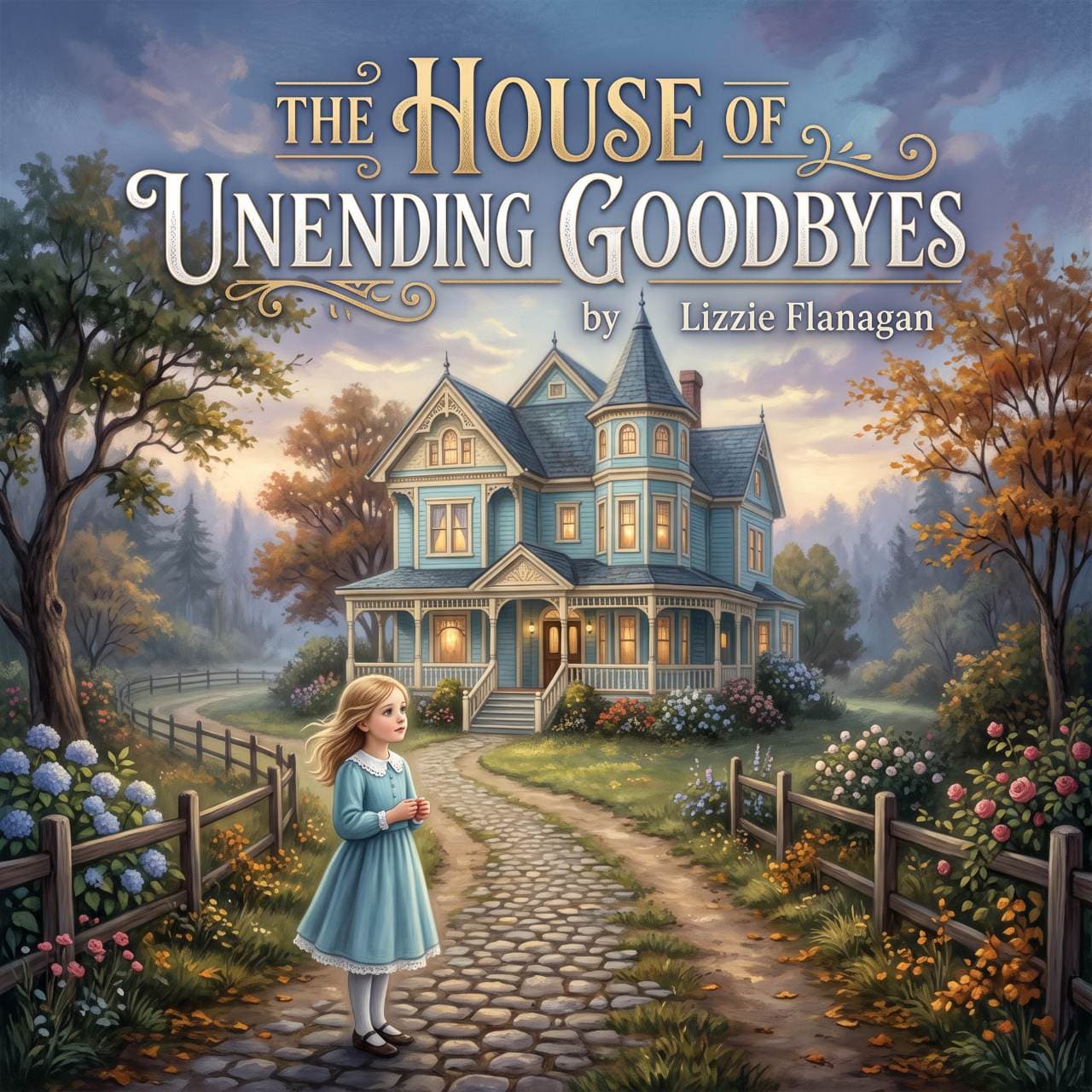
Bridget wavered. She looked at the house—the blue house that looked like something from a dream, something too beautiful to be purgatory. She looked at her son, who was crying light-tears, who looked at her with such love, such forgiveness.
"I failed you," she whispered. "I let you die. I let you walk on the ice. I wasn't watching."
"You were working," Thomas said. "You were washing clothes to feed us. You were a good mother. The best mother. I never blamed you. Not for a second."
"I blamed myself," Bridget said. "Every day. Every prayer. Every ache in my knees. I thought if I suffered enough, I could save you."
"You saved me by loving me," Thomas said. "That's all I ever needed. Your love. Not your pain."
He held out his hand. After a long moment, Bridget took it. She let him lead her into the house, into the room he had kept for sixty-three years—the room with the fireplace and the quilts and the window full of butterflies.
They sat together on the bed, mother and son, and Thomas told her about his death. About how quick it was. About how he had felt no fear, only a sudden warmth, and then he had been here, in this house, with Irene and Annabelle and the others.
He told her about the waiting, about the other children, about the messages they prepared for their parents. He told her that he had written her a letter, every day for sixty-three years, telling her about his days, his thoughts, his love.
"I can't read them," Bridget said, holding the stack of papers he handed her. "My eyes... they're not good anymore."
"I'll read them to you," Thomas said. And he did. He read to her for hours, days, weeks—time moved strangely in the house—telling her about every moment of his waiting, every child he had helped, every lesson he had learned.
And slowly, painfully, Bridget Greene began to heal. She began to understand that her suffering had been unnecessary. That her guilt had been misplaced. That she had been a good mother, and that Thomas had known it, and that God—if God existed in this strange between-place—was not the punishing deity she had feared, but something gentler, something that understood love better than theology.
When they finally walked down the path together, mother and son, into the deeper light, Bridget was no longer the broken woman who had arrived. She was whole. She was forgiven. She was ready.
Irene watched them go with a mixture of joy and envy. Thomas had succeeded where she had failed. He had reunited with his mother. He had delivered his message. He was free.
And she was still waiting. Still searching. Still bound by a fear she couldn't name.