


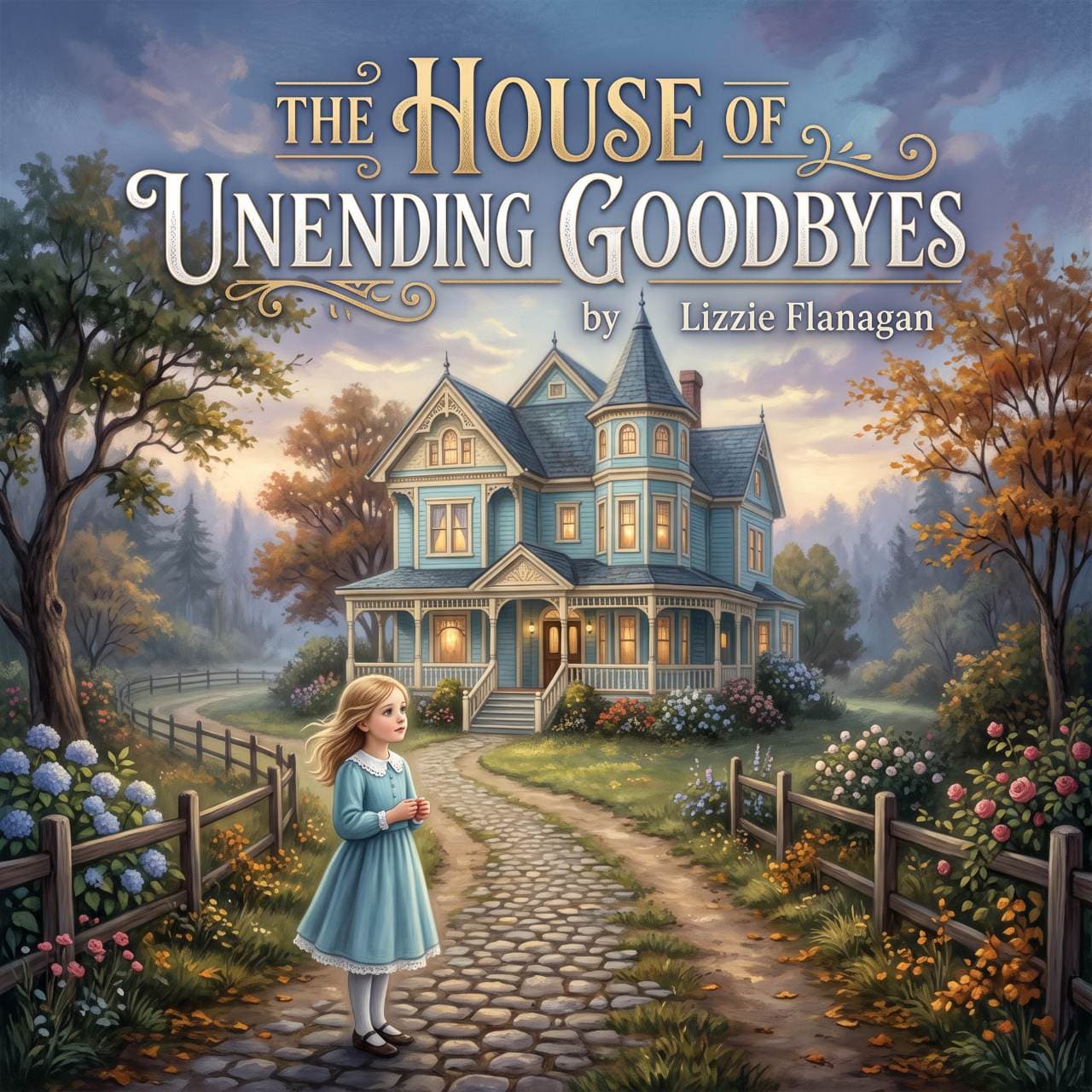

Thomas Greene arrived in January of 1848, when the snow was piled high against the fences of Millbrook and the world was silent with cold. He was six years old, the son of Irish Catholic immigrants who had fled the famine and brought their faith with them across the Atlantic.
Thomas had wandered onto the ice of the frozen millpond chasing a dog that wasn't his, and the ice had betrayed him. He came to the gray meadow gasping, his lungs full of water that wasn't there anymore, his small body shaking with remembered cold.
Irene found him. She had learned to feel the arrivals now—a tug in her chest, a pulling sensation that drew her to the meadow's edge. Annabelle had taught her the way, had shown her how to walk between the worlds, how to find the lost before they drifted too far.
"You're safe," Irene said, kneeling beside the boy. She was still seven, would always be seven in appearance, though she had lived a year in the house already, had learned and grown in ways that had nothing to do with physical aging. "The cold can't hurt you here."
Thomas looked at her with blue lips and wide, terrified eyes. "I couldn't breathe," he said. "I kept trying to breathe but there was only water."
"I know," Irene said. She took his hand—his hand was cold, but she warmed it with her own impossible warmth. "I know. But that's over now. Come with me. Come to the house."
She led him through the gray, through the wildflowers that shouldn't bloom in January, up the gravel path to the blue Victorian. Thomas stopped at the gate, staring up at the tower, the windows, the smoke that rose from a chimney that had no fire.
"It's beautiful," he whispered.
"It becomes what you need it to be," Irene said, repeating Annabelle's words. "What do you need, Thomas?"
Thomas thought about it. "I need my mama," he said. "But I also need... I need to not be scared anymore. I need to be warm."
The house shifted. Irene felt it—a subtle rearrangement of walls and spaces. When she led Thomas inside, there was a new room on the first floor, a room with a fireplace that burned with light that gave warmth without consuming wood, with a bed piled high with quilts, with a window that showed a summer meadow full of butterflies.
But Thomas also needed something else, something Irene didn't understand until he began to cry.
"I didn't confess," he sobbed, clutching the scapular that hung around his neck—a small piece of cloth that his mother had pinned there, blessed by the priest, meant to protect him. "Father Murphy said we have to confess our sins before we die or we go to purgatory. I didn't confess. I stole a penny from my sister's drawer. I didn't tell. And now I'm dead and I didn't confess."
Irene stared at him. She had been raised Protestant; the concept of last rites, of confession as a requirement for salvation, was foreign to her. But she understood fear. She understood guilt.
"Thomas," she said gently, "do you feel like you're being punished? Do you feel fire?"
Thomas stopped crying. He looked around the room—the warm room, the safe room, the room that smelled of baking bread and summer grass. "No," he whispered. "I feel... I feel warm. Like Mama's holding me."
"Then maybe the rules are different here," Irene said. "Maybe the priests didn't know about this place. Maybe God made this place special, for children who died too soon, so they don't have to worry about purgatory. So they can just... wait. And be warm. And be loved."
Thomas considered this. His faith was simple, childlike, absolute. If God had made this house, then it must be good. If he felt warm and safe, then he must be forgiven. The theology sorted itself out in his six-year-old mind, not through logic but through feeling.
"Will Mama come?" he asked again.
"Yes," Irene promised. "But it will be a long time. She's still young. She has to grow old first."
"How long?"
Irene thought of her own mother, still visiting the grave every day, still young and strong and broken. "Maybe fifty years," she said. "Maybe more."
Thomas didn't cry. Children were adaptable, Irene was learning. They accepted the impossible because they hadn't yet learned what was supposed to be possible. He simply nodded, pulled the quilt up to his chin, and asked, "Will you stay with me until she comes?"
"Yes," Irene said. "I'll stay. I'll collect you. That's what I do now. I'm the Collector."
The word felt right. Felt true. She was seven years old, and she had found her purpose.