


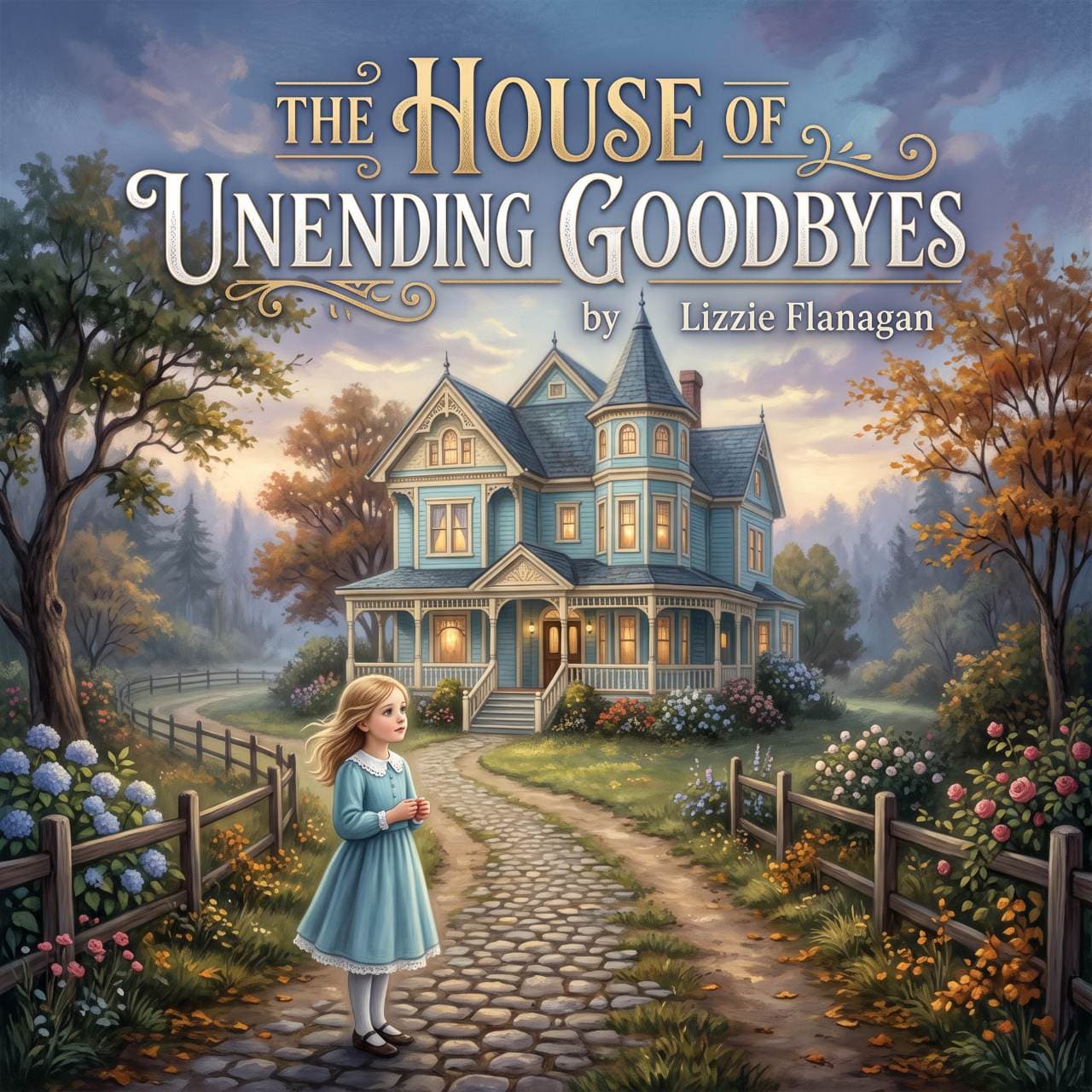

Sarah Chen arrived in 1855, when Irene had been dead for eight years. She was nine years old, though she looked younger—malnourished, her bones visible through her skin, her hands calloused from work.
She had died in the textile mill where she had worked since she was six, her lungs destroyed by cotton dust, her body finally giving out after years of labor that would have been criminal if she had been a white, Christian child, but was merely business because she was an immigrant and a Jew.
Her family had come to Massachusetts in 1849, part of the first wave of immigrants to the East Coast. They were not welcome. They were not wanted. They lived in a tenement on the edge of town, eight people in two rooms, and they worked wherever they could find work.
Sarah had worked in the mill because her small fingers were nimble, because she could crawl into spaces adults couldn't reach to fix broken threads, because she was cheap labor in a world that valued profit over childhood.
She came to the gray meadow coughing, her soul remembering the asthma that had killed her physical form. Irene found her lying on the not-grass, gasping, her eyes wide with terror.
"You're safe," Irene said, kneeling beside her. "You can breathe here. The air is clean."
Sarah coughed once more, then stopped. She took a breath—deep, full, painless. "I can breathe," she whispered, wonder in her voice.
"Yes," Irene said. "You can breathe. Come with me. Come to the house."
Sarah hesitated. She looked around the meadow, at the gray light, at the house in the distance. "Is this heaven?" she asked. "Is this Gan Eden?"
Irene didn't know that term. "It's a waiting place," she said. "A place between. We wait here until our families are ready to join us."
"My family," Sarah said, and her face crumpled. "My mother. My father. My brothers. They'll be so sad. They needed my wages. I was helping. I was helping them survive."
"You don't need to worry about that anymore," Irene said. "Come. Let me show you."
She led Sarah to the house, and the house provided. Sarah's room was on the second floor, a room filled with books—books in English, in Chinese, in languages she didn't recognize. A desk with paper and ink. A window that looked out on a garden full of flowers that never wilted.
"I wanted to learn," Sarah said, touching the books with reverent fingers. "I wanted to go to school. But we couldn't afford it. I had to work."
"You can learn here," Irene said. "You can read every book in this room. You can write your thoughts. You can grow. And when your parents come—"
"They won't come," Sarah said quietly. "Not for a long time. They're young. And they have to take care of my brothers. And..." She paused. "And they might not come here at all."
"Why not?"
Sarah looked at Irene with ancient eyes, eyes that had seen too much suffering for a nine-year-old. "We're Jewish," she said. "But not... not like the Jews in the Bible. My family, we came from China. We've been Jewish for hundreds of years, since the Tang Dynasty. But here, in America, people don't understand. They think Jews are European. They think we don't exist."
She sat on the bed, pulling her knees to her chest. "And we don't practice much. We can't. There's no synagogue here. No rabbi. My father says we're Jews in our hearts, but we can't be Jews in public. It's too dangerous."
Irene tried to understand. "But... God knows you're Jewish, right? Even if other people don't?"
"I don't know," Sarah said. "I don't know what God knows. My mother says there are different heavens for different people. That when we die, we go to the heaven of our ancestors. But my ancestors are in China. And I died here. So where do I go?"
It was a theological question that Irene couldn't answer. She was eight years old in appearance now, though she had been in the house for eight years. She had learned about different religions from Annabelle, who had been raised Unitarian and had studied comparative theology before her death. But she had never encountered a child who was unsure if she belonged anywhere.
"The house is for everyone," Irene said finally. "I've seen children from different places. Different beliefs. The house doesn't care what religion you are. It just... waits. It keeps you safe until your family comes."
"But what if my family doesn't find me?" Sarah asked. "What if they die and go to the Chinese heaven, and I'm here, and we're separated forever?"
Irene didn't have an answer. She held Sarah while she cried, and she promised to help her find a solution, even though she didn't know if one existed.