


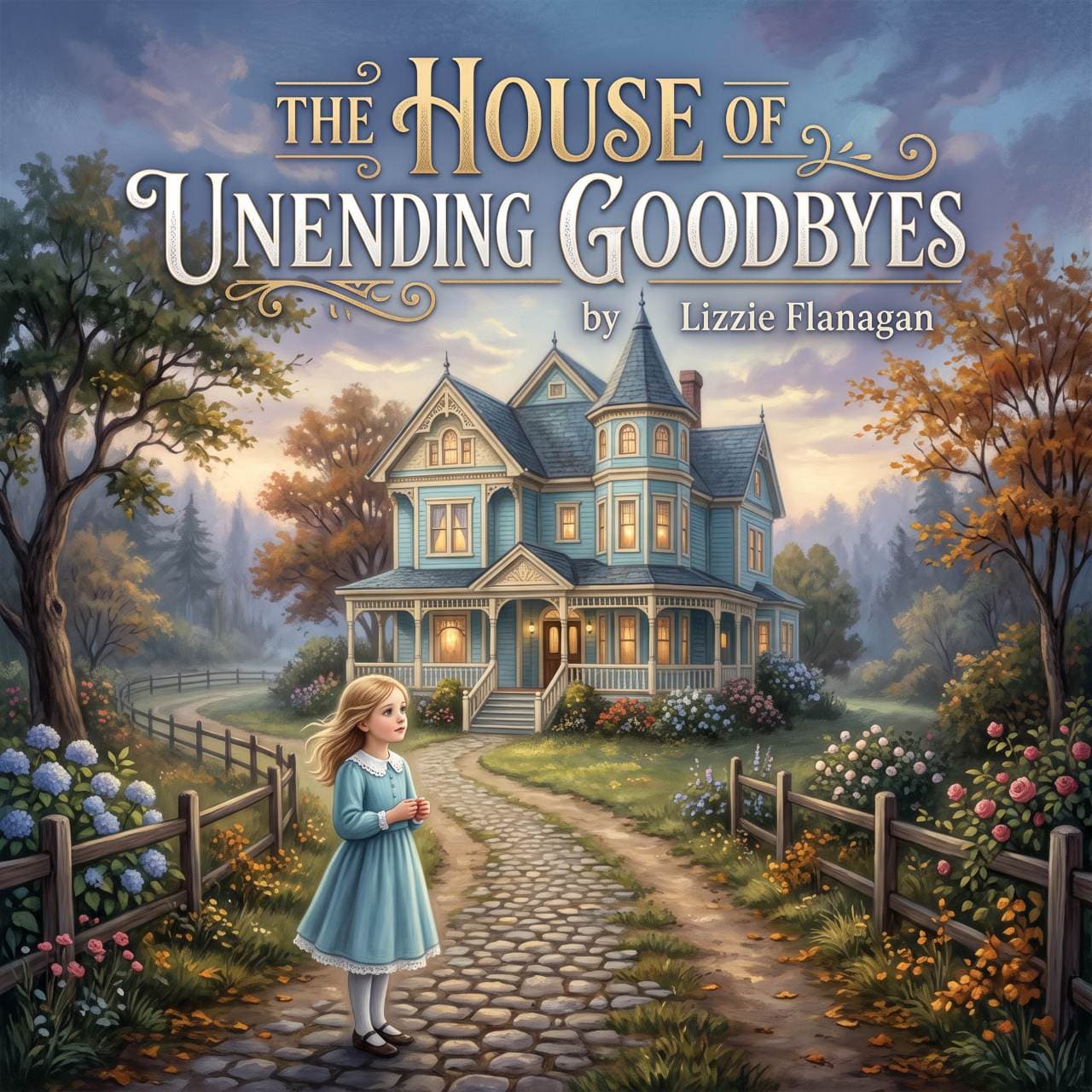

Irene's mother, Catherine Whitmore, had been a devout Congregationalist before her daughter's death. She had believed in a tidy afterlife: heaven for the saved, hell for the damned, purgatory for those in between. She had believed that children who died before the age of reason went straight to heaven, innocent and pure, welcomed by Jesus himself.
When Irene died, that belief shattered.
Not because she stopped believing in heaven—she didn't. But she stopped believing that Irene was there. Because if Irene were in heaven, whole and happy and surrounded by angels, then Catherine should feel peace. The Bible promised that. "Sorrow not as those who have no hope," the pastor had quoted at the funeral, his voice sonorous and certain.
But Catherine did sorrow. She sorrowed more than she had ever thought possible. She sorrowed until she couldn't breathe, until her body became a vessel for grief and nothing else. And in that sorrow, she realized that if Irene was in heaven, and she was supposed to be comforted by that knowledge, then either she was failing as a Christian... or the theology was wrong.
She began to study. Secretly, at first, ashamed of her doubts. She read the German theologians, the mystics, the accounts of near-death experiences. She corresponded with spiritualists in Boston, with Quakers who believed in continuing revelation, with Unitarians who questioned the doctrine of eternal damnation.
She learned that many cultures believed in a middle place. The Celtic pagans had their waiting lands. The Catholics had purgatory, where souls were purified before entering heaven. The Jews had Sheol, a shadowy place of waiting. The Muslims had Barzakh, the isthmus between worlds.
And she began to wonder: what if Irene wasn't in heaven yet? What if she was waiting? What if she needed her mother to do something, to become something, before they could be reunited?
This thought was both torture and comfort. It gave Catherine purpose. She would become worthy of reunion. She would purify herself through good works, through prayer, through suffering. She would make herself ready, so that when her time came, she would find her daughter waiting.
She didn't know that Irene was indeed waiting, but not for Catherine to become worthy. Irene was waiting simply because time moved differently, because the dead aged differently than the living, because the house demanded patience.
Through the meadow-windows, Irene watched her mother's transformation. She watched Catherine transform from a conventional Christian into a mystic, a seeker, a woman who spoke to her dead daughter as if she were present in the room. She watched her father, Samuel, grow increasingly distant, uncomfortable with his wife's unorthodox beliefs, retreating into silence and work.
Samuel Whitmore dealt with his grief differently. He didn't question his faith—he clung to it more fiercely. He believed that Irene was in heaven, and that his job was to endure his suffering as a test of his faith. He read Job repeatedly, finding solace in the story of a man who lost everything but remained righteous.
But he also drank. Secretly, at first, a glass of whiskey in his study after Catherine had gone to bed. Then two glasses. Then a bottle hidden in the barn. He was a schoolteacher, respected in the community, and he maintained his facade for years. But Irene saw the way his hands shook in the mornings. She saw the way he looked at empty spaces, as if expecting to see her there.
He died in 1880, thirty-three years after Irene , his liver destroyed by alcohol and his heart broken by grief he had never allowed himself to express. He didn't come to the house. Irene watched him walk toward a light that was golden and warm and welcoming, and she knew that for him, the theology had worked. He had believed his daughter was in heaven, and so for him, she was. He didn't need the house. He didn't need the waiting.
Catherine was alone then. She moved to Boston, to a small apartment near the spiritualist church. She attended séances, not because she believed the mediums could contact Irene, but because she hoped they might confirm what she felt in her heart: that her daughter was waiting somewhere, somehow, and that they would meet again.
She died in 1892, forty-five years after Irene, her mind gone to dementia in her final years. Her last coherent words, spoken to a nurse who didn't understand their significance, were: Irene, is that you, baby? You've grown so tall."
She didn't come to the house.
Irene waited. She waited at the gate, she waited in the meadow, she waited in the gray space between worlds. Her mother didn't come.
"Where is she?" Irene asked Annabelle, panic rising in her chest. "Where did she go? She should be here. I was supposed to collect her. I was supposed to tell her—"
"Sometimes they go straight to the light," Annabelle said gently. "Sometimes they don't need the house. They don't need the waiting or the message. They find their own way home."
"But I needed to see her," Irene cried. "I needed to tell her I was sorry. I needed to tell her it wasn't her fault, that she did everything right, that I loved her—"
"She knows," Annabelle said. "If she went to the light, she knows everything now. She knows your love. She doesn't need the words."
But Irene couldn't accept it. She searched the meadow for days, weeks, months. She called out for her mother in the gray space. She begged the house to show her where Catherine had gone, to open a window to the deeper light so she could see her mother one more time.
The house remained silent. The house kept its secrets.
And Irene realizing it, made a decision that would bind her for centuries: she would never go to the light herself until she found her mother. She would wait forever if necessary. She would become the thing she had created: the eternal Collector, the guardian of the threshold, the one who could never cross because she was too afraid of what she might find—or not find—on the other side.