


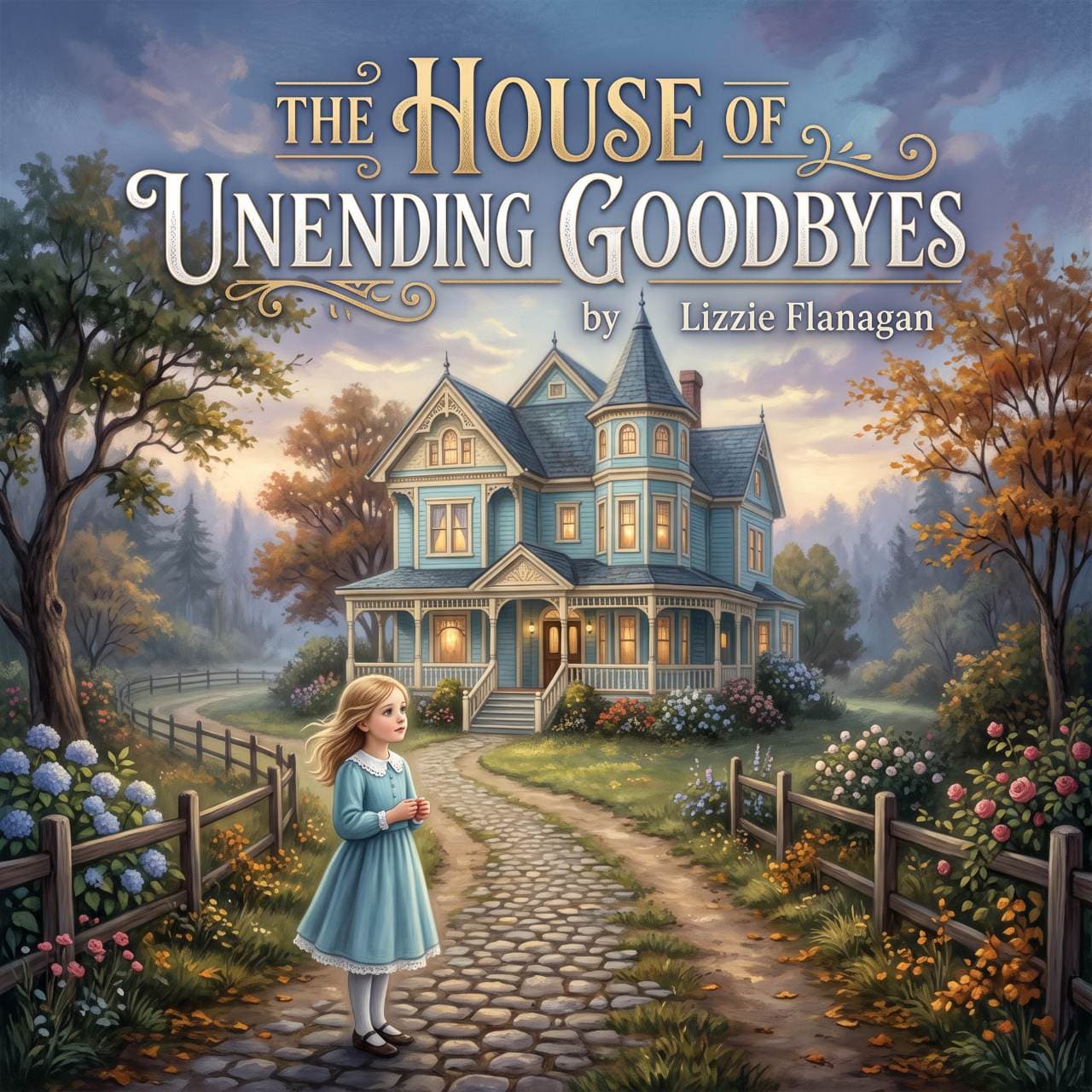

Irene Whitmore died on the morning of October 14th, 1847, when the fever finally consumed her small body. She was seven years old, the daughter of a schoolteacher and a milliner in the town of Millbrook, Massachusetts. The typhoid had swept through the town like a hungry wind, taking twelve children that autumn, but Irene was the first.
She remembered the heat of it—how her skin had felt like paper left too near the stove, how her mother's hands had been cool and wet with lavender water, how her father's voice had cracked when he read her Bible stories by candlelight. She remembered the moment her breathing stopped, how suddenly quiet the room became, how the pain simply... ceased.
And then she was standing in the meadow.
It wasn't the meadow behind her house, though it had similar wildflowers—goldenrod and aster and the last stubborn black-eyed Susan’s of October. This meadow existed in a gray light that had no source, under a sky that was neither day nor night. She could see her house from where she stood, but it was distant, blurred, as if viewed through thick glass.
"Hello?" she called out, and her voice didn't echo. It simply stopped, absorbed by the strange air.
She waited. She didn't know for how long. Time moved differently here—she would learn that eventually—but in those first hours, she simply stood in her nightgown, barefoot in the not-grass, waiting for someone to come for her. Her grandmother, perhaps, who had died three years prior. An angel with wings. God Himself, with a long white beard and kind eyes like in the paintings at church.
No one came.
Eventually, she began to walk. The meadow seemed to extend forever, but when she thought about her mother—about how her mother would be waking to find her cold, about the screaming that must be happening in that blurry house—she felt a tug in her chest. It pulled her forward, and suddenly the meadow ended, and she was standing at the end of a lane she didn't recognize.
There was a house there. It hadn't been there a moment before, she was certain. It was the color of a robin's egg, a blue so pale it was almost white, with gingerbread trim and a wraparound porch and windows that glowed with warm light. It looked like her grandmother's house in Boston, but bigger, more welcoming, as if the house itself was opening its arms to her.
"This is a waiting place," a voice said.
Irene turned. A woman stood beside her—no, not a woman. A girl, older Irene but not by much, perhaps twelve or thirteen. She wore a dress the color of the house, and her face was kind but sad, impossibly sad.
"Who are you?" Irene asked.
"I was the second, the one conjured here in spirit by the first ," the girl said. " but I can’t say if I was before you. Before the fever took others. Iam a placeholder, and someone is coming to take my place. I think... I think I am waiting for you."
"Where are we?"
"Between," the girl said. "Between the living and the... other place. The place where souls go to rest. But some souls can't rest yet. Some souls have work to do here. Messages to deliver. Love to keep safe."
Irene didn't understand. "I want my mother."
"I know," the girl said. "And she wants you. But she can't come yet. She's still living. She has years and years ahead of her. Decades. And you... you have to wait. We both have to wait. Until the ones who love us are ready to hear what we need to tell them."
"How long?" Irene whispered.
"A long time," the girl admitted. "I'm sorry. I'm so sorry. But you're not alone. I'll stay with you. I'll teach you. And when the others come—and they will come, Irene, the fever is still burning in Millbrook—you'll help them too. You'll collect them. You'll keep them safe until their families are ready."
"And then?"
"Then we go home," the girl said. "To the real home. The one beyond the meadow."
But she said it with such longing, such aching sadness, that Irene knew—even at seven years old—that the girl was lying. Or not lying, exactly, but hoping for something she didn't believe would happen.
"I'm Annabelle," the girl said, holding out her hand. "Welcome to the House of Unending Goodbye."