


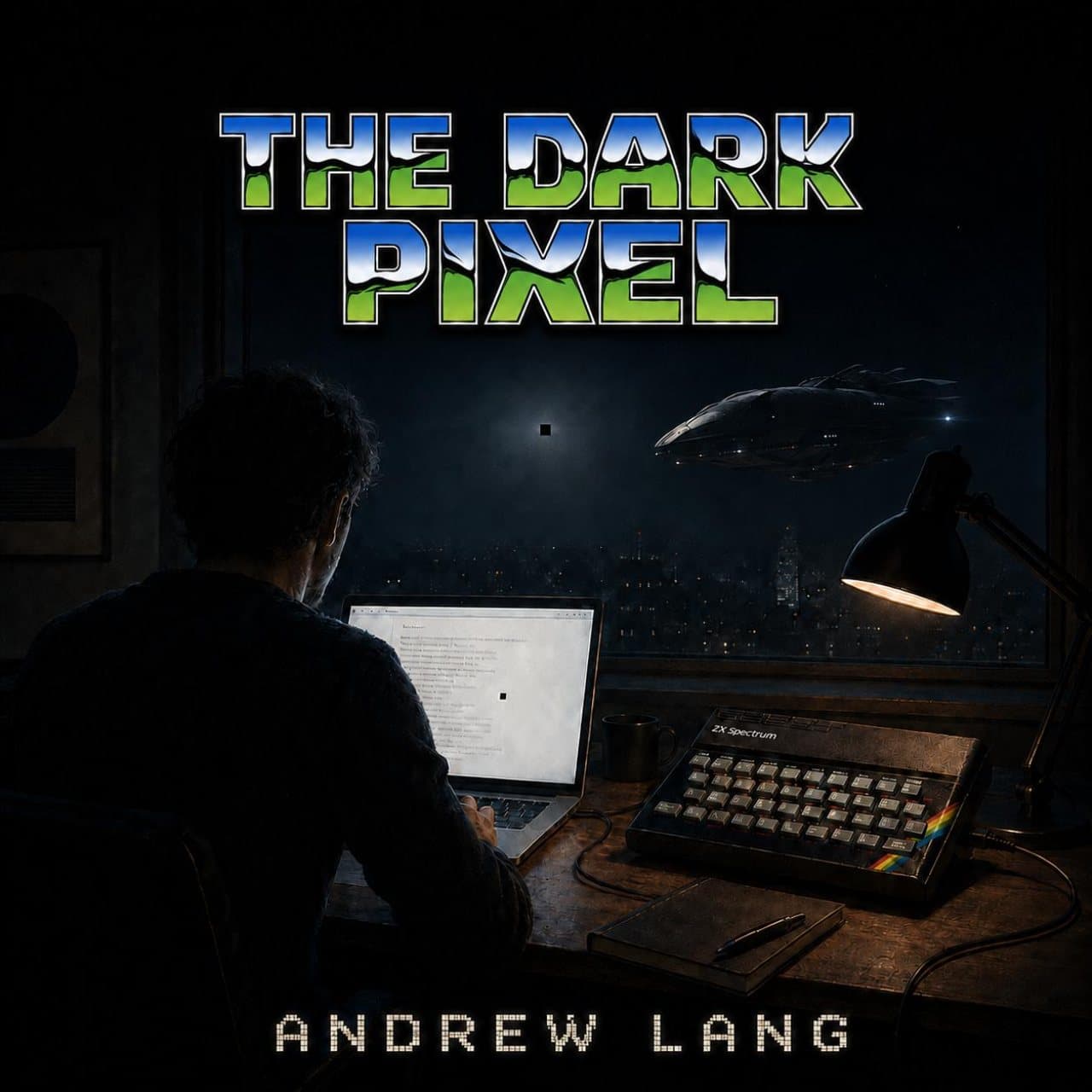
In 1984, Andrew Lang had 255 lives.
Inside the Spectrum, death was a number. Andrew changed it.
The guards remained murderous, the arrows remained airborne and the rope continued its policy of being elsewhere. He had not made Hunchback easier. He had made failure affordable.
At twelve, abundance meant 255 lives.
Nineteen eighty-four did not regard itself as abundant. It had unemployment, strikes, bomb scares and nuclear extinction, which had entered popular comedy because remaining exclusively in terror would have given it airs. Britain was shabby, violent and tired in several important places.
But it leaned forward.
The inhabitants of 1984 did not think they had never had it so good. They thought they had barely started.
Orwell’s dreaded year had arrived thrilled to be here.
It arrived with home computers, synthesisers and a chart full of people dressed for futures that never happened. Every Thursday, Top of the Pops delivered the next world into the living room, where somebody’s father complained about its trousers.
Andrew loved synthesisers because they made sound inspectable: waveform, envelope, filter, modulation. A guitar hid its mathematics inside wood and fingers. A synthesiser put the controls on the front and dared you to produce weather.
Still, the number of possible sounds had to be finite. Vast, certainly, but finite. There were only so many useful relations between frequencies before music became a domestic alarm. Therefore music must eventually peak.
This was not prescience. It was twelve-year-old mathematics applied to pop.
To Andrew, the peak remained impossibly far away. Every week disclosed another room. Pop music in 1983 and 1984 had the indecency of a civilisation discovering new colours and putting them straight into the charts.
A summit becomes visible only during the descent. It was not a summit of universal excellence: 1984 manufactured rubbish with tremendous confidence. But the confidence mattered. Even the rubbish wanted to astonish strangers. Films, games, fashion and pop music presumed that novelty remained possible and that ordinary people might recognise it when it arrived. Failure flourished because an unsuccessful attempt did not yet destroy the person attempting it.
Culture had lives to spare.
Andrew bought Eurythmics’ 1984 and Orwell’s Nineteen Eighty-Four: the soundtrack and the warning.
Orwell’s world was grey, hungry and watched. Language narrowed. History changed behind you. A boot had secured a permanent booking with the human face.
The book seemed outlandish.
It was outlandish. Andrew’s television could not watch him; it could barely maintain a picture without spiritual correction to the aerial. The Spectrum knew nothing about the hands touching it. The government did not know which bus he had taken. Nobody had yet made surveillance look like convenience.
Orwell had made 1984 the year the past feared. It would become the year the future missed.
The watching came, of course, but democratised and smiling. There was no single Party substantial enough to hate. The telescreen was purchased voluntarily, upgraded annually and carried into the lavatory. History vanished not by incineration but beneath limitless history. Machines learned everything about their owners while their owners learned where the battery went.
Andrew knew none of this. He wondered why Winston Smith had not run away sooner.
He put on Eurythmics and opened Orwell. The book entered the music; the music entered the room. The future sounded cold, grand and interesting.
Then, for perhaps thirty seconds, interest stopped.
Nothing happened. That was the peculiarity. The room remained available, but Andrew could not quite reach it. The objects lost their invitations. He was not sad; sadness would have been company.
This was one dark pixel in a bright consciousness.
He had felt it before, usually on Sunday afternoons. He had no name for it and therefore no secondary fear of the name. He did not become anxious about anxiety or depressed by the possibility of depression. A strange minute was permitted to remain a strange minute.
Then the route reopened.
Andrew looked at Popular Computing Weekly. His name was still there. So was his work:
POKE 24760,255
The world had answered him once and therefore seemed likely to answer again. He loaded Hunchback and waited through the electronic shriek.
The future he imagined was not extravagant. It was the present with its promises honoured: better computers, stranger music, easier travel, greater freedom. He could not know that the future would inherit the archive but mislay the momentum; that it would possess more songs and less elsewhere; that abundance would survive mainly as quantity.