


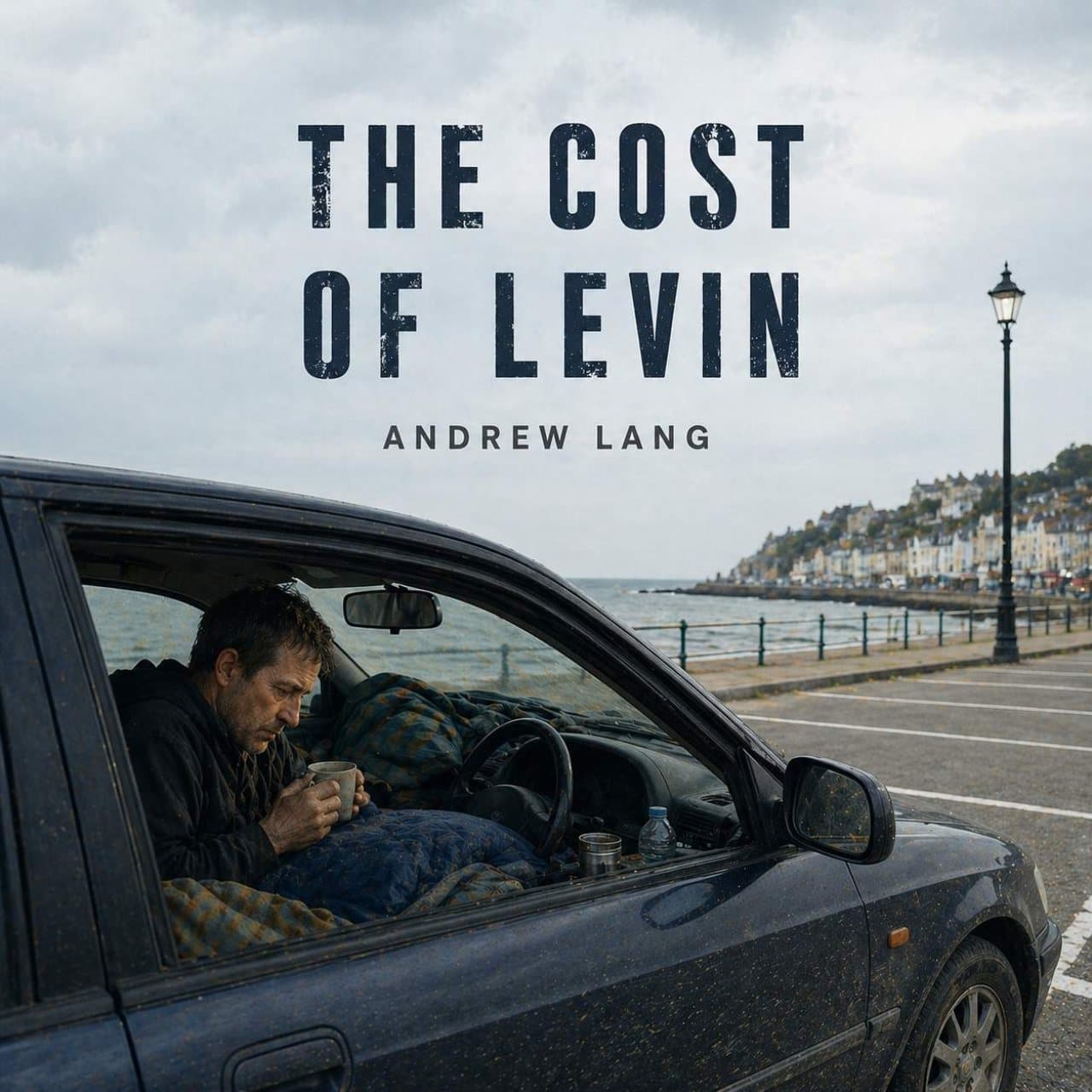
Levin Carrick woke at 5:52 a.m., precisely eight minutes before his phone alarm. He never slept through the night anymore. Something about the cold made his body keep time like an anxious watchman. He lay under the duvet a moment longer, gauging whether the chill had crept deeper overnight. It had. He exhaled a fog of breath and swung his legs over the side of the bed.
The bedsit was small but efficient, and that was how Levin liked it. One main room, a kitchenette tucked into the corner, and a bathroom the width of his outstretched arms. Everything he needed. Nothing he didn’t.
He filled the kettle just past the halfway mark — less water, less energy — and while it hissed to life, he opened the fridge and began the Monday ritual: meal prep.
On the scratched counter, he laid out seven plastic containers in a perfect row. Each would hold the same: a chicken thigh curry made from yellow-sticker meat he’d batch-cooked last night, boiled rice, and frozen mixed veg. No waste, no guesswork. He’d calculated the cost per portion at £1.12.
While spooning in the rice, he caught a flicker of motion in the corner of his eye. A pigeon. Same one, he assumed, that sat on the ledge most mornings. He didn’t know why, but its presence reassured him. Maybe because it, too, looked like it was surviving on precision and routine.
He cycled to work. Not because he enjoyed it — he didn’t — but because it was cheaper than the bus, healthier than doing nothing, and one more line on the spreadsheet that added up correctly.
His destination: the Barclaycard processing centre in Northampton. A featureless grey rectangle of a building surrounded by two dozen others just like it. Levin worked in “Customer Resolution Data Maintenance,” which sounded more important than it was. He updated contact records. Checked flagged accounts for duplicates. Monitored the “Returned Mail” folder for people who no longer existed — or at least, no longer wanted to be found.
£24,000 a year. Full time. Pension scheme. Tea room with a microwave that smelled permanently of burnt lasagne. All things considered, a good job. Which is why he didn’t complain. Or take sick days. Or speak more than necessary.
Lunch was a jam sandwich on white bread. He’d pre-packed it, of course — cheap, soft slices from the reduced section, jam from a jar bought on offer at Morrisons three weeks ago. He ate at his desk, headphones in, watching a YouTube video titled: “UK Economy on the Brink: Real Inflation is 18%”.
The presenter was American, nasal voice, buzzcut. But Levin appreciated the charts. The bluntness. It matched what he already felt in his bones: something was cracking beneath the surface. Wages frozen. Bills up. Fuel up. Rent up. Everything creeping.
“The system’s not broken,” the man on the video said. “It’s working exactly as designed — just not for you.”
Levin paused the video and stared at his spreadsheet. His monthly cost breakdown. He’d updated it last night. Every line was accurate. Every expense justified. He was doing everything right.
And yet…
That evening, back home, he pulled off his damp socks and put them near the radiator to dry — he’d only run the heat for one hour tonight. Just enough to take the edge off.
He opened another YouTube video while he reheated one of the meal tubs.
“Living on £2 a Day – UK Challenge!”
A young woman smiling into the camera, bouncy, full of pluck. She was holding lentils. They always had lentils.
Levin watched silently. He didn’t dislike her. But she had hope, and that made her a different species.
When the video ended, he didn’t click another. Instead, he turned the lights off, sat in the dark, and listened to the faint hum of his neighbour’s television through the wall.
He wasn’t suffering. Not really.
Not yet.
But he was balancing.
Always balancing.
And in Britain, in 2025, that was the same as falling.