



The morning began with prayer. Not the soft, timid kind, but the kind that rumbles from the belly and rises through the air like thunder from the soul.
After "Bloody Sunday," after the gas, the horses, and the batons, the people came back. They came limping, bandaged, coughing - but they came.
This time, they weren't six hundred.
They were thousands.
From every corner of the country, they arrived - students, preachers, nurses, steelworkers, rabbis, nuns, sharecroppers, and children. The air buzzed with anticipation and something holier than hope.
Sarah stood among them, her arm in a sling, her face still marked with healing bruises. The small boy she'd protected, Matthew, clung to her good hand. They looked like family now, bound by blood that had spilled in the name of freedom.
On the steps of Brown Chapel, Dr. Martin Luther King Jr. spoke to the sea of faces. His voice carried through the Alabama air like prophecy:
"We are on the move now! No wave of racism can stop us. The burning of our churches will not deter us. We are moving to the land of freedom!"
The crowd erupted. "Amen! Tell it!"
Sarah felt tears slide hot down her cheeks. Not from fear this time - but from the weight of being seen.
The March Begins
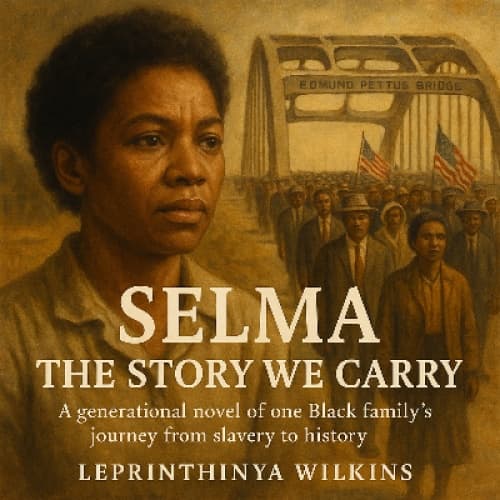
When they stepped onto the Edmund Pettus Bridge again, the soldiers stood in silence this time. The world was watching. Journalists lined the roads. Federal protection flanked them. There would be no batons today - not while cameras caught every breath.
The bridge gleamed under a pale sun, no longer just steel and rivets but a monument to endurance. As Sarah crossed, she could almost feel her grandmother Ruth's spirit walking beside her, the ghost of Josiah's song humming through her veins:
"Wade in the water…"
Beyond the bridge, the road stretched endlessly ahead - fifty-four miles of history waiting to be written.
They marched through Lowndes County, through red clay roads and sleepy towns, through heat and exhaustion and whispered prayers. Along the route, white farmers stood on porches watching them pass. Some spat. Some clutched rifles. But others - quiet, unseen - left jugs of water and baskets of food by the roadside, too afraid to speak but brave enough to care.
At night, they camped under the stars. Sarah shared bread with strangers who became kin. She listened to stories - of women who'd lost husbands to violence, of men who'd lost everything but faith. In the distance, soldiers kept watch, their faces unreadable behind helmets.
Under the glow of a small fire, Sarah opened Ruth's Bible and whispered to Matthew, "You know why we're walking, right?"
He nodded, chewing the crust of bread. "So they can't say no anymore."
Sarah smiled softly. "Exactly."
She looked at the stars and thought of every ancestor who had dreamed of walking freely on this soil. Tonight, it felt like they were walking too - barefoot, invisible, but here.
The Last Day
By the fifth day, the marchers looked like a river - wide, unstoppable, and alive. Tens of thousands joined the final stretch into Montgomery. The air shimmered with heat and the rhythmic sound of feet.
Sarah's throat ached from singing, but she couldn't stop. Every verse carried her forward:
"Ain't gonna let nobody turn me around…"
As the dome of the Alabama State Capitol came into view, a roar rose from the crowd. The sight of it - that building where white men had written laws to break their backs - now loomed as a destination of defiance.
Dr. King climbed the steps, his eyes sweeping the sea of faces below. Sarah stood in the crowd, tears streaking down her cheeks, her hand pressed over her heart.
"Let us march on ballot boxes," Dr. King thundered. "Let us march on until victory is won! How long? Not long, because the arc of the moral universe is long, but it bends toward justice!"
The words wrapped around Sarah like sunlight breaking through clouds. She shouted "Amen!" until her voice cracked.
Matthew tugged on her arm. "Did we do it?"
Sarah bent down, brushing a tear from his cheek. "We started it."
She looked around - at the flags waving, at the weary faces glowing with triumph, at the mix of Black and white hands clapping together. The moment was holy.
The Morning After
The next morning, the marchers dispersed slowly. The streets of Montgomery bore the footprints of history. Newspapers screamed headlines about courage, unity, and change. The Voting Rights Act would come months later, but Sarah already knew - the bridge, the march, the blood - it had all been worth it.
As the buses loaded, she turned back for one last look at the Capitol. The same sun that had burned her skin now kissed her face in peace.
She whispered, "We are still here."
When she reached home that evening, her mother and grandmother waited at the door. Ruth's eyes shone wet, pride quivering in her smile. She held Sarah's hand tight and whispered, "I knew our words would make it to the road."
Sarah leaned her forehead against hers. "They made it to history, Grandma."
Epilogue of the March
That night, Selma was quiet. The air felt different - lighter, freer. But the people knew this was not an ending. It was a beginning carved from courage and carried by generations who refused to die silently.
Sarah placed Ruth's Bible on her nightstand, next to her registration card - a small white rectangle of paper that had cost centuries of pain.
She opened the window, and from somewhere beyond the trees, she swore she could hear the faint chorus of a hymn on the wind.
"Wade in the water… God's gonna trouble the water…"
Sarah smiled through her tears.
"Trouble it again, Lord," she whispered. "And we'll keep walking."