


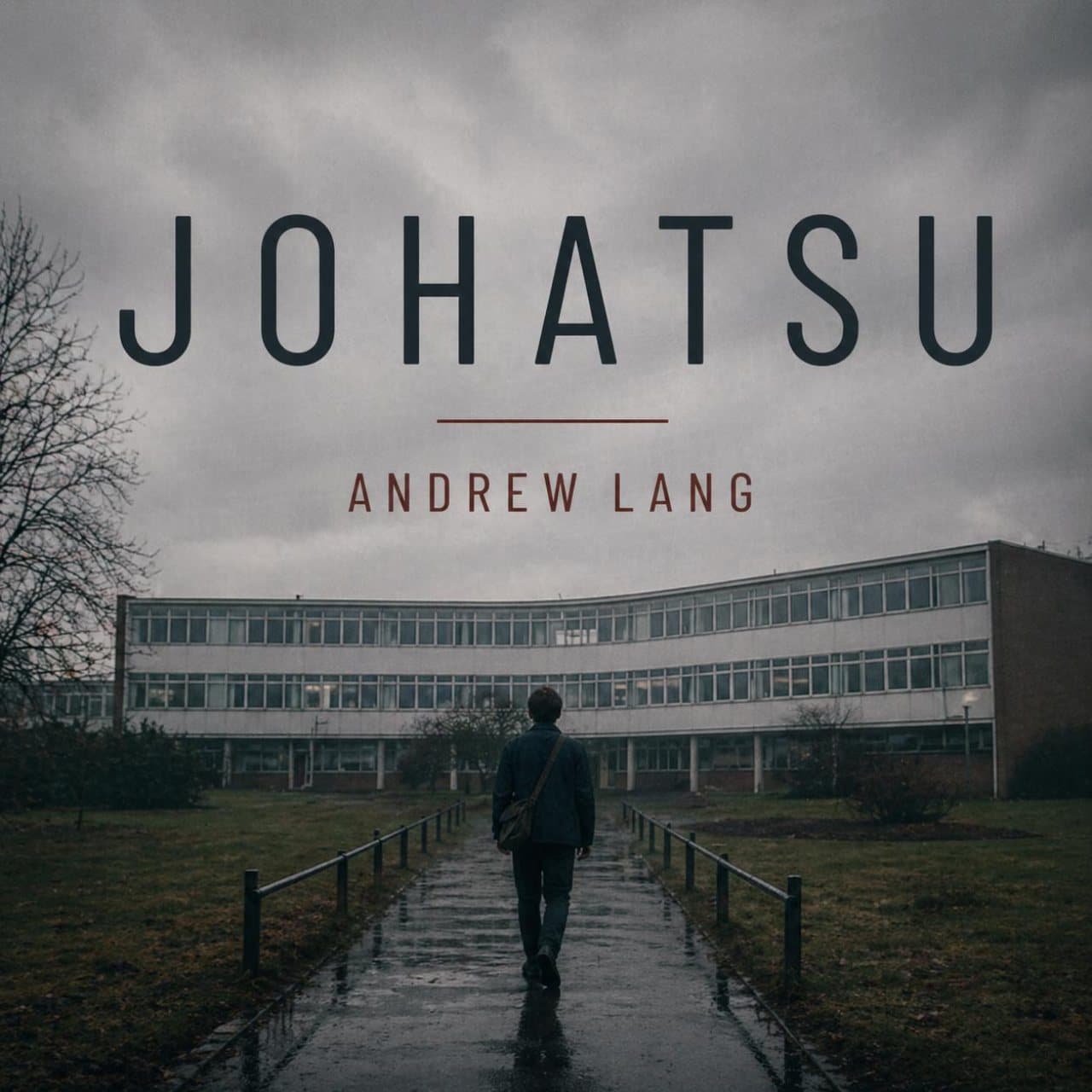
The gymnasium was a coffin turned sideways.
Brick walls the colour of unbrushed teeth. Light bars humming overhead like mechanical tinnitus. Rows upon rows of students—cross-legged, blank-faced, already half-anaesthetised by routine and polyester.
The floor had a slight give to it, like something underneath was still breathing.
Ben Norris sat among the rest, knees tucked, back straight, the way you’re supposed to when you don’t want to be noticed. The gym smelt of boiled shoe leather and the kind of sweat that doesn’t come from exercise but from institutional heating.
At the front stood Mr. Bennett, who was not the headmaster but had—by some common understanding among pupils and staff alike—become the headmaster by attrition.
He was tall, but not tall in a distinguished way. He had the build of a man used to barking at fifteen-year-olds and winning. Skin the colour of grey clay, lips thin as biro lines. His hair was retreating strategically.
He was talking already. He didn’t need silence. He generated it.
“You boy—hat off!”
A ripple passed through the crowd. A head turned. Then more. Martin Davis, fourth year. Wore a soft-brimmed sun hat. A ridiculous thing, objectively—pale blue with a rim like a frisbee.
“Off. Now.”
Bennett’s voice didn’t shout. It cut.
Martin looked up. There was a pause. Not defiance—just delay. Like his body didn’t want to follow through.
And then, slowly, mechanically, he removed the hat.
Gasps.
Not dramatic ones. But audible. A collective inhale, as if someone had opened a door onto something private.
Martin was bald.
Not stylishly. Not by choice.
His head was pale, almost translucent. The kind of baldness that hadn’t been earned over decades but extracted—by chemicals, by treatments, by hands in latex gloves.
The hat, it turned out, had been serving a purpose.
Mr. Bennett didn’t blink.
“There you go,” he said, already looking elsewhere. “What medical purpose was that hat serving you, son? Nothing. Let’s keep it off at all times.”
And that was it. No pause. No shift in tone. No realisation.
Just order, reasserted.
Ben stared forward. He could feel, more than hear, the confusion in the row around him. A few kids whispered. One muttered, “he doesn’t know.” Someone else replied, “he does know.” But the muttering stopped before it grew.
There were rules. Even grief had to sit still during Assembly.
Still no headmaster.
The chair on stage—throne by implication—sat empty. Again.
They said he drank in his office. They said he didn’t have an office. They said he lived in a flat above the science labs and only came down at night.
Some said he wasn’t real.
Others had seen him—once, twice—a pale man with a red face and yellow teeth, wandering the halls with the aimless precision of the terminally hungover.
Teachers rarely mentioned him. Pupils never saw him. Parents, presumably, received his name typed at the bottom of newsletters—Mr. P. Durrant, Headmaster—as though that were enough to make him real.
He hadn’t come to Assembly in over three years.
And yet here they all were, cross-legged on the parquet floor like penitents at a funeral. And Bennett, dictating order with the grim joy of a man whose inner life had been permanently cauterised.
Not a word was said about the hospitalised teacher.
Not a whisper about Peter Shaw.
Not a hint that anything was amiss.
Just the same tired script:
Uniform expectations.
Littering on the east field.
Something about a fire drill.
A reminder that lateness would not be tolerated.
No mention of comas. Or violence. Or fear.
No mention of how many staff were quitting, or how many teachers had gone on stress leave, or how many parents had made calls and never received answers.
Just order.
Even if it had to be wrung out of the dying throat of the institution.
Bennett dismissed them with a nod.
They rose—silent, twitchy, dust-covered—and filtered out.
Ben stayed seated for a moment longer. The floor beneath him felt colder now. Or maybe he was just starting to feel the building in his bones.
It wasn’t just the school that was sick.
It was the silence.