


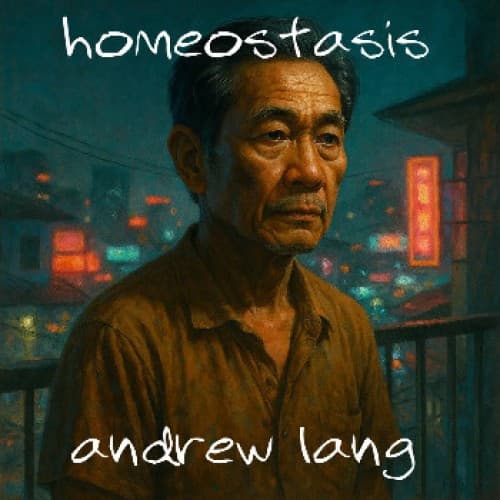
Manit didn’t believe in anything anymore—not medicine, not meditation, not mindset, not miracles. The only thing he could believe in was the ringing in his ears—because it never lied, never left. It was always there. A shrill hiss, like feedback from an invisible speaker lodged in his skull. He could hear it over traffic, over sirens, over earthquakes, over someone else's breakup across the street. Five years, twenty doctors, zero change.
He sat in a dim bar on Pratumnak Hill, sipping a Leo. Pattaya was loud and cheap and anonymous. Just what he needed—to get away from his farming work up in Issan. The quiet there made him focus too much on the ringing. At least here, the city’s noise could bleed into his own. He hadn’t been cursed with hyperacusis, thank god, so the ambient sound helped somewhat. Not a fix, but a dulling. A trick his brain could sometimes fall for.
He didn’t notice the older man watching him from the far end of the bar until he felt the gaze—quiet, direct, patient.
The man approached. Late fifties, short, wiry, fellow Thai. His skin looked carved by sun and time. He wore a loose white shirt, linen pants, and worn-out sandals held together by sheer optimism.
“You have the sound,” the man said.
Manit blinked. “Excuse me?”
The man pointed gently to Manit’s left ear. “High tone. Inside your head. Constant. Like a wire pulled too tight.”
Manit stiffened. “How the hell do you—”
The man smiled, soft but unamused. “You look around, but never at anything. Your face strains. Your jaw fights itself. You have tinnitus.”
Manit almost laughed. “How do you kn-"
“I can help,” the man said. “But only if it’s unnecessary.”
“What?”
“The suffering,” the man clarified. “Not all can be touched. But yours—this one—it teaches nothing. So I will show you.”
He motioned toward an empty stool beside him. Manit hesitated, but something about the man—his certainty, his calm, the absence of salesmanship—nudged him forward. He sat.
The man placed his fingers just under his own jawline. “Here. Press hard. Then behind your left ear—under the ridge of bone. You will feel a sting. Hold it.”
Manit followed, more curious than convinced. He pressed. A sharp ache bloomed along his jaw, then pulsed under his ear.
“Now breathe. Through the nose. Four seconds in. Hold. Four seconds out. Do not talk.”
They sat in silence. The bar noises blurred. The music faded. And then—
Nothing.
No hiss.
No static.
Just silence.
Manit opened his eyes. He looked around wildly, as if the sound might be hiding nearby.
“What the fuck?” he whispered.
The man nodded. “It will return. But do this daily, one hour. It will leave.”
“Just like that?”
“No. Not just like that,” the man said. “You have to touch it every day. Until it forgets to come back.”
Manit stared. “What’s your name?”
“Pan,” he said. “Like the god, but not.”
“What are you?”
Pan smiled faintly. “Someone who solves the wrong kind of pain.”
With a wai and a bow, Pan left — a wisp of linen and collapsing sandals fading into street behind the bar.
Manit wanted to say something before he left, but nothing came out. Just tears — hot, stupid, ambush tears. They slid down his cheeks without warning, not from pain but from the sheer absence of it. The bar was quiet. Actually quiet. For the first time in five years, the noise was gone. No ringing, no shrieking, no brain-frying hum — just a silence so pure it felt like being mugged by a cathedral. He covered his face with one hand and let it happen. Screw it. He'd earned this breakdown.