


The café was one of those dim, amber-lit refuges Tokyo hides between convenience stores and tax accountants’ offices—places that appear only after nightfall, like shy animals. Nakamura sat opposite a woman named Takako, who regarded him with the sort of devotional intensity usually restricted to religious art.
“You know,” she said softly, fingertips grazing the stem of her glass, “I’d forgotten what it feels like to be really seen.” She held his gaze as though it were a fragile instrument. “But you… you see me.”
Nakamura didn’t blush. He didn’t look away. Nakamura took in the compliment slowly, as though confirming something he had suspected all along.
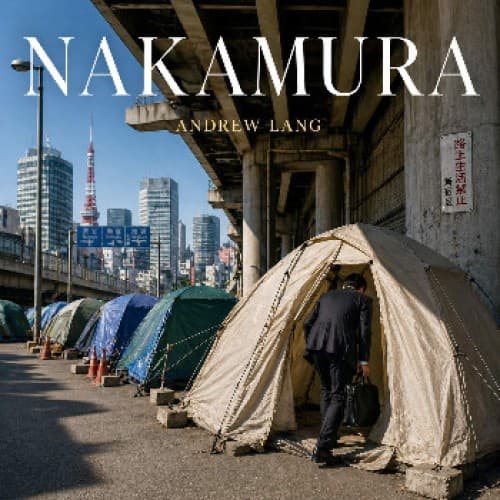
“So few of us are seen today,” he said, voice even, authoritative. “It’s a crying shame, Takako. Look around.” He gestured at the city through the café window: neon, night, humanity gliding past like schools of spectral fish. “Tokyo’s full of ghosts. People walking through each other. Talking past each other. Only my Shachō appreciates me, really. I’m a linchpin at my company. Two hundred employees, but strip it down to bare bones and there’s maybe five, six of us who keep the whole thing afloat. And I’m one of them. Yet most people don’t even notice I’m there.”
Takako leaned in, her expression bright with fascination and something warmer.
“You have such a way with words,” she murmured. “Such a way… with life. Where have you been all my years? And you—no wife waiting for you at home.”
Nakamura lifted his hands in a gesture of calm resignation.
“I never had the time for marriage,” he said. “Being an integral player in a company—that’s its own sacrifice. You give the hours, the years, the best of yourself. There’s not much left for anything else.”
Takako breathed out as though receiving wisdom from a mountaintop sage.
“How do I keep you in my life?” she asked. “I mean it. I instantly know I need you forever. You’re… extraordinary. You walk into a room, and the whole room shifts.” She laughed, half in disbelief. “It’s unreal. I just met you, and already I can’t imagine not having you near me.”
Nakamura nodded with solemn assurance, as though such declarations were his daily fare.
“You see me, Takako. That’s rare. People go whole lives without being seen once. But if two people see each other—truly see—don’t they owe themselves a future? Don’t they owe each other that chance?”
Takako pressed a hand to her chest, stunned by the force of his conviction.
“Did I tell you,” she whispered, “that you have a way with words?”
Nakamura smiled—slow, knowing, entirely at ease.
“Possibly,” he said. “But I don’t mind hearing it again.”
They laughed together, softly, the sound mingling with the warm café air as if the night itself were leaning in to listen.