


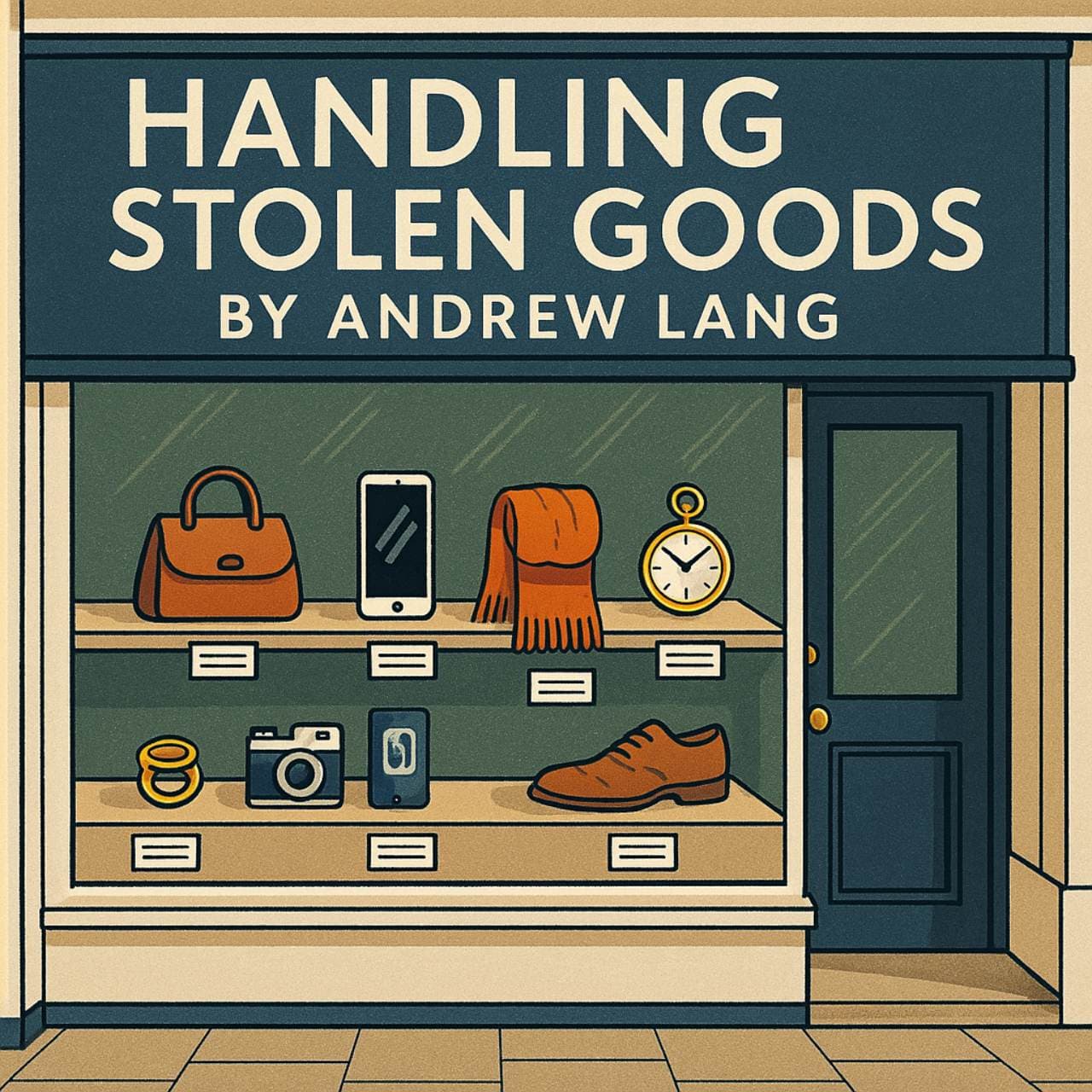
After the police visit, Dylan knew he’d won the opening skirmish. The game, as he saw it, was not about guilt or innocence. It was about irritation. You couldn’t wound the modern state with violence or rhetoric — but you could annoy it into self-parody.
He posted a video, standing outside his shop, rain stippling the sign behind him.
“A brief civic announcement,” he began. “If you’ve ever had something stolen and found the police response underwhelming — a shrug, a crime number, a promise to ‘review the CCTV’ — then this project is for you.
They no longer investigate petty theft. They haven’t the time, the resources, or the will. But tell them they’re not doing their job and they’ll come running, bristling with wounded pride.
So, we’re helping them out. We’re giving them something to be offended by.”
He paused, let the smirk do the punctuation.
“If you have an item you no longer want, something to be symbolically stolen, DM us. Time and place, must be public — a London park, ideally. Leave it beside you. We’ll do the rest. The act of taking becomes the art of notice.”
He finished with the faint half-bow that was becoming his trademark.
A few days later, the performances began in earnest — or rather, in irony.
It was always in a park: Primrose Hill, Hyde Park, the Serpentine, places with benches and moral distance.
A “panto thief” would materialise — instantly recognisable, dressed in the full cartoon regalia: black-and-white stripes, little domino mask, cloth sack slung over one shoulder.
And the public, of course, would know.
They’d murmur it, delightedly: “It’s that art project!” Phones went up like periscopes, the screens blooming all at once.
The thief would perform the ritual — the exaggerated tiptoe, the pantomime sneak, arms out like quotation marks. Someone always shouted, “He’s behind you!” and the thief, never breaking character, would wag a gloved finger at the crowd, mime-shushing them like a naughty uncle.
Then the “theft.”: a quick lunge for whatever item was left to take next to the “victim” on the bench (a coat, a handbag, a watch), a comic gasp from the “victim”, a burst of laughter. The thief would sprint off with his sack, vanishing into the trees.
The “victim,” half-acting, half-giddy, would get to his feet and shout, “Stop! Thief!” in the approved tone of a Victorian farce. A few seconds of staged pursuit — then nothing.
And, always, the closing line: the “victim,” turning to the nearest phone camera, regaining his composure.
“Not to worry,” he’d say, deadpan. “I’m very sure the local constabulary will take this crime seriously.”
Laughter. Applause. Upload.
This wasn't just performance. It was a form of protest too. At the lack of policing.
The footage made its way online that same evening, captioned:
‘Panto thefts’ continue across London — art or anarchy?
But it wasn’t anarchy, not really. It was something gentler, crueller — a country laughing at its own impotence.