


Part Three
Once he was asleep, I washed, freshened up, and had some tea. Then I took a leisurely look around and caught my breath. We had climbed so high that all the land, the whole world, seemed to lie below us. A clear blue sky stretched overhead, and far, far below, the River Indus flowed, its clear waters visible and glittering. Rows of trees stood along the edge below.
The village itself was very beautiful. There was a little level ground, and I noticed three or four things that were unusual to me and delighted me.
One was the small black amlok—currants, or persimmons, as they are called—which grew on large bushes. Along the sides, there was an abundance of yellow maize, planted in very orderly rows.
There were also trees bearing all sorts of unfamiliar fruit whose names I did not know. The villagers told me which ones were edible. They picked them, brought them to me in plastic shopping bags, and left them beside me. I ate some while the others were still asleep.
As I sat looking around, my companions continued sleeping. They began waking up one by one, two or three hours after I had woken.
As each man woke, I told him, “They have heated water for you in tubs. First of all, have a bath and freshen up. Then have some tea. Afterwards, we will sit down together. Whatever time it is by then, we will hold our meeting and decide what we are going to do next.”
Our hosts were now eager for us to tell them what we wanted to eat that night and what they should prepare for dinner. Their elders kept saying, “If you need anything at all, whatever it may be, we are ready to arrange it for you.”
These were people from both sides contesting the election. They were trying to get as close to us as possible, flatter us, and keep us happy, hoping that we might grant them some favour.
But we had only just woken up. The men had washed and bathed, offered their prayers, and had tea. We had not yet decided what to do next. Our hosts, however, were very eager.
Suddenly, it occurred to me that the most important matter was the sick young constable we had left along the way. With no means of communication available, we had no idea what had become of him. Was he still there? Was he coming up towards us, or had he gone back?
He was my responsibility—a human responsibility, a moral responsibility, and an official responsibility as well.
I asked one of the men, “Would it be possible for someone to set off now and go down to the place where we left that young man? Please find out whether they have returned to headquarters, are on their way up, or are still there. Give them whatever help you can.”
I was worried about his health and wanted to put my mind at ease.
They replied, “Sir, we will send not one man, but ten.”
“No,” I said. “Two or three will be enough. You know this area and its paths.”
So they set off.
After they had gone, the others said, “We have been waiting for you. We have prepared two goats and a sheep, cooked dum pukht—roasted and made ready for you. We have maize bread, though no wheat bread. We have also arranged tea and whatever else we could. We have cleaned and cut the local vegetables and set them out for you.
“After dinner, if you want to sleep, please sleep. If you would like to sit and chat, you can do that.”
One man even brought us a tape recorder that ran on dry-cell batteries, along with some cassettes filled with very good songs.
“You can listen to these songs as well,” he said. “Our tape recorder runs on batteries.”
You could call it a music player. They did a great deal to make us comfortable. Our room was warm too, and we sat at ease.
I then decided that, God willing, polling would begin at nine the following morning. Before that,
we would get up at about seven, offer our prayers, have breakfast, and change our clothes. Afterwards, I would give everyone a short briefing on what they had to do and how to do it.
We also agreed that we would go early in the morning to inspect the school, which stood a little way down the mountainside from the village. We would look around it: where the gate was, where people would enter and leave, how many rooms there were, and what facilities were available. We would check the approach route and the path leading down.
That was what I decided, and everyone agreed.
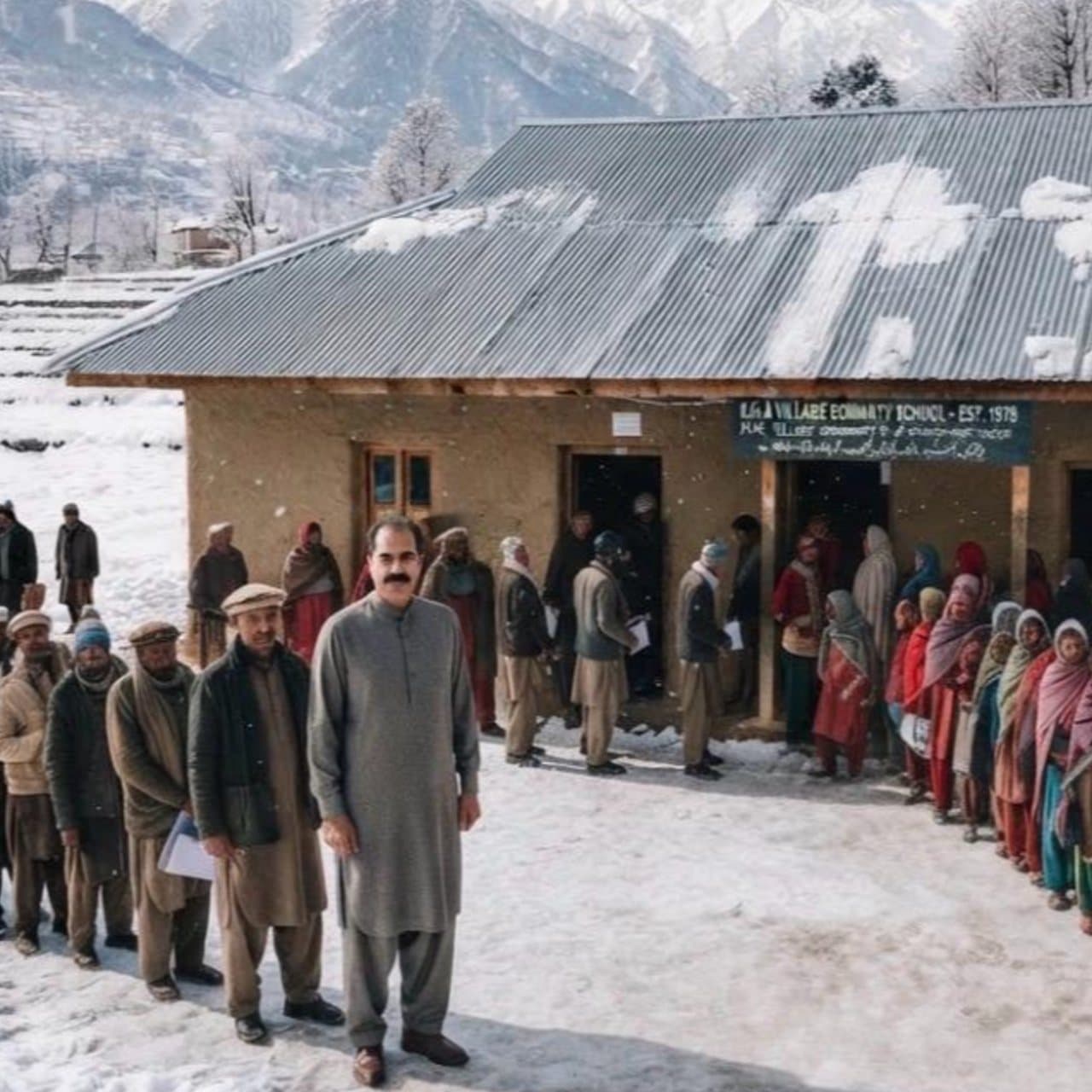
And that was exactly what happened. When we went there in the morning, we found a rather beautiful little school building, with a veranda at the front and two rooms behind it. It was probably a primary school—a boys’ primary school.
Inside, there was a desk, a few chairs, some charts, and a cupboard containing papers and pieces of chalk. There was a blackboard as well. Outside, the school had quite a spacious courtyard. We also saw some walnut trees, or trees of that sort. There was no fruit on them then; it was winter, and they looked somewhat dried out. Anyway, a breeze was blowing, and the view was lovely.
When we arrived, they brought out the chairs and seated me on one. My two immediate juniors sat beside me, and we placed a table in front of us.
We decided that everyone arriving to vote should sit about a hundred paces away from the school and then proceed as we instructed them. We made all the arrangements, put the ballot boxes in place, and set up a curtain to provide privacy.
We then explained the procedure: “You will each have to show your identity card. Once you have shown it, you will receive a slip—a ballot paper—from us. Take it inside and place your thumb impression against the candidate of your choice, or use the stamp where required. When you receive your ballot paper, your thumb will also be marked with indelible ink to indicate that you have voted.”
We explained all of this to them. Then I said, “Now, let all the women come to one side and
form a queue here, and let all the men come from the other side.”
They spoke among themselves and said, “That is not possible. It cannot be done.”
“Why not?” I asked. “It is really very strange.”
While we were still discussing it, I said, “Why should the women not stand on one side? This is a tribal society. Surely men and women should have their separate polling arrangements. That is how it is done in our cities and throughout Pakistan.”
Just then, I saw about four men approaching us. To my utter surprise, they were wearing very nice black trousers and trainers.
“How have these fellows turned up here?” I wondered. “The people here do not even know how to dress properly.”
Anyway, we met them and asked, “Who are you?”
“We belong here, to this very place,” they replied. “We actually live down in Rawalpindi, Islamabad, Faisalabad, Karachi, and places like that. We have come here to cast our votes. We belong to these same tribes.”
They explained that they did small jobs in the cities. One might be a waiter in a hotel, another a shoeshiner, and so on.
“We have come from there,” they said. “Living there, we wear these second-hand clothes from the used-clothing markets. Now we have come back here. We are a little different from them, but these are our own people.”
The first thing they told us was, “Please do not ask these people for identity cards. They do not even know yet what an identity card is.”
In fact, the registration process throughout our country had only begun in 1984, and my own identity card had been issued only about two years earlier.