


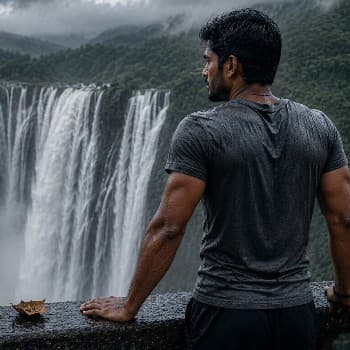

Ganga opened the door herself. She was younger than Rohan had expected — perhaps twenty-six or twenty-seven — with her father's broad, unhurried face, though he did not know that yet, because he had never met her as a child; she had been an infant, or not yet born, in the years he had known her father.
"I am looking for Shivappa," he said. "I was told to ask for you."
Something moved across her face — not surprise exactly, but a kind of recognition arriving late, as though a name she had heard many times had finally found a face to attach itself to.
"What is your name?"
"Rohan."
She was quiet for a long moment. Then she opened the door wider.
"Please come in."
He sat in a small front room while she made tea he did not ask for and did not want to refuse. She did not speak while she made it. It was only after she had set the cup in front of him, and sat down across the small table, that she said the thing he had, by then, half prepared himself to hear.
"My father passed away eight months ago."
The rain, which had been threatening all afternoon, chose that moment to begin — not heavily, only a fine, steady sound against the tin roof, the kind of rain that does not announce itself so much as simply arrive.
Rohan did not say anything for a while. He looked down at the tea he was not drinking.
"I am sorry," Ganga said. "I can see this is not the news you came for."
"How did it happen?"
"His heart. It was quick, the doctor said. He was sitting on the veranda in the evening, the way he always did, and he simply did not wake for dinner." She paused. "He had been sitting there most evenings for years. Every year, when the monsoon came, he would sit there longer than usual. My mother used to ask him what he was watching for. He never gave her a proper answer."
She rose, went to a small wooden shelf, and took down a metal box — the kind used to store old documents, slightly rusted at the corners. She set it on the table and opened it.
Inside, carefully kept, were things Rohan had not thought of in ten years and recognised instantly: two folded, unopened letters in a child's handwriting, addressed to Shivappa in a hand Rohan recognised as his own, aged eleven. A dried, flattened leaf-boat, its fold gone brittle with age. A single photograph — himself at perhaps eight years old, sitting on the crossbar of a bicycle, Shivappa's hand resting lightly on the handlebar beside him.
"He kept everything," Ganga said quietly. "He used to tell us about a boy from Mysore. He said the boy would come back one day, when he was grown, and that when he came, he was to be given these things. We did not always believe him. Ten years is a long time to wait for a stranger's child to return."
"He never opened my letters?"
"He could not read very well, Rohan. He never told you that, I think. He was ashamed of it — a grown man, and a boy's letters he could not read on his own. He kept them all the same. He used to say the boy had written them with his own hand, and that alone made them worth keeping."
Rohan felt something break open in his chest that he did not have a name for — not simple grief, though grief was certainly part of it. Something closer to the specific, late arriving sorrow of understanding a person's love only after it is no longer possible to thank them for it.