



They found Gulabi by the sea.
She was not bound, nor hidden away in fear, nor pale with any captivity. She was sitting in the doorway of a quiet house above the shore, looking out at the grey water, and when she saw Sukumar climbing toward her she rose and met his eyes without the least surprise. She had been waiting for him. She had, Sukumar understood in that moment, been waiting for him from the very first.
"You found the cup," she said. It was not a question.
"And the coffee," said Sukumar. "You meant me to."
"I meant you to," Gulabi agreed, and drew him in out of the wind. "Sit. You have come a long way, and I owe you the whole of it. There is no one else I would have trusted to walk this road to its end."
And there, with the sea below them and the rain at last thinning over the coast, she told him — not as a captive freed, but as the one who had arranged every step.
She had planned it all herself.
Shyla, she said, was the daughter of her dearest friend. Ten months before, Dinesh had come to Karwar with companions of his, and there he had behaved shamefully toward the girl. He had taken indecent photographs of her, and afterward he had used them to threaten her and to torment her. Shyla's people had no faith that the law would ever touch the son of a respected farming family, and so they had kept their silence, frightened, with no weapon of their own. The girl had carried it alone, and it had been slowly destroying her.
"I have loved both of those boys as my own," Gulabi said. "But I will not love a wrong into the ground. And I am an old woman, Sukumar. Who would believe me, if I stood in the road and accused Dinesh? They would say grief had turned my head. So I did not accuse him. I made a thing the law could not look away from — and I gave it to the one person clever enough and honest enough to carry the truth out of it. I gave it to you."
The blood had been her own, she told him — drawn in a small quantity from a cut she had made ready beforehand, enough to raise alarm and never enough to mean a true death. The jewels and the cash she had hidden by her own hand. Babu and Shyla had done no more than help her travel and keep her out of sight. She had never meant for Dinesh to suffer for a murder that had never been. She had meant only to pull the whole matter into the open, where his real crime could no longer shelter behind his good name — and where Shyla, no longer alone, might at last be believed.
"I knew you would not stop at the blood," she said. "I knew you would see the cup, and the coffee, and follow them to Babu, and Babu to me. I was not running from you, Sukumar. I was waiting for you. Because the next part I cannot do alone."
For she had brought the truth to the surface — but it would take Sukumar, and his good name, and his plain honesty, to make it stand. Shyla's word against a respected family was a frail thing. Shyla's word, with Sukumar beside her, was another matter altogether.
Sukumar was silent for a long while, looking out at the sea. He was ashamed — not of Gulabi, but of his own brother. And then he understood what she was asking of him, and what it would cost, and he gave her his answer.
He would stand with Shyla.
When they returned, Gulabi went to the police herself and set the matter straight. There had been no murder, she told them, and no robbery; she explained what she had arranged, and why she had arranged it, and she bore their anger without flinching. And in the same breath, with Shyla and her family beside her now, no longer afraid, and with Sukumar standing plainly at the girl's side, she laid the real crime before them. Shyla made a formal complaint of the photographs and the harassment. The very images that Dinesh had wielded as a weapon now became the evidence against him. He was charged under the law, and for the first time the shelter of his family's name could not reach him. He would answer for what he had done, in open court.
Sukumar did not shield him. And though it broke something within him, he told his brother plainly that he would face this alone, and that if any redemption remained to him, it lay only in becoming, someday, an honest man.
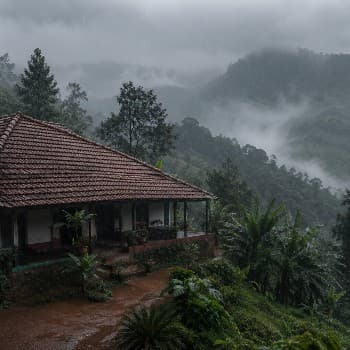
Gulabi came home to her house above Kodekallu Gudda — to her farm, her solitude, and her one particular steel tumbler — with a clear conscience. She had risked everything, not to destroy a son, but to make a wrong answer for itself at last. And she had done it by placing her whole faith in one man's honesty, and finding it equal to the weight.
The mist closed again over the Charmadi hills.
But as Sukumar climbed the path toward home, Gulabi spoke to him once more. An old friend in the next valley had written to her, she said — frightened, troubled — over a death that all the world was calling an accident. And Gulabi did not believe, for one moment, that it had been an accident at all.
And that is the next case, beneath the Charmadi mist.