


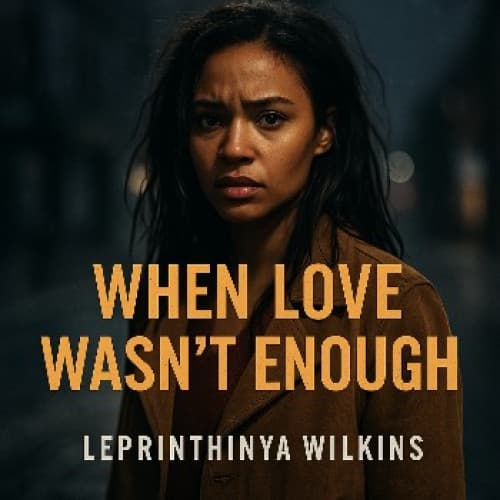

The city she chose next didn’t know her name. That was the point.
Nia Carter became Renee Clarke—new license, new haircut, new silence.
Atlanta’s dirt was still on her boots, but the ocean in Savannah didn’t ask questions.
She rented a second–floor apartment over a pawn shop that smelled like metal and memory. At night, she lay awake listening to freight trains howl in the distance and wondered if maybe that was what ghosts sounded like when they finally left.
Three weeks after the church, Vera James found her.
The reporter’s voice came through the phone like a whisper full of caffeine and fear. “You need to hear this.”
“I told you, Vera. I’m done with the story.”
“This isn’t about the story. It’s about survival.”
Nia hesitated. “Talk.”
“The flash drive you gave me? The leak didn’t come from you. It didn’t even come from me. It came from inside Cas’s own network. Someone uploaded everything to a cloud under your name.”
Nia’s pulse stuttered. “So whoever did it wants me hunted.”
“Exactly. And guess whose signature was buried in the metadata?”
Nia’s throat went dry. “Say it.”
“Malik Bryant.”
The world tilted. “That’s not possible.”
“Oh, it’s possible. He didn’t just fake his death—he staged the whole collapse. Every cop, every councilman, all of it. He made himself disappear by turning you into the ghost instead.”
Nia sat down hard on the edge of the bed, the floor creaking beneath her. “So he’s still out there.”
“Not for long,” Vera said. “Word is, Cas’s lieutenants are looking for him too. And they think you’re the key.”
That night, she went to the beach. The tide was low, the moon thin as a blade.
She thought about every man who’d told her he’d protect her right before handing her the weapon that would destroy her.
Love. Loyalty. Survival. They all sounded the same when you were desperate enough.
She whispered into the dark, “You want me, Malik? Come find me.”
Tariq found her first.
He looked worse than she remembered—gaunt, eyes sunken, moving like he’d aged ten years in a month.
“You’re hard to track,” he said, leaning against her doorway.
“I meant to be.”
He glanced around the small apartment. “Nice place. You hiding or healing?”
“Both.”
He nodded, something pained behind his eyes. “He’s alive, Nia. And he’s coming.”
“I know.”
“You plan on running again?”
She looked past him toward the dark street. “Not this time.”
They waited for Malik together.
Two broken halves pretending they were whole.
By midnight, the storm rolled in. Lightning flashed through the windows, turning their faces into flickering portraits—anger, regret, exhaustion.
When the knock finally came, it was gentle. Almost polite.
Nia opened the door before Tariq could stop her.
Malik stood there in a black coat, rain dripping from his hair, a faint scar cutting through his smile.
“Thought you’d be gone by now,” he said.
“I tried,” she replied.
He stepped inside, eyes roaming the small room. “You always did land on your feet.”
“Yeah,” she said. “Even when people tried to break them.”
Tariq raised his gun. “End it, Nia. Right now.”
Malik didn’t move. He just looked at her, calm. “You won’t shoot me.”
“You sure?”
“Yeah,” he said softly. “Because you need answers more than vengeance.”
He reached into his coat and tossed a small envelope onto the table. “That’s your freedom. Bank codes, clean papers, enough money to vanish for real. I told you I’d fix it.”
Nia stared at him. “Why?”
Malik smiled faintly. “Because I’m dying anyway. Cas’s people caught up with me in Miami. Two bullets. I’ve got maybe a week left.”
Tariq’s jaw clenched. “You expect sympathy?”
“No,” Malik said. “I expect peace.”
He looked at Nia again. “The files, the leak—it was all me. I wanted Cas gone, but I needed a scapegoat the system wouldn’t question. You were perfect: loyal, clean, believable.”
Nia’s voice shook. “You ruined me.”
“I made you untouchable,” he said. “Now you know how it feels to survive the truth.”
She stepped closer. “You think that’s mercy?”
He exhaled. “It’s the only kind I know.”
Then he turned, walked out into the storm, and didn’t look back.
The next morning, they found his body on the shore two miles away, washed up like a final apology.
No gun. No note. Just the envelope she hadn’t opened.
Inside: one line on a scrap of paper.
You were the only thing I ever did right.
Months later, when Vera’s exposé finally won a national award, the papers called it The Resurrection Clause—the story that resurrected the city’s conscience at the cost of three lives.
Nia read the article once, folded it neatly, and tucked it into her wallet.
She didn’t cry. She didn’t forgive.
She just lived.
And for the first time, that was enough.