


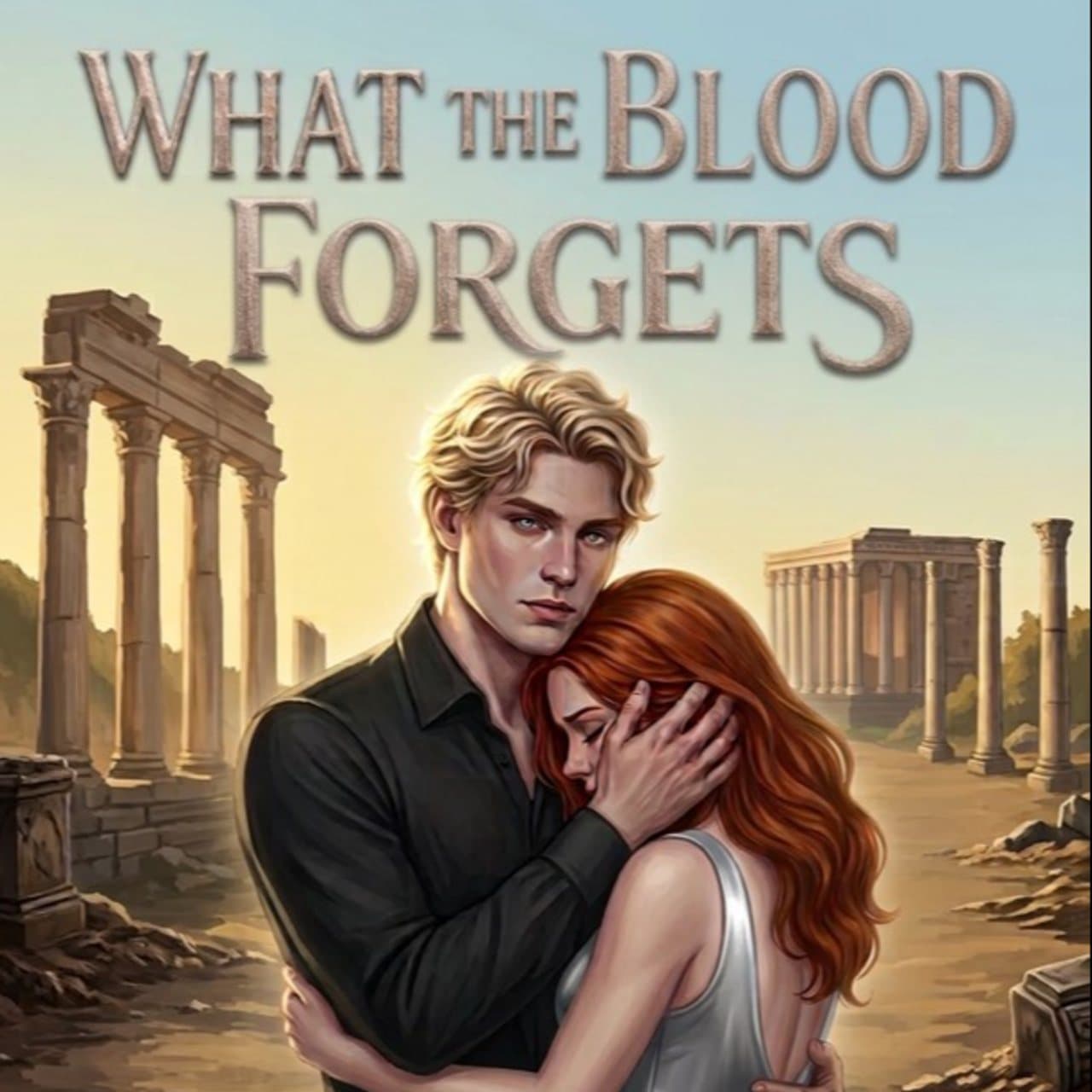

Nothing had prepared me for the plane.
It wasn’t the airline’s first class, though the seat that turned into an actual bed and the coffee, brought without asking, in real porcelain rather than plastic, told me plenty on their own. It was the quiet, unbothered way Damian handled it all, like a man who’d simply forgotten this wasn’t normal for other people, until he caught the look on my face somewhere over the Pacific and had the grace to look faintly embarrassed.
“I should have warned you,” he said. “About the money.”
“How much money, Damian?”
“Enough that the number stopped meaning much to me around the seventeenth century.” He said it the way another man might apologize for forgetting to defrost something for dinner. “Property, mostly. A great deal of it, in a great many places, under a great many names. Five hundred years is a long time to be careful with what you earn.”
Rome itself broke something open in me that I hadn’t known was still closed. We stayed in the penthouse of a castello two streets back from the Pantheon, centuries old, its lower floors long since converted into one of those quietly extravagant hotels that never bothers advertising itself, the kind of place where nobody at the desk blinks at anything. Damian, it turned out, had owned the whole building outright since sometime in the 1800s, and had simply kept the top floor for himself when he finally let the rest of it become a hotel, its ceilings frescoed, its shutters the particular faded green of every good Roman photograph I’d ever seen. Noah spent the first morning running full circles around the Pantheon’s ancient columns until a carabiniere gently suggested he stop, then spent the afternoon eating gelato with the serious concentration of a boy conducting a formal taste trial, three flavors deep and unwilling to commit to a favorite.
“Does Rome have lions?” he’d asked that morning, watching a stray cat stalk pigeons near the fountain. “Real ones? Like the Colosseum ones?”
“Not anymore,” Damian said. “Just the cats, being far more dramatic about it than the job requires.”
“Did you actually watch it get built?” Noah pressed, delighted by his own question.
Damian considered this with mock seriousness. “What do I look like, a history textbook?”
“Kind of,” Noah said, matter-of-fact, already losing interest, already turning back to the cat.
“Cheeky,” Damian said, laughing, and reached over to steal a lick of Noah’s gelato before he could protest, which set off an entirely different argument, one that had nothing at all to do with Damian’s age and everything to do with the sanctity of a seven-year-old’s pistachio scoop.
On our fourth day, Damian took us to the Palatine Hill, up past the crowds thinning near the top, to a quiet cluster of stones that meant nothing to me and, judging by the guidebook, very little to most other visitors either. No plaque marked it. No official sign. Just a fallen colonnade half-swallowed by weeds, and at the centre of it, half-buried and leaning at an angle time hadn’t been kind to, a statue of a woman, her face worn soft by centuries of rain, vines grown thick across what was left of her features, as if the stone itself had simply been waiting, patiently, for someone to come and uncover her.
I crouched by the base and brushed the dirt from a line of worn lettering at her feet.
“Cybele,” I said, reading the name on an ancient statue that was withered in time, vines covering the face as if the stone waited patiently for someone to uncover.
He went very still, the way stone goes still, some old reflex freezing him mid-breath before he’d even decided to react. For a second his face wasn’t his own age at all, wasn’t any age, just a man standing in the wreckage of something he hadn’t let himself look at directly in a very long time.
“Damian?”
“I’m not sure,” he said finally, and his voice had gone somewhere quiet and far away, “that I even know how to start from Cybele. There’s so much before her, and so much because of her, and I don’t know yet which thread to pull first without unravelling all of it at once.” He looked at me, and there was an apology in it, and something rawer underneath the apology. “I will tell you. All of it. Just not standing on top of it, and not before I’ve worked out how to say it in an order that doesn’t break both of us.”
I let it go, the way you let a wound alone when you can see it hasn’t scarred over yet.
He put his hand flat against the statue’s base, the way you’d rest a hand on someone’s shoulder, and looked at it for a long time. I slid my hand into his other one without thinking about it, and felt him hold on like it mattered more than he was letting his face show.
“This is close to where it happened,” he said eventually. “Not this exact spot. But close.”
Noah, oblivious to all of it, was three metres away trying to convince a pigeon to pose for a photo, and Damian watched him with an expression I was starting to recognize, something that looked very much like a man watching a life he’d never let himself want out loud.
We fell into a rhythm those three weeks that felt dangerously close to what I imagined an ordinary family holiday might feel like, if ordinary families had a five-hundred-year-old vampire booking dinner reservations and a small boy negotiating gelato diplomacy at every stop, and if that same ordinary family also found time, most nights once Noah was asleep, to simply be together in the quiet, talking long past when either of us should have been tired, in a city built for exactly that kind of hour, even though neither of us had found our way back to anything more than that since the night of the formal, since the night I found out what he was.
The subject of what Damian actually ate came up once more, in Florence, over a dinner he barely touched, the way he always barely touched anything on a plate.
“You’re doing it again,” I said. “The thing where you eat two bites of everything and call it a meal.”
“Old habit.”
“Damian.”
“There are things about how I survive that I’m not ready to say out loud yet,” he said quietly, glancing once toward the terrace door where Noah had gone to watch the street performers below. “Not here. Not on holiday, with your son twenty feet away asking a man dressed as a gladiator for a selfie.”
“Fair enough,” I said, and meant it, mostly. Some part of me, the part still bruised from a marriage built on things unsaid, wanted to push further. I didn’t. I told myself there would be a right time, the way you tell yourself there will always be more time, generally right before you find out there won’t be.