


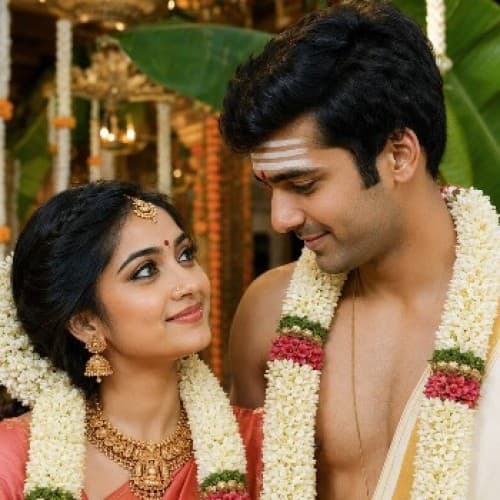

She prepared for her wedding the way generals prepare for victory — with discipline, with joy, with no margin for error.
For six months she woke at five. She ran four kilometres around the colony park while the dosa-batter aunties watched her go. She drank turmeric water with honey. She used her grandmother's ubtan — gram flour, sandalwood, curd, a single drop of jasmine oil — and let her aunts paste it on her in the courtyard while they teased her about Rudraksh's eyebrows. Her skin began to glow from inside the way mango skin does when the fruit is finally ready.
Her mother stitched her trousseau by hand. Twelve silk saris. Eighteen cotton. A coral-pink Kanjivaram for the muhurtam that had been her grandmother's, the gold threadwork now worth more than gold itself. Aaranya spent hours running her hand along its edge, the way some people pray.
Her mehendi was done by an old woman from Rajasthan. Henna ran from her fingertips to her elbows. Rudraksh's name was hidden five times in the design — tradition. She made the artist hide it a sixth time, secretly, because she had become a girl who could not stop choosing him.
On the wedding day, she wore the coral Kanjivaram with a maang tikka that had to be re-pinned three times because her hair was too thick. The priest later said the jasmine in her plait smelled "like a small temple of its own". When Rudraksh first saw her at the mandapam, he forgot the line he was supposed to say.
[ He stops mid-step. He looks at her so long that his own mother clears her throat. The priest gestures. Rudraksh does not move. ]
RUDRAKSH — "Aara."
AARANYA — "Rudra. They are waiting."
RUDRAKSH — "Let them wait. I have spent twenty-six years walking around without knowing what I was walking toward. I would like one moment to look at it."
[ A long pause. The flutes outside continue. Somewhere a baby cries. ]
RUDRAKSH — "You look like the kind of woman a man builds his entire life around."
She believed him. She had no reason not to.