


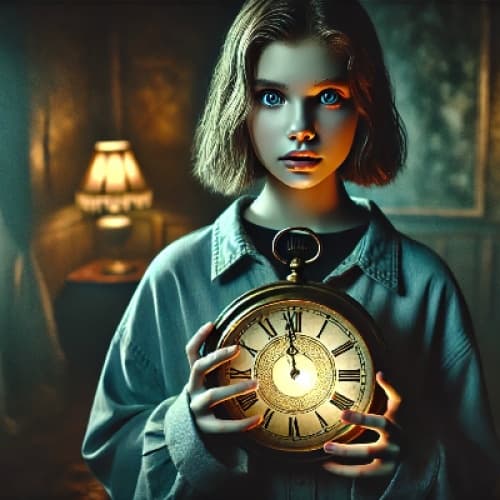
In the quiet seaside town of Greyhaven, where fog clung to the streets, Mia, a bold 16-year-old, found an old shop full of forgotten treasures. Among them sat a strange brass clock—no hands, just a faint hum. She touched it, and it ticked once, loud and sharp. The creepy shopkeeper, with sunken eyes and a crooked smile, warned, “That clock doesn’t show time—it takes it.” Mia shrugged, paid a few bucks, and took it home.
That night, the clock ticked again. Mia woke up sweaty, her room the same, but her phone showed tomorrow’s date. News screamed about a deadly storm hitting soon—yet the sky outside was calm. Another tick, and she was flung forward a month: her house flooded, her family missing. She gasped, heart racing. With every tick, time jumped—two months, six, a year. She saw her town crumble, dark figures stalking the ruins, her name scratched on a wall in blood.
She ran back to the shop, now a wreck. The shopkeeper appeared, laughing. “You wanted excitement? Fix it—or lose everything.” The clock buzzed in her hands, hot and heavy. Another tick loomed. Mia froze—smash it? Turn it back? Time was slipping. The next tick roared, and the ground shook. She had to choose—now.